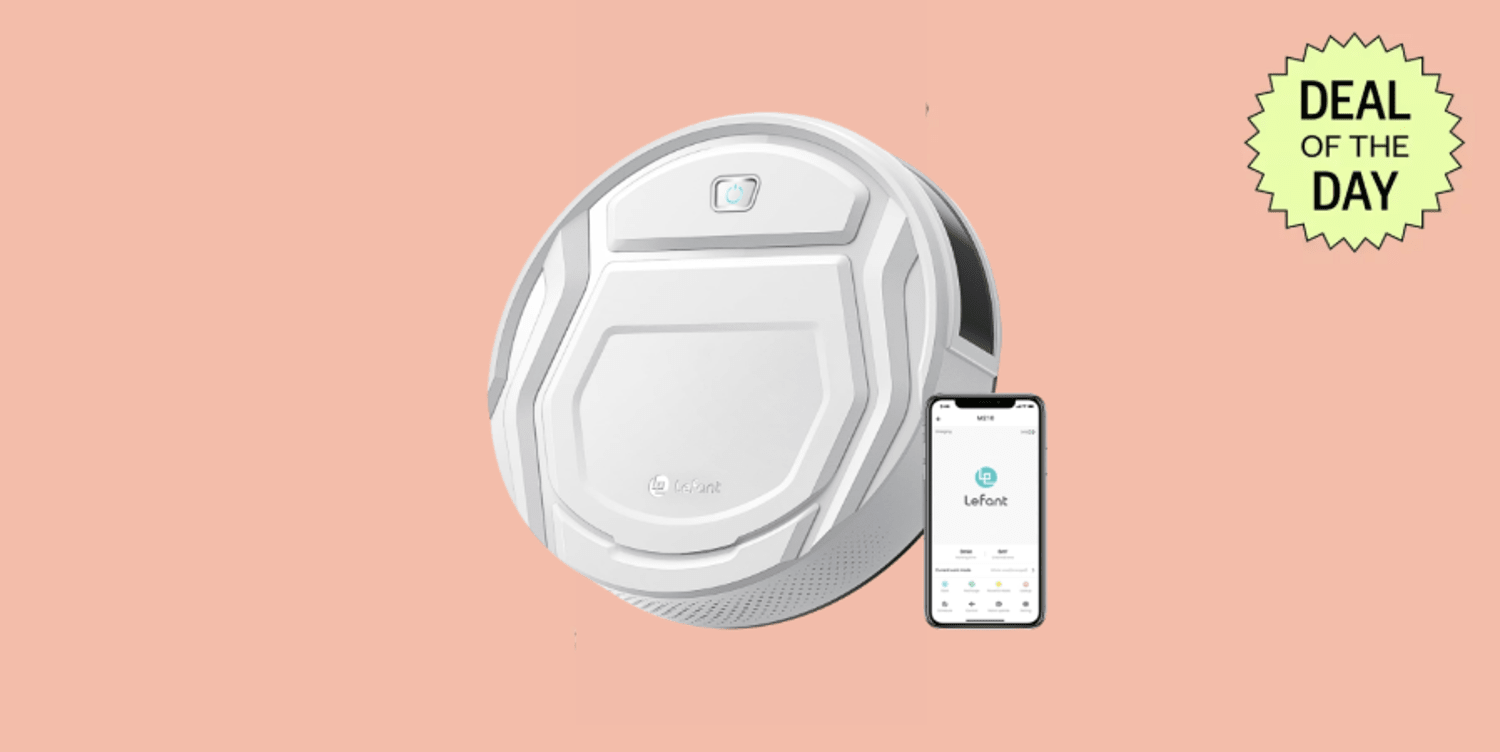
Autonomous floor cleaners are advertised as a 55 percent discount dream, a heavy markdown on a highly rated machine that promises to free your weekends from pet hair and dust bunnies. You see the slashed price tag, you calculate the savings, and you reach for your credit card. Stop. I have taken apart enough of these mechanical chassis to know that a steep markdown on a cleaning appliance is rarely a stroke of consumer luck. It is almost always a fire sale on an obsolete navigation architecture.
When a mid-tier automated vacuum drops by more than half its retail value overnight, you are not witnessing corporate generosity. You are watching a manufacturer panic over expiring warehouse inventory. The industry moves at a pace that renders hardware obsolete within eighteen months. Brands need floor space for the next generation of obstacle-avoidance sensors, and they will dump older units onto discount platforms at or below production cost to clear the ledger.
Understanding how these machines actually operate reveals why those deeply discounted models are often a false economy. The modern autonomous cleaning market is split down the middle. On one side, you have machines utilizing high-end LiDAR towers or stereoscopic cameras to map a home with millimeter precision. On the other side, you have the clearance-bin specials relying on rudimentary bump sensors and random-bounce gyroscopes.
If a robot vacuum is selling for a fraction of its original price, look closely at the navigation specification. It almost certainly lacks active spatial intelligence. A random-bounce machine does not clean your home; it violently assaults your baseboards until its battery dies. It will wedge itself beneath the exact same kitchen cabinet ledge every single afternoon, requiring a rescue mission that defeats the entire purpose of automation. You traded manual labor for mechanical babysitting.
The Hardware Trap Inside Budget Cleaners
Let us look at what happens beneath the plastic housing of a heavily discounted floor cleaner. To hit a rock-bottom price point, manufacturers must strip away the components that make automated cleaning viable in a chaotic domestic environment.
Brush rolls tell the real story. Premium units utilize multi-surface rubber extractors that resist hair wrap and maintain constant contact with varying floor heights. Clearance models rely on traditional bristled brushes. Within three weeks of running in a home with long hair or shedding pets, those bristles become choked into a solid cylinder of felted fibers. You will spend twenty minutes every third day sitting on the kitchen floor with a razor blade, slicing hair away from an axle that was never designed for heavy-duty residential loads.
Suction metrics provided by marketing teams are largely useless. Manufacturers love to throw around Pascal measurements or airwatt ratings, but these numbers represent peak static pressure at the intake port, not real-world cleaning efficiency. A cheap motor screaming at high RPMs cannot compensate for poor seal design around the suction channel. You end up with a machine that sounds like a jet engine while leaving behind heavy debris like kibble or tracked-in gravel, simply nudging it across the hardwood until it gets flicked into a corner.
Battery degradation represents another hidden cost of cheap automated hardware. The lithium-ion cells packed into budget sweepers are frequently surplus stock with high internal resistance. After six months of daily charging cycles, capacity drops off a cliff. A machine that once managed ninety minutes of cleaning time will suddenly give up after twenty-five minutes, crawling back to its dock with half the house untouched. Replacing those proprietary battery packs often costs nearly as much as the discounted machine itself, effectively trapping the consumer in a replacement cycle.
Software Support and the Planned Obsolescence Clock
Hardware failures are frustrating, but software abandonment is worse. Smart home appliances are fundamentally computers on wheels. They require continuous firmware updates to patch security vulnerabilities, refine mapping algorithms, and maintain compatibility with modern Wi-Fi routers and smartphone operating systems.
When a manufacturer marks down a legacy model by fifty percent or more, they are signaling the beginning of the end for software support. Brand new flagships require engineering bandwidth. Companies do not pay software developers to optimize mapping code for a discontinued chassis sold at a massive discount.
Imagine buying a deeply discounted automated vacuum only to discover that the companion smartphone application stops receiving security patches after the next mobile OS update. Suddenly, your floor cleaner cannot connect to the network. The scheduled cleaning routines disappear. The map of your home stored on the cloud becomes inaccessible, turning a smart appliance into a dumb, manual-start puck that you have to kick across the living room rug.
Privacy concerns compound the software issue. Budget manufacturers often cut corners on data encryption to save on licensing fees. Cheap automated cleaners constantly map the interior layout of private residences, capturing spatial data that streams through poorly secured cloud servers hosted overseas. Buying a heavily discounted machine from an obscure brand means inviting an unvetted, internet-connected camera and sensor array into your private living spaces.
The Consumable Revenue Model
The razor-and-blade business model is alive and well in the automated cleaning industry, and clearance units are the ultimate trapdoor.
Manufacturers frequently price the initial chassis near or below cost because the real profit lies in selling proprietary replacement parts. HEPA filters, side brushes, mopping pads, and self-emptying dust bags are essential for ongoing operation. For a discontinued, heavily discounted machine, finding generic aftermarket consumables can become an exercise in frustration. You are forced to buy official replacements directly through an authorized portal where a pack of three disposable dust bags costs twenty dollars.
Over a three-year lifespan, the cost of replacement consumables for a cheap machine often eclipses the initial purchase price. Meanwhile, premium manufacturers have largely shifted toward washable, reusable components and standardized modular designs that reduce long-term ownership costs. The discount was an illusion designed to hook you into an expensive ecosystem of proprietary plastic accessories.
What Actually Matters When Buying Autonomous Floor Care
If you want a machine that genuinely reduces household friction, throw out the discount percentage as a metric of value. Look exclusively at architecture and infrastructure.
Prioritize navigation over raw suction power. A machine that knows where it is and where it still needs to go will clean an entire floor plan in a fraction of the time required by a random-bounce sweeper, even if its motor is slightly less powerful. Look for active obstacle avoidance that can identify stray charging cables, socks, and pet waste before running them over and smearing them across expensive Persian rugs.
Assess your flooring topography. Homes dominated by high-pile carpets require completely different brush mechanisms and motor profiles compared to residences with polished concrete and tile. A clearance unit built for hard floors will choke and stall the moment it transitions onto a plush bedroom carpet, throwing a navigation error code and shutting down entirely.
True convenience in automated cleaning is not about paying half price for yesterday hardware. It is about investing in a modular, serviceable platform that integrates cleanly into your home infrastructure without demanding constant mechanical intervention or putting your home network security at risk.
Check the return policy before chasing any steep markdown. If a manufacturer is dumping old inventory, they often hide restocking fees or short return windows in the fine print. Give the machine two weeks in your actual living environment. Throw pet hair, tight corners, and low-clearance furniture at it. If it gets stuck on the same rug fringe three days in a row, box it up regardless of how good the initial discount looked on your computer screen. Your weekends are worth more than a broken bargain.