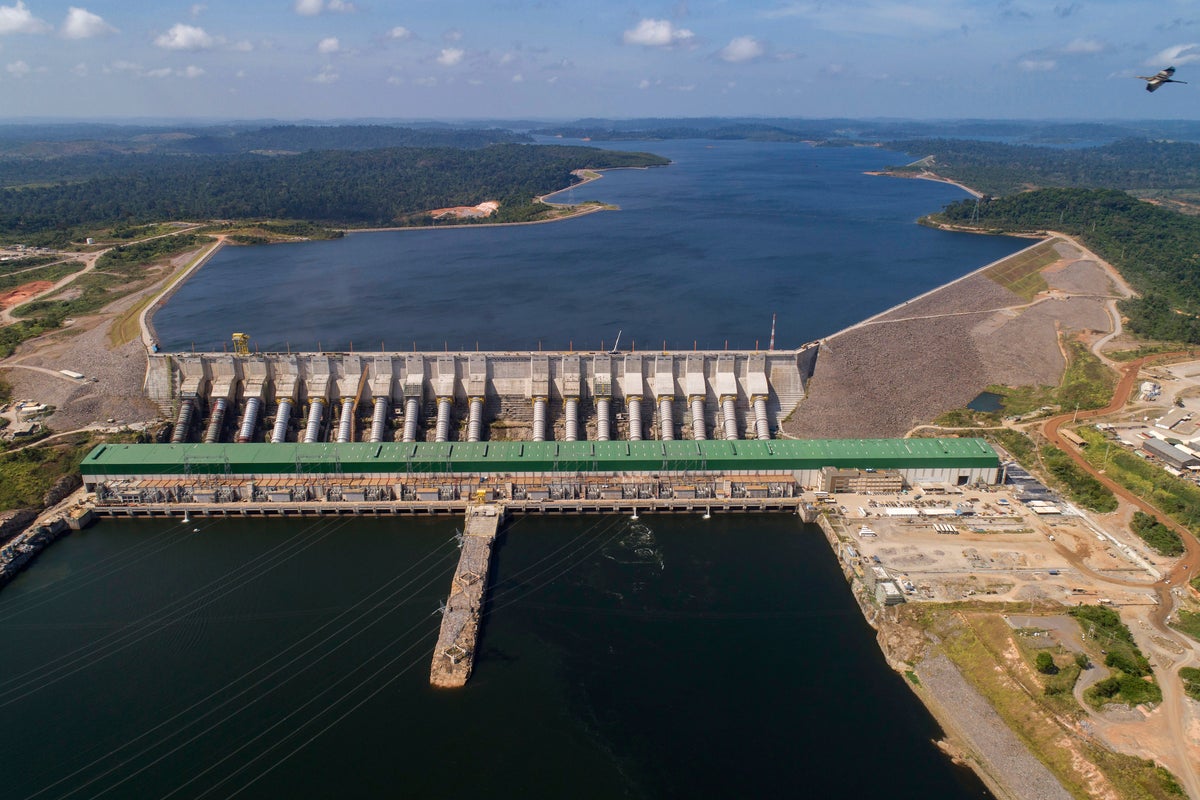
Water has weight. You do not notice it when it falls as mist over the pasture or pools quietly in a garden barrel. But when thousands of tons of it press against a concrete wall seventy meters high, it acquires a heavy, terrifying presence.
I remember standing at the edge of the Itaipu Dam years ago, looking down at the turbines spinning in the dark. The noise was not a sound you heard with your ears. It was a vibration that entered through the soles of your shoes, rattling your teeth, reminding you that civilization runs on the sheer, violent insistence of gravity.
Right now, that gravity is shifting.
Far away in the tropical Pacific, ocean temperatures are playing a quiet, volatile game. El Niño is waking up. And in Brazil, the men and women who watch the gauges on the Paraná and the Tocantins are checking their instruments twice, sometimes three times, with a knot in their stomachs.
Brazil runs on water. More than sixty percent of the nation's electricity comes from the restless flow of massive river basins. When the rains come, the lights stay on. When the rains fail, or when they arrive with apocalyptic fury all at once, the system stumbles.
Meet João. He is a hypothetical operator, but he stands for dozens of men and women stationed in control rooms across the country. João has worked the night shift at a hydroelectric facility for twenty-two years. He knows the smell of the transformer oil when it is running too hot. He knows the exact pitch the generators make when they are gulping too much sediment during a flash flood.
When João looks at the weather models today, he does not see abstract meteorological data. He sees a loaded gun.
El Niño is notoriously fickle in South America. In the southern half of the continent, it usually brings torrential, unyielding downpours—storms that swell riverbeds overnight, turning placid tributaries into brown torrents of mud and debris. In the north and northeast, it often brings drought. But when the southern rains hit the massive reservoirs too fast, the danger is not a lack of water. It is too much of it, too quickly.
Consider what happens next.
When a reservoir reaches capacity, engineers face a cruel paradox. If they hold the water back to prevent downstream flooding, the pressure threatens to compromise the structural integrity of the dam itself. If they open the spillways to let the excess escape, towns and farms downstream are swallowed by sudden, artificial floods. There is no graceful middle ground. There is only management of catastrophe.
During the severe El Niño cycle of 2015 and 2016, João watched helplessly as floodgates had to be hauled open while millions of liters of water roared into the night. Downstream communities had to evacuate with whatever they could carry in plastic bags. Power grid operators had to scramble, rerouting transmission lines across thousands of kilometers because individual plants had to be temporarily throttled down to protect their machinery from debris-choked water.
The irony of hydroelectric power is that it feels clean, natural, and timeless. You look at a river and think of eternity. But a dam is a fragile bottleneck. It captures the rhythm of the earth, and when that rhythm turns erratic, the bottleneck chokes.
Meteorologists are warning that the upcoming heavy rains will test the resilience of these colossal structures once again. But the problem goes deeper than concrete walls and steel spillway gates. It touches the very heart of how a modern nation keeps its refrigerators cold, its hospitals lit, and its factories humming.
When the rains arrive in blinding sheets across the southern plateau, the reservoirs fill in a matter of weeks. The energy spot price on the Brazilian power market can plummet because suddenly there is too much juice in the lines. Yet, six months later, the pendulum swings. The heat sets in. The evaporation accelerates. The reservoirs drop to dead pool levels, and the ghost of an energy crisis whispers through the boardrooms of São Paulo.
We treat electricity like an invisible right. You flip a switch, and the bulb obeys. You plug in your phone, and life continues. We rarely pause to think about the farmer in Paraná watching his soil wash away, or the engineer staring at a digital monitor as the inflow rate climbs past safe thresholds by the minute.
The human element is always buried beneath the statistics. We talk about gigawatts and cubic meters per second as if they were cold numbers on a spreadsheet. They are not. They are the pulse of millions of lives tied to the whims of a warming ocean thousands of miles away.
As the heavy clouds gather over the southern basin, the turbines keep spinning. They hum their low, subterranean song. João will pour another cup of bitter black coffee, lean over the glowing console, and watch the water levels rise.
The river decides everything. We are merely learning how to hold on while it passes.