Water does not care about lines drawn in the dirt by men who have never dug a trench or tasted salt from an exhausted well. It flows because gravity commands it, rushing down from the towering white shoulders of the Himalayas, carving green ribbons through dry earth, and offering life to anything that kneels at its edge. But when those ancient currents are chained by treaties, diverted by concrete, and weaponized by politicians sitting in air-conditioned capitals thousands of miles away, the river ceases to be just water. It becomes a fuse.
Consider for a moment what it feels like to stand on the banks of a dying canal in the scorching heat of an Indian summer, watching the dust devils dance across cracked clay where a steady current used to run. (Note: this hypothetical dry field illustrates the visceral terror of scarcity felt by millions of farmers downstream). Now, look up. Across a heavily militarized border guarded by razor wire and searchlights, words are being traded like artillery shells.
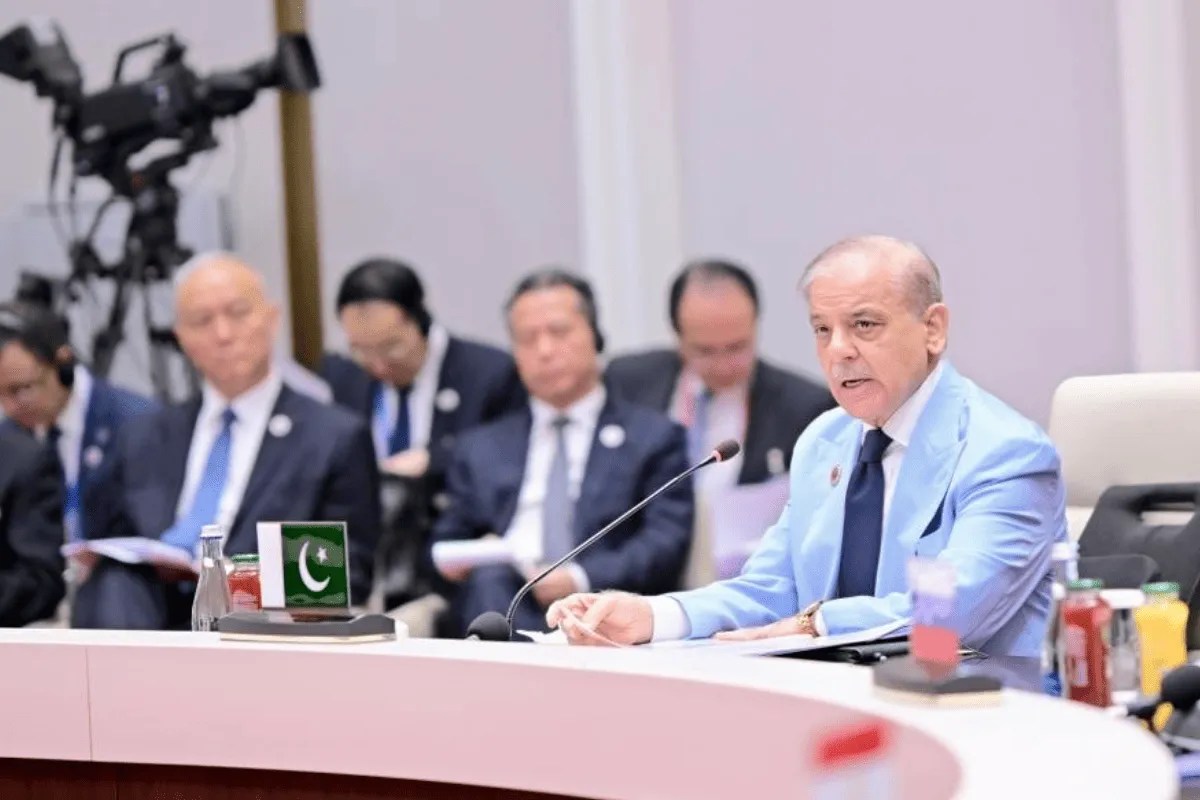
When Pakistani Prime Minister Shehbaz Sharif recently stood before his audience and threw down a stark challenge regarding the Indus basin—declaring that any obstruction of their historic water flow would be treated as an act of war—he was not merely talking about hydrodynamics. He was invoking the primal fear of starvation. He was touching a raw nerve in a region where every drop of moisture is tied to national survival.
The response from New Delhi was swift, sharp, and entirely uncompromising. Indian diplomat Petal Gehlot stepped forward to dismantle the rhetoric, reminding the international community of a grim reality that Islamabad often conveniently forgets. Water cannot be weaponized by those who sponsor terror while expecting the downstream benefits of unconditional cooperation. You cannot bleed a nation with proxy conflicts and simultaneously demand unhindered rivers as a birthright.
History hangs heavy over these riverbanks. The Indus Waters Treaty of 1960 was forged in a different era, signed with cautious optimism when the ink on partition was still damp and the scars were still fresh. For over six decades, that fragile accord survived wars, political upheavals, and diplomatic freezes. It worked because both sides recognized a mutual red line: touch the water, and the whole house of cards burns down.
Yet, treaties are only as strong as the trust between the hands that sign them. And trust in South Asia is as rare as rain in the Thar Desert.
Think about the sheer volume of life hanging in the balance. We are talking about hundreds of millions of human beings whose daily bread depends entirely on glacial meltwater channeled through intricate networks of canals, barrages, and dams. When leaders start talking about war over water, ordinary people do not parse the legal jargon of international riparian rights. They look at their children, look at their parched fields, and they feel the cold grip of panic.
Diplomacy in this theater is rarely a polite exchange of notes in wood-paneled rooms. It is a high-stakes game of geopolitical poker where every bluff is called with troop movements and fiery public declarations. When Sharif raised the specter of conflict, he was playing to a domestic audience desperate for strength in the face of compounding economic crises. It is an old, tired playbook: when your domestic house is collapsing, point a trembling finger across the border and scream about external threats.
India’s sharp retort cut through that theater with surgical precision. The core message delivered through figures like Gehlot was simple: actions have consequences. You cannot export instability and expect trade, peace, and shared resources to flow uninterrupted. The era of strategic hypocrisy—where one side claims the right to wage asymmetrical warfare while hiding behind the protective shield of water treaties—is drawing to a close.
Water is finite. Patience is even shorter.
As climate change alters weather patterns, shrinking Himalayan glaciers and making monsoon seasons increasingly erratic, the margin for error shrinks to zero. The rivers are carrying less water than they did fifty years ago, yet the populations demanding sustenance from them have multiplied exponentially. This is the invisible crisis underpinning every political speech and diplomatic cable. It is a slow-motion catastrophe driven by geography and human pressure.
When a politician threatens war over a river, they are acknowledging a terrifying truth. They know that whoever controls the headwaters holds a dagger pointed at the heart of the nation below. But they also know that unleashing that dagger guarantees mutual destruction.
We watch these diplomatic clashes unfold on our television screens, wrapped in the safety of distance, forgetting that behind every headline lies the quiet desperation of a peasant watching the sky for clouds that never come. The grandstanding in Islamabad and the firm rejoinders from New Delhi are translated into real-world anxiety for millions.
The river keeps flowing, indifferent to the speeches, the threats, and the posturing. It cuts through gorges, slips past bunkers, and empties into the sea. Whether it carries the reflections of peaceful coexistence or the red glare of a burning subcontinent depends entirely on whether leaders remember a fundamental truth before it is too late. You cannot drink blood, and you cannot irrigate a field with the ashes of war.


