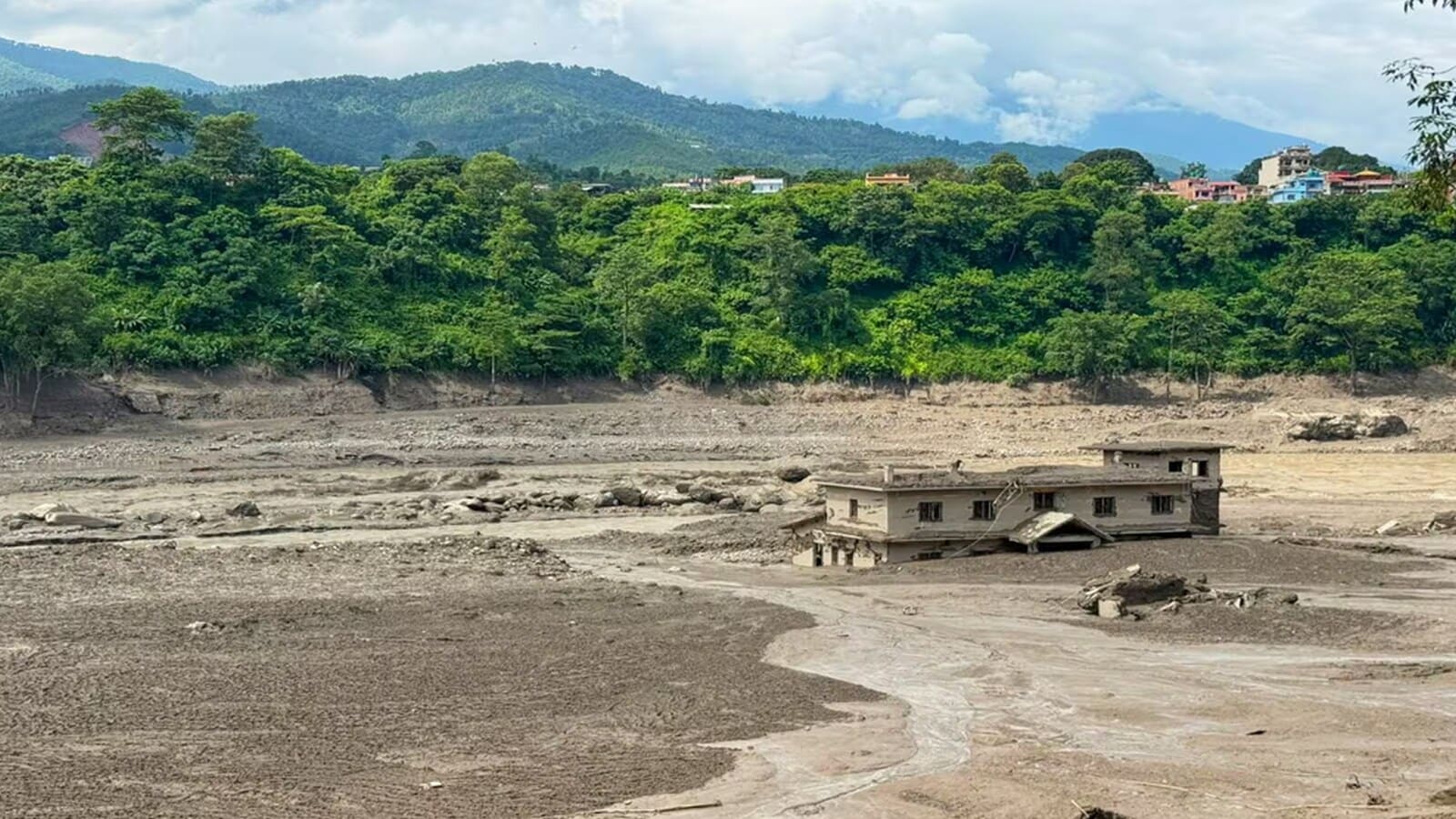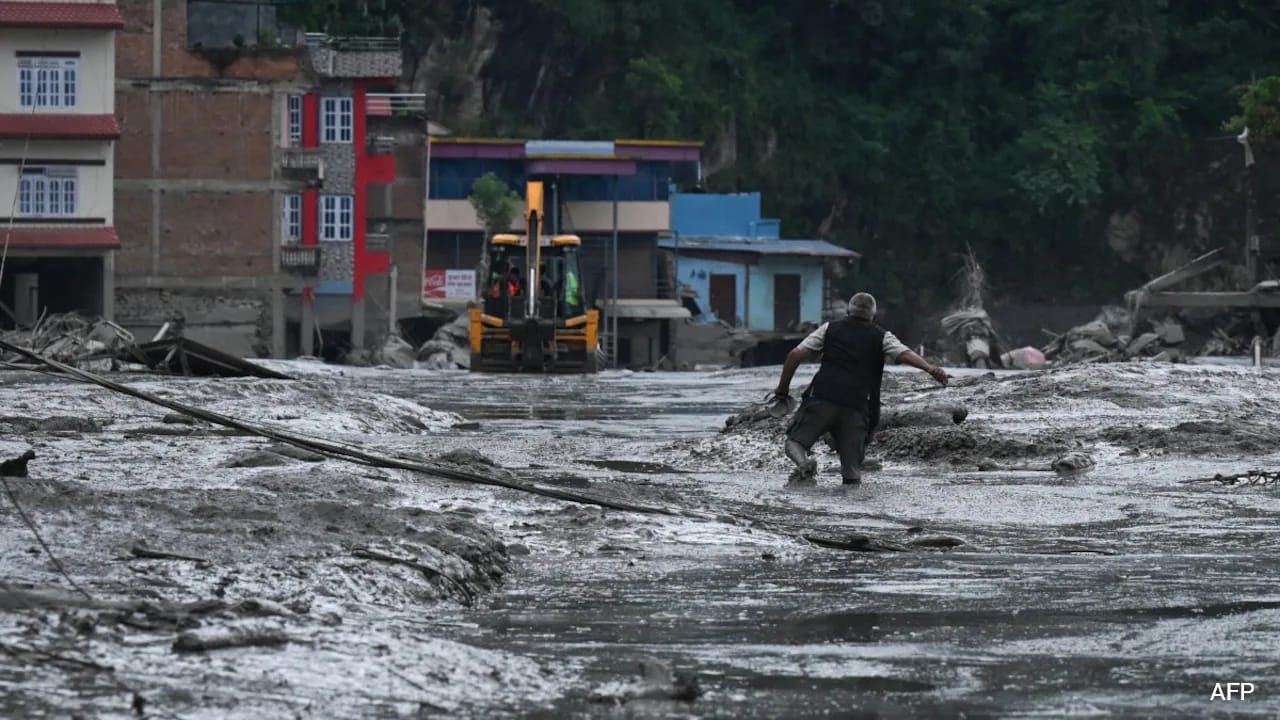
The water does not knock. It arrives.
One moment, the monsoon air is thick with the scent of wet soil and woodsmoke, heavy over the Kathmandu Valley. The next, a low, subterranean groan shakes the foundations of stone houses that have stood for generations. That sound is the signature of the Kosi and its sister tributaries—a liquid avalanche carrying the weight of the roof of the world down into the valleys below. Meanwhile, you can explore other events here: Why Roger Waters Is Right About War Profit and The Tech Machine.
Scientists call them extreme precipitation events. Climatologists point to rising temperatures in the Hindu Kush Himalaya region, noting that air holds more moisture as it warms, turning summer rains into atmospheric hoses. Hydrologists talk about peak discharge rates, cubic meters per second, and saturated soil profiles that have lost their friction.
These terms are precise. They are also entirely useless when the mud is up to your chest. To understand the full picture, check out the excellent article by The New York Times.
To understand what is happening in Nepal, you have to look past the cold telemetry of satellite maps and walk the edges of the riverbanks where the earth has simply let go.
The Anatomy of a Flash Flood
Imagine standing at the edge of a Himalayan slope. Note that this is a hypothetical vantage point, though the physics are terrifyingly real. The monsoon does not fall as a gentle mist here; it strikes like a hammer. When hundreds of millimeters of rain dump onto steep, deforested gradients in a matter of hours, gravity takes over with violent efficiency.
Water mixes with topsoil, boulders, and uprooted pine trees, transforming into a dense slurry known as a debris flow. This is not just water rising; it is a moving wall of concrete and stone.
Scientists studying Nepal's deadly floods have identified a grim sequence. First, the upper catchments breach their natural thresholds. Glacial lakes, swollen by accelerated meltwater, burst their moraine dams—a phenomenon known as Glacial Lake Outburst Floods, or GLOFs. Second, the runoff funnels into narrow gorges, accelerating like water through a firehose. By the time these torrents reach the densely populated mid-hills and the flat plains of the Terai, they carry an unstoppable momentum.
The data tells us that Nepal loses hundreds of lives and billions of rupees in infrastructure every single year to these disasters. But statistics are defensive armor. They protect our minds from the horror of a family waking up at three in the morning to the sound of their courtyard dissolving into the dark.
The Human Cost of Silence
In the village of Melamchi, the scars of previous floods are still fresh in the masonry. People talk about the night the river changed its course as though they are describing a ghost sighting.
"You don't hear the water first," an elder told me once, his eyes fixed on the gray current. "You hear the boulders. They grind against each other like the bones of the earth. When you hear that, you have five minutes."
Five minutes.
That is the entire buffer zone between normal life and catastrophe. In those three hundred seconds, you must decide what to save. Do you grab the citizenship documents sealed in plastic? Do you try to untie the livestock? Do you carry an aging parent up the ladder to the tin roof, praying the structure holds against the lateral force of the brown tide?
This is the reality behind the scientific papers published in international journals. Researchers analyze how early warning systems fail or succeed, pointing out that while text-message alerts have improved, cell towers often go down in the very first hour of a storm. The technology exists. The transmission fails. The gap between a satellite detecting a meteorological anomaly in the upper atmosphere and a farmer waking up in time is riddled with systemic vulnerabilities.
Why the Mountains Are Changing
The crisis is not merely meteorological; it is profoundly human-made. For decades, unmanaged road construction has carved open fragile mountain slopes across the country. Bulldozers cut paths into hillsides without proper drainage, dumping loose debris directly onto the slopes below. When the heavy rains come, these unengineered roads act as ready-made chutes, accelerating runoff and triggering landslides that choke the main river channels.
Furthermore, changing land-use patterns have stripped the lower basins of their natural sponges. Wetlands have been filled, floodplains built upon, and forests thinned. When a river is restricted by concrete embankments rather than allowed to breathe across a wide floodplain, its velocity increases. We have tried to cage dragons, and we are surprised when they break the bars.
Climatologists warn that the Hindu Kush Himalaya region is warming at a rate well above the global average. Snow and ice fields that took millennia to accumulate are retreating at an alarming pace. This creates a dangerous paradox: short-term floods caused by intense downpours, followed by long-term water scarcity as the natural reservoirs disappear.
The Search for Higher Ground
What happens next is not a mystery, but a choice.
We can continue to treat every monsoon as an act of God, a tragic inevitability to be met with emergency relief packages and somber political speeches after the damage is done. Or we can listen to the scientists and the communities who have lived alongside these waterways for centuries.
That means shifting from disaster response to radical preparedness. It means relocating vulnerable settlements away from active alluvial fans. It means enforcing strict zoning laws that respect the river's ancient right of way. It means investing in community-managed early warning systems that rely on low-tech sirens and local spotters rather than fragile digital networks alone.
The river does not hate us. It simply obeys the laws of physics, indifferent to property lines and political borders.
The water rises. The mud settles. And somewhere in the valley, a dog barks in the dark, testing the limits of the night, waiting for the dawn that always reveals a changed landscape.