A standard convenience store run should never end in a casket. Yet a South Carolina jury just decided that chasing a 14-year-old child down the street and shooting him in the back does not legally constitute murder.
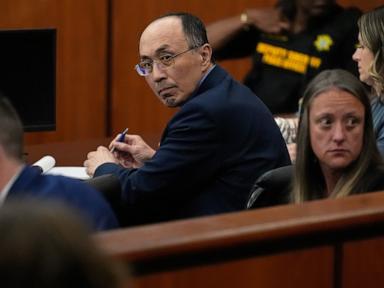
On June 1, 2026, the murder trial of Chikei Rick Chow wrapped up in Columbia, South Carolina. The 61-year-old Shell gas station owner walked out of the courtroom a free man after a jury found him not guilty in the 2023 killing of Cyrus Carmack-Belton. The courtroom erupted. Sobs echoed from the gallery where the Black teenager's family sat. Chow sat frozen, bowing his head in relief.
This verdict cuts deep into the raw wounds of Richland County, a community where nearly half the population is Black. It forces us to confront a terrifying reality about self-defense laws, racial profiling, and how easily a tragic misunderstanding can escalate into legal bloodshed. If you think this case is just about a shoplifting dispute gone wrong, you are missing the most dangerous details.
The Illusion of Theft and the 130 Yard Chase
Let's clear up the biggest misconception right out of the gate. Cyrus Carmack-Belton did not steal anything.
Inside the Parklane Road convenience store on May 28, 2023, Chow’s wife suspected the teenager of stuffing four bottles of water into his backpack. Surveillance video later proved he put them right back. But the suspicion was already locked in. The Chow family verbally confronted the teenager, and fear or survival instinct caused Carmack-Belton to run.
What happened next is the crux of why this acquittal feels like a punch in the gut to so many. Chow and his son, Andy Chow, didn't call the police to report a suspected shoplifter. They didn't let the kid run. Instead, they armed themselves and launched a relentless physical pursuit.
Chow chased the 14-year-old more than 130 yards off the store’s property, tracking him down toward a nearby apartment complex. Think about that distance. That is longer than a football field. It is a sustained, frantic chase through public spaces. During closing arguments, Richland County Solicitor Byron E. Gipson placed a single bottle of water right in front of the jury box. His point was simple. Chow decided a human life was worth less than a few dollars of plastic-bottled liquid.
But the defense completely flipped the narrative, steering the jury's focus away from water bottles entirely.
A Gun on the Ground Versus a Gun in the Hand
The legal strategy that saved Rick Chow from spending the rest of his life behind bars rested on a single argument: fatherly defense.
The defense team, led by attorneys Jack Swerling and Shaun Kent, successfully convinced the jury that this was not a case about property protection. It was about a father making a split-second decision to save his son. According to defense testimony, Andy Chow yelled out during the chase that the teenager had a gun. Andy testified that Carmack-Belton actually pointed the firearm directly at him.
Nobody denies that the teenager had a weapon. Investigators recovered a 9mm semiautomatic pistol with a tactical laser attachment near the scene. The defense leaned heavily into this fact, questioning why a 14-year-old was roaming the streets of Columbia with a loaded pistol, a round already chambered and ready to fire. To the jury, that gun transformed Carmack-Belton from a fleeing child into an active, lethal threat.
The prosecution countered with a starkly different physical reality. They argued that while the teenager did possess a gun, it fell out of his backpack or hands during the frantic 130-yard sprint. They maintained he never brandished it, never threatened anyone, and was actively trying to escape when the fatal bullet struck him.
Multiple independent eyewitnesses took the stand. Not a single one of them saw anything in Carmack-Belton's hands. None of them saw him point a weapon at the store owner or his son. As Solicitor Gipson pointed out to the jury, nobody testified that the teen pointed a gun except the people whose last name is Chow.
Yet, the forensic pathology of the case is undeniable. Chow shot the boy directly in the back.
The Moving Goalposts of Reasonable Doubt
How do you shoot a fleeing person in the back and secure a total acquittal on a murder charge? It comes down to the grueling mechanics of the American legal system and the immense burden of proof.
The state had to prove beyond a reasonable doubt that Chow did not act in self-defense or defense of his son. In South Carolina, the law doesn't necessarily require a threat to be real in hindsight; it requires the defendant to have a reasonably objective fear for their life in the heat of the moment. By introducing the presence of a loaded firearm, the defense successfully injected just enough doubt into the minds of those twelve jurors.
The jury deliberated for roughly eight hours across three days of intense evidence. They weighed the body camera footage, analyzed PowerPoint breakdowns of the scene, and listened to Chow’s initial 911 call where he claimed he was terrified and tried to render aid. When the verdict came down, the judge polled the jurors one by one. Twelve times, the answer came back identical. No compromise. No hesitation.
Outside the courtroom, the anger is palpable. Todd Rutherford, an attorney and South Carolina state representative representing the Carmack-Belton family, blasted the decision. He noted that in nearly 30 years of practicing law, he had never seen a verdict quite like this. The family plans to immediately pivot to a civil lawsuit, searching for a different form of accountability where the burden of proof isn't as stacked against them.
What the Verdict Leaves Behind
The legal system may have closed its books on Rick Chow, but the community on Parklane Road is left to pick up the shattered pieces. Vigils have repeatedly filled the sidewalk outside the Shell station, where community members previously used empty water bottles to spell out the name "Cyrus."
This case exposes the terrifying gray area where store owner vigilantism meets gun violence. It shows how black youth are instantly viewed through a lens of criminality, where a simple mistake by a business owner triggers a deadly chain reaction. If you want to understand why trust in local justice systems is hitting rock bottom, look no further than this Columbia courtroom.
If you are following these high-stakes civil rights and self-defense trials, you need to understand the legal precedents being set right now. Keep your eyes on the upcoming civil filing from the Rutherford Law firm, which will target the financial and civil liabilities of the store owner. True change doesn't stop at a criminal verdict; it requires a deep look at how communities protect their youth from armed overreactions. Stay informed, demand transparency from your local prosecutors, and support grassroots organizations working to reform local stand-your-ground interpretations before another child pays the price.