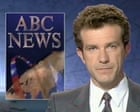
The television newsroom of the late twentieth century was a fortress of calibrated authority. In Australia, few figures mastered that fortress quite like Richard Morecroft, whose death at the age of 70 following a diagnosis of cancer marks the passing of an era that digital-age broadcasting has systematically dismantled. For nearly two decades, Morecroft anchored the Australian Broadcasting Corporation's flagship evening bulletin in New South Wales. He did not shout. He did not manufacture false urgency. He simply delivered the facts with an unshakeable poise that turned the nightly television screen into an anchor point for millions of living rooms.
When his passing was announced, the tributes followed a predictable, albeit heartfelt, script from political leaders and network executives. Yet behind the standard corporate eulogies lies a more profound narrative about how the media landscape has mutated since Morecroft signed off for the final time in 2002. His career represents a study in contrast against contemporary journalism, where quiet competence has frequently been sacrificed on the altar of personal branding, sensationalism, and round-the-clock panic.
Born in England in 1956, Morecroft migrated to Australia as a boy and drifted into broadcasting through university radio at Adelaide. By 1983, he stepped into the role that would define his public life, succeeding James Dibble at the ABC news desk. It was an era when public broadcasters operated under a different social contract. The news anchor was not an influencer or an opinion columnist with a daily social media feud. They were trusted custodians of the public record. Morecroft understood this distinction implicitly. His authority stemmed not from theatrical outrage, but from an obvious command of the material and an underlying respect for the viewer's intelligence.
Consider the famous newsroom anecdote shared by his former colleagues: Morecroft reading the evening news with an infant rescued flying fox tucked safely inside his suit jacket. In a modern corporate news environment governed by risk aversion and pristine image management, such a scenario is practically unthinkable. Yet for Morecroft, environmental advocacy and wildlife rehabilitation were not compartmentalized hobbies; they were extensions of a genuine curiosity about the natural world. He managed to balance journalistic objectivity with a visible, unashamed tenderness toward living things—a feat that humanized him without ever compromising his professional gravity.
His post-news career further defied industry expectations. Instead of sliding into comfortable retirement or capitalizing on his fame for commercial endorsements, Morecroft pivoted to intellectual curiosity, hosting the cult-favorite SBS quiz show Letters and Numbers from 2010 onward. Guiding contestants through complex mathematical equations and cryptic word puzzles required a different kind of screen presence. It demanded patience, wit, and a willingness to let others shine. He was just as comfortable parsing a numerical conundrum with Lily Serna or David Astle as he was breaking down geopolitical crises.
Beyond the television monitor, Morecroft cultivated a serious life as a landscape photographer and conservationist, working alongside organizations like the World Wildlife Fund and the Taronga Foundation. His photographic work, displayed in Parliament House, reflected the same patient eye he brought to journalism. He looked at landscapes not for how they could be exploited for a quick headline, but for their underlying structure and enduring worth.
When Morecroft faced his final illness, he chose to navigate it with the same quiet agency that characterized his professional life. Reports confirmed that he died on the New South Wales south coast at a time of his choosing, utilizing voluntary assisted dying alongside his partner of thirty-six years, Alison Mackay. In doing so, he exercised control over his departure just as carefully as he once controlled the cadence of a nightly broadcast.
The journalism industry today chases algorithms, engagement metrics, and instantaneous reaction loops. It trains its practitioners to be loud, ubiquitous, and perpetually outraged. Richard Morecroft's life and career serve as an enduring reminder that true authority requires none of those things. It requires integrity, a respect for the audience, and the courage to remain calm while the world around you loses its composure. And that is the news, to this minute.