Ink dries slowly on political statements, but the shock of a sudden departure can fracture an entire ecosystem overnight.
Step into a backroom in Kuala Lumpur on a humid Tuesday evening. The air conditioning hums a low, desperate tune against the tropical heat pressing hard against the glass. Tables are cluttered with cold cups of teh tarik and papers marked with red pen annotations. Conversations stop instantly when the door opens. Faces are tight. Eyes look toward a single man holding a piece of paper that carries more weight than any ballot box.
Politics in Malaysia has never been a game of quiet moderation. It is an arena of historic bloodlines, shifting alliances, and ideologies that have clashed across decades. For years, the political architecture was defined by unbreakable walls: you stood with your party, you fought your ancestral rivals, and you never crossed enemy lines. To do so was treated as treason of the highest order.
Yet, lines blur when power shifts.
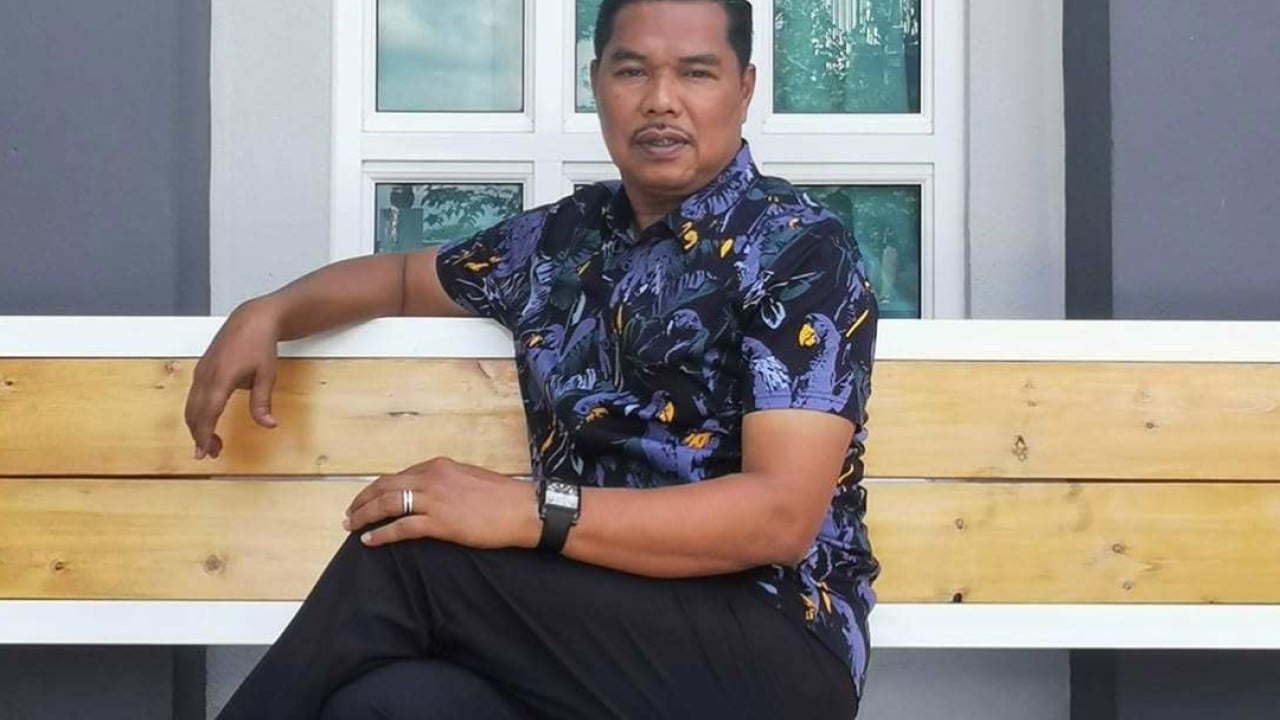
The core event is stark in its official simplicity. A local municipal councillor, embedded within the Democratic Action Party (DAP), stepped down from his post after making remarks at a gathering hosted by the United Malays National Organisation (UMNO). To understand why this resignation triggered tremors far beyond a local council chamber, one must understand the ghosts haunting Malaysian political history.
DAP was forged in opposition. For generations, its identity was built on challenging the status quo, fighting entrenched systems, and standing firmly outside the corridors of dominant governance. UMNO, conversely, held the levers of federal power for decades, shaping the nation's institutional identity. For a DAP representative to speak warmly, or even constructively, at an UMNO assembly is not merely a diplomatic faux pas. To the party faithful, it feels like an apostasy. It is a betrayal of the blood, sweat, and tear-soaked rallies of elections past.
Consider the atmosphere of that assembly. Imagine standing at a podium beneath banners of red and white, facing a crowd that has historically viewed your political house as its primary adversary. The applause you receive is not necessarily warm; it is complicated. It is the sound of old barriers trembling. When the councillor spoke, he likely thought he was bridging a chasm. He believed in the rhetoric of unity, the modern political necessity of coalition cooperation in a fractured parliament where no single party holds absolute dominion.
He miscalculated the memory of the grassroots.
Politics is managed from the top by strategists calculators, and kingmakers, but it is felt at the bottom by people who hold grudges like heirlooms. For an ordinary party worker in a working-class neighborhood in Penang or Selangor, party loyalty is an identity. It is a jersey worn through decades of rain and sun. When a representative mingles too comfortably with the historical adversary, the betrayal cuts deep.
Backlash was swift. Whispers turned into phone calls, and phone calls turned into public condemnations. The internal pressure cooker reached a point where survival required severance. The councillor chose to fall on his sword rather than drag his comrades down with him.
This is the hidden cost of coalition politics.
When bitter enemies are forced into bed together by the arithmetic of parliamentary math, the leaders sign agreements in air-conditioned boardrooms. But the foot soldiers on the ground are left to swallow the bitter pill of hypocrisy. How do you ask a man to spend thirty years campaigning against a symbol, only to ask him to cheer for it today because of a cabinet reshuffle or a prime ministerial pact?
You cannot simply legislate cognitive dissonance.
The resignation is a symptom of a deeper, ongoing identity crisis within the nation's political landscape. Malaysia is navigating a turbulent transition from old tribal politics toward pragmatic, transactional governance. Coalitions are stitched together out of sheer necessity. Yesterday's tyrant is today's cabinet colleague. Yesterday's sworn enemy is today's coalition partner in a unity government.
For the elite, this is sophisticated statecraft. For the voter, it is dizzying whiplash.
When a local councillor resigns over a speech, the headlines will fade in forty-eight hours. Another name will be appointed to fill the seat. The bureaucracy will grind forward, unbothered by the human drama behind the vacancy. Committees will meet. Budgets will be approved. Potholes will be filled, or left empty.
Yet, the empty chair tells a larger story. It speaks of the friction between the cold calculus of high-level survival and the burning loyalty of the streets. It reminds us that behind every press release, every official apology, and every sudden resignation, there are human beings caught in the gears of history, trying to reconcile the enemies they were told to hate with the allies they are now told to love.
The lights go out in the municipal hall. The cleanup crew sweeps up plastic cups and crumpled flyers bearing slogans of unity that proved too fragile for the room they were spoken in. Outside, the night traffic of the city roars on, indifferent to the small political tragedies unfolding in its shadow, waiting to see who will dare to speak next.