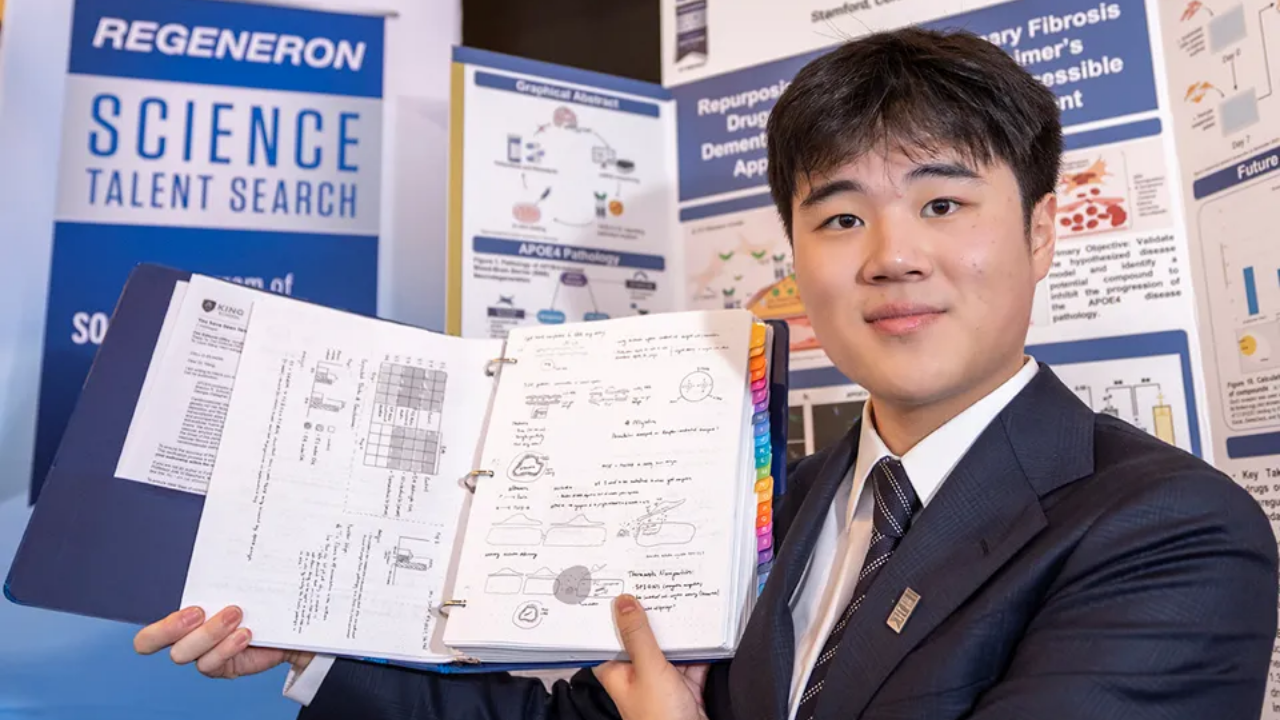
Every few months, tech and science media fall over themselves celebrating a wunderkind who has supposedly cracked the Alzheimer's code over a long weekend. The latest darling is a seventeen-year-old student named Leon Wang, whose high school research project pointed to two existing pulmonary fibrosis drugs, nintedanib and pirfenidone, as potential shields against Alzheimer's-linked cellular damage. The narrative writes itself: brilliant youth bypasses dusty university labs, targets the notorious APOE4 gene variant via the TGF-beta signaling pathway, and finds a shortcut using FDA-approved medications.
It makes for a heartwarming headline. It is also a masterclass in wishful thinking that fundamentally misunderstands the brutal realities of neuropharmacology. Also making waves lately: Why Federal Dietary Advice Keeps Missing the Mark on Real Food.
Let us dismantle the lazy consensus. The premise behind drug repurposing for neurodegeneration is seductive because it promises speed and thrift. Why spend twelve years and two billion dollars building a molecule from scratch when you can sweep up existing pharmacotherapy and point it at a new target? But biology does not care about your development timelines or venture capital savings.
The core argument rests on targeting transforming growth factor beta, or TGF-beta, in brain vascular cells. Carriers of the APOE4 allele experience elevated TGF-beta signaling, leading to blood-brain barrier degradation. Nintedanib and pirfenidone inhibit this pathway in lung tissue to halt fibrosis. Therefore, the logic goes, slap them into a culture of lab-grown human brain cells, watch the marker damage drop, and call it a breakthrough. More details on this are covered by Everyday Health.
Except petri dishes do not have a blood-brain barrier that actually functions.
I have watched pharmaceutical startups burn tens of millions of dollars pushing compounds that looked pristine in cellular models, only to watch them crash headfirst into the most unforgiving fortress in the human body: the cerebral endothelium. Nintedanib and pirfenidone are powerful multi-kinase and antifibrotic inhibitors engineered to alter tissue architecture in organs that lack the strict selective permeability of the central nervous system. Achieving a therapeutic concentration of these drugs in the hippocampal parenchyma without inducing systemic toxicity is an entirely different sport than reducing scar tissue in a lung biopsy.
When you systemic-dose potent anti-fibrotics like pirfenidone or nintedanib in human patients, you invite severe gastrointestinal distress, hepatic enzyme elevations, and skin photosensitivity. These are not benign vitamins you pop with breakfast. Translating a reduction of cellular damage in an in vitro monoculture to a living, breathing human brain riddled with complex neurovascular pathology requires clearing a pharmacokinetic hurdle that most repurposed compounds fail.
Furthermore, treating TGF-beta as a straightforward villain in the central nervous system is dangerously naive. TGF-beta is a pleiotropic cytokine. It plays a foundational role in tissue repair, neuroprotection, and immune regulation within the brain. Sledgehammering this pathway with potent pulmonary antifibrotics might damp down one specific stress response tied to APOE4, but you risk disrupting homeostatic signaling loops that neurons rely on to survive. Biology is an interconnected web, not a linear flowchart where you can pinch one wire and expect the bulb to burn brighter.
We need to stop treating drug repurposing as a magic bullet for complex neurological diseases. It is a triage strategy, nothing more. While it is true that clinical trial pipelines for Alzheimer's have historically been graveyards of failed amyloid-clearing antibodies, pretending that lung scars and neurodegeneration share a simple pharmacological shortcut ignores the staggering complexity of the human connectome.
If we want to conquer vascular-driven cognitive decline, we have to fund rigorous, expensive, ground-up neurovascular engineering designed specifically for the brain's unique microenvironment. Stop waiting for high school science fairs to hand you an easy way out of a crisis built on decades of reductionist biology.