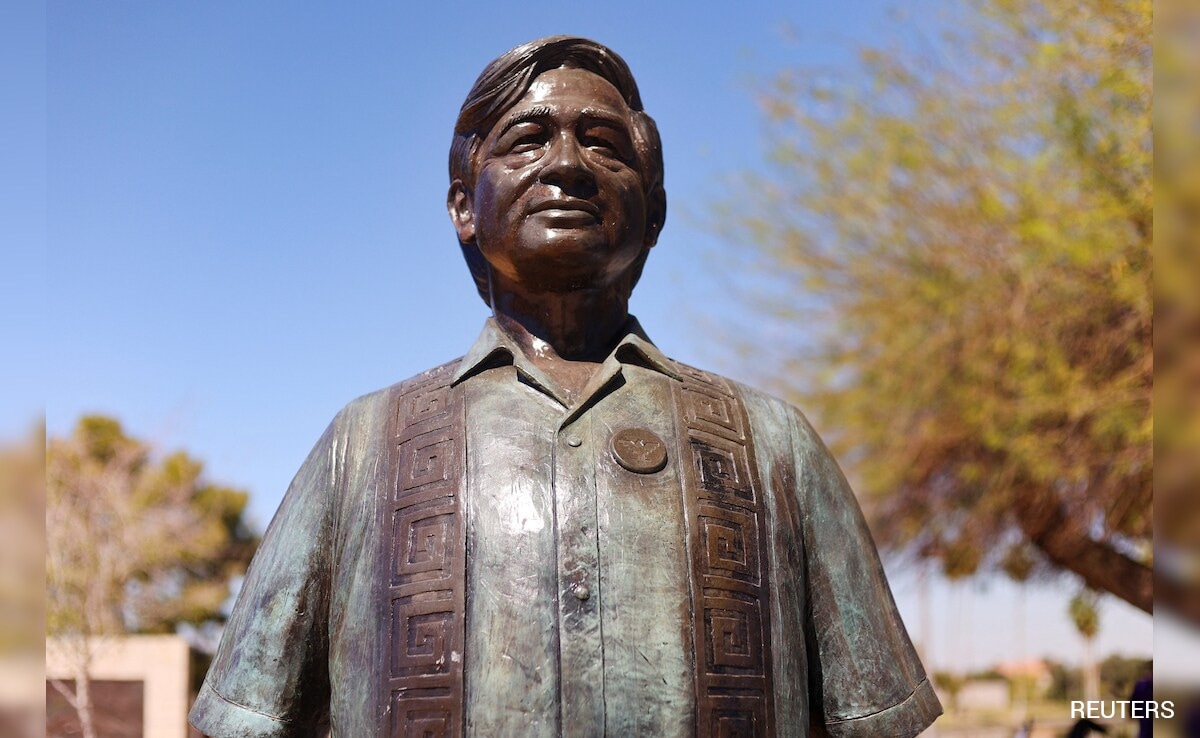
The moral police are at the gates again, clipboards in hand, ready to scrub the record. Recent calls to rename Cesar Chavez Day following allegations of misconduct are not just predictable; they are a symptom of a modern intellectual rot that demands our heroes be saints or non-existent. We have traded the grit of the picket line for the sterile comfort of a HR-approved history book.
If you think stripping a name off a calendar fixes the systemic issues Chavez fought against, you aren't paying attention. You’re just participating in a performative ritual of purification that does exactly zero for the people still picking your grapes.
The Myth of the Immaculate Activist
The competitor's narrative relies on a "lazy consensus" that says public honors are a reward for personal piety. They aren't. They are markers of historical impact.
Chavez was not a monk. He was a ruthless, often paranoid, and deeply flawed labor leader who dragged a marginalized workforce into the national consciousness. To expect him—or any mid-century organizer—to pass a 2026 vibe check is not just revisionist; it’s delusional. When we evaluate figures like Chavez, we aren't voting on their entry into heaven. We are acknowledging the tectonic shift they caused in the $788 billion American agricultural sector.
I’ve seen organizations spend six figures on rebranding campaigns to "align with modern values" while their actual workers are still fighting for basic heat illness prevention. Renaming a day is the ultimate corporate-style "pivot." It’s cheap. It’s easy. It changes nothing on the ground.
The Nuance the Moralists Missed
The rush to rename the holiday ignores the most uncomfortable truth about the United Farm Workers (UFW) era: the movement was built on a foundation of extreme pressure and ideological rigidity. Chavez didn't just fight growers; he fought his own board. He utilized "The Game"—a psychological confrontation tactic borrowed from the Synanon cult—to maintain control.
Is that "problematic"? Absolutely.
Does it negate the fact that before the 1966 Delano grape strike, farmworkers had virtually no legal right to bargain? No.
By hyper-focusing on his personal failings or the disturbing allegations now surfacing, the media ignores the structural reality of the labor movement. Power is never ceded voluntarily. It is taken by people who are often obsessed, difficult, and morally complex. When you sanitize the leader, you sanitize the struggle. You make it look like progress happened because everyone sat in a circle and shared their feelings, rather than through grueling, decade-long boycotts.
Dismantling the "People Also Ask" Illusions
Is it time to move past Cesar Chavez?
This is the wrong question. The question is: why are you so eager to trade a symbol of militant labor for a generic "Social Justice Day"? When you remove the name, you remove the specific history of the Chicano movement. You dissolve a concrete victory into an abstract, meaningless sentiment.
Does keeping the name condone the alleged behavior?
Only if you have the historical literacy of a goldfish. We celebrate the United States Constitution without endorsing the fact that its authors owned human beings. We study the tactical brilliance of historical figures without needing to invite them to dinner.
What is the "better" way to honor farmworkers?
Stop worrying about the name of the holiday and look at the Agricultural Labor Relations Act. Look at the fact that in 2026, farmworkers are still excluded from many of the federal protections guaranteed to office workers. If you want to "honor" the movement, fund the legal clinics. Don't just change the font on a government website.
The High Cost of Purity
The danger of this renaming craze is that it creates a "Standard of Perfection" that no human can meet. If we apply the same scrutiny to every figure in the labor, civil rights, or feminist movements, the calendar will be empty by December.
- Martin Luther King Jr. had documented infidelities.
- Margaret Sanger held eugenicist views that are abhorrent by today’s standards.
- Bayard Rustin was marginalized by his own peers.
When we demand that our icons be flawless, we ensure that no future leader will ever step up. Who would want to lead a movement knowing that a single human failing—or a series of them—will result in their entire life's work being tossed into the memory hole?
The Industry Insider’s Reality Check
I’ve spent years in the trenches of public policy and advocacy. I can tell you exactly how this goes. A "controversy" breaks. An institution panics. They form a committee. They spend months debating a name change. They hold a press conference. They feel good about themselves.
And the workers? They are still in the fields. They are still dealing with wage theft. They are still exposed to pesticides that the EPA is too slow to ban.
The renaming of Cesar Chavez Day is a gift to the status quo. It allows the powerful to pretend they are "doing something" while leaving the actual power dynamics of the industry completely untouched. It is a distraction tactic. It’s the "thoughts and prayers" of the progressive elite.
Stop Trying to Fix the Past (Fix the Present)
If the allegations against Chavez are true, they should be documented, taught, and integrated into the history of the UFW. We should teach the whole man—the brilliance and the brutality. That is how you build an educated citizenry.
But renaming the day doesn't educate; it erases. It suggests that if we can't find a perfect hero, we shouldn't have one at all. It’s a scorched-earth policy for cultural memory.
Instead of fighting over a name, use the day to organize. Use it to fund the UFW’s current efforts to protect workers from extreme heat. Use it to lobby for the Farmworkers Modernization Act.
The "lazy consensus" wants you to believe that progress is a line of falling statues and renamed streets. Real progress is the messy, uncomfortable, and often hypocritical work of moving the needle on human rights.
If you’re more offended by a name on a calendar than by the fact that the people who feed this country are often the most food-insecure, your priorities aren't "modern." They're just shallow.
Keep the name. Own the history. Do the work.
Leave the airbrushing to the amateurs.