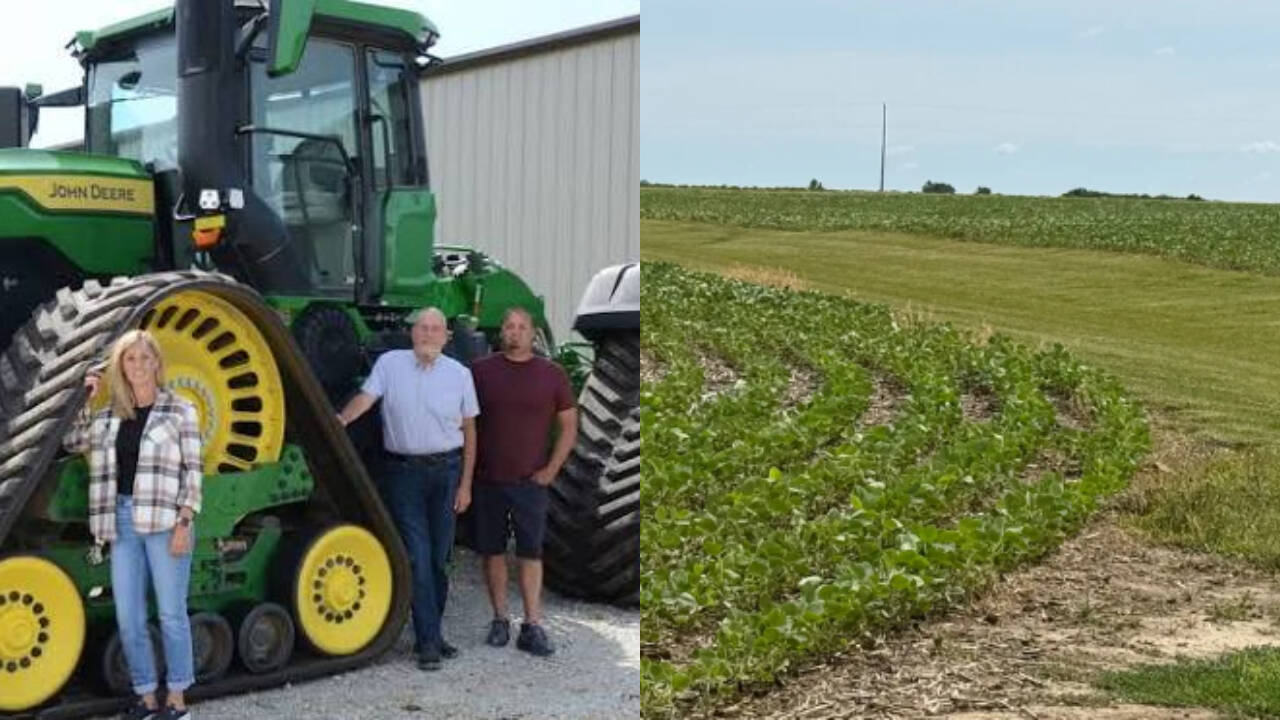
Dirt washes away. Profits follow.
Most people look at a washed-out gully on a hillside and see bad luck. They blame the weather. They blame a heavy spring downpour. They blame the regional climate shift. But looking at the problem that way misses the entire point of modern agriculture. Erosion isn't an act of God. It's a design flaw in how we treat the earth. If you liked this post, you should check out: this related article.
When you strip the biology out of topsoil, you are left with powder. Rain hits powder, and gravity takes over. You lose your most valuable asset by the truckload every single time it storms.
Yet, some operators look at heavily degraded land and see an opportunity. They don't abandon the dirt. They fix the biology. By transforming a battered, erosion-prone 700-acre plot into a sprawling 8,000-acre blueprint of profitability, forward-thinking growers prove that soil health and massive scale go hand in hand. For another look on this story, see the latest update from Forbes.
Let's talk about how that actually happens. Not in theory. Not in a glossy corporate sustainability brochure. In the muddy, high-stakes trenches of real farming.
The Real Cost of Soil Erosion
We have a cultural blind spot when it comes to topsoil. We treat it like an endless supply of cheap carpet. Wear it out, throw it away, move to the next room.
Except you can't just pack up and move your farm when the nutrients run dry.
Traditional intensive tillage destroys the living network beneath our feet. Every time a heavy disc cuts through the dirt, you oxidize organic matter. You release carbon into the atmosphere. Worse, you shatter fungal hyphae and earthworm channels. You create a hardpan layer just beneath the surface that water can't penetrate.
When a three-inch rain event hits compacted, bare soil, infiltration fails. Water pools, runs off, and takes thousands of tons of fertile topsoil down the creek. You are literally watching your equity wash away.
Fertilizer costs spike because crops can't access locked-up minerals. Yields stagnate despite heavier chemical applications. Farmers get stuck on a treadmill of buying more inputs to compensate for declining soil function. It's an expensive treadmill. And eventually, the motor burns out.
Breaking that cycle requires a total mental shift. You have to stop treating dirt like a passive chemical sponge and start treating it like a living ecosystem.
Rebuilding Soil Structure From Scratch
Restoring an eroded farm doesn't happen overnight. You can't just park the tractor and hope for the best.
The first step is armor. Bare dirt is dead dirt. If sunlight hits exposed earth, moisture evaporates rapidly and soil temperatures spike, killing beneficial microbes. Successful operators cover every square inch of their fields year-round. If a cash crop isn't growing, a cover crop is.
Cereal rye, crimson clover, radishes, and hairy vetch become your new workforce. These plants do heavy lifting. Their roots drill deep channels into compacted subsoil, opening pathways for air and water. When those roots die, they leave behind carbon and organic channels that sponge up moisture during heavy rains.
You also have to quit the tillage habit cold turkey.
Cold turkey is painful. The first two or three years of no-till farming on severely degraded land can look messy. Weed pressure might test your patience. Neighbors might shake their heads over the fence. The soil hasn't yet established the microbial army needed to regulate weed growth and cycle nutrients naturally.
You need grit. You need to trust the biology. Once earthworms return in the millions and mycorrhizal fungi weave the soil particles into stable aggregates, the system locks into place. Rain sinks in like a giant sponge instead of tearing furrows through your fields.
The Economics of Minimum Tillage
Let's address the elephant in the room. Farming is a business. If a practice doesn't improve the bottom line, it's just an expensive hobby.
Too many people assume regenerative agriculture means taking a massive hit on yield and revenue. The data says otherwise. When you scale from a modest acreage to thousands of acres, efficiency dictates survival.
Think about the input bill on a conventional operation. You pay for diesel to pull heavy tillage equipment across every acre multiple times a year. You pay for synthetic nitrogen, phosphorus, and potassium because your native soil can no longer feed the crop. You pay for insecticides and fungicides because plants grown in sterile dirt lack natural immunity.
Cut out tillage, and your fuel consumption drops dramatically. You burn far fewer gallons of diesel per acre. Equipment wear and tear plummets. Tractors last longer. Repairs happen less often.
Introduce a diverse mix of cover crops, and you start fixing your own nitrogen. Soil microbes solubilize phosphorus that has sat trapped in the mineral matrix for decades. Your reliance on purchased synthetic inputs drops significantly.
Lower input costs combined with stable or rising yields equal wider profit margins. Wider profit margins give you the cash flow needed to acquire neighboring land. That is how a 700-acre farm grows into an 8,000-acre enterprise. You don't scale by losing money faster on more acres. You scale by proving your model works, generating strong free cash flow, and reinvesting when opportunities arise.
Scaling From Seven Hundred to Eight Thousand Acres Growth Blueprint
Growing a farming operation by more than ten times requires ruthless operational discipline. You cannot manage 8,000 acres the same way you manage 700 acres.
At 700 acres, you can fix equipment breakdowns in the shop yourself, scout every field on foot, and keep all the operational details in your head. At 8,000 acres, chaos swallows you alive if you don't build systems.
Successful large-scale operators treat soil management as a standardized protocol. Every field gets mapped for fertility zones, organic matter levels, and moisture retention capacity. Decisions are driven by hard data rather than generational habit.
When you expand by acquiring distressed or eroded neighboring farms—land that other operators considered tapped out—you apply the established playbook immediately. You implement no-till drilling. You seed multi-species cover crops right after harvest. You monitor soil respiration rates and microbial activity.
Sellers are often eager to unload degraded land at a discount because they believe it has lost its productive capacity. To a skilled regenerative farmer, that discounted land is raw potential. Within three to five growing seasons, disciplined soil building turns neglected ground into high-yielding real estate.
That is the hidden engine of agricultural expansion. You buy land cheap because others misjudge its value, and you restore its productive capacity using biological principles.
Managing Financial Risk in Modern Agriculture
Farming is one of the most volatile businesses on earth. Weather extremes, commodity price swings, and unpredictable supply chains can crush an operation in a single season.
When you scale rapidly, your financial exposure multiplies. Carrying debt on 8,000 acres demands careful risk management.
Traditional intensive farming leaves little room for error. If input costs spike and crop prices drop simultaneously, highly indebted conventional farmers face severe cash crunches. They spent top dollar on fertilizers and chemicals, but weather or market conditions ruined the harvest.
Regenerative systems offer a vital financial buffer. Because your input costs are lower, your break-even price per bushel drops. If commodity prices take a hit, you don't bleed cash as fast as a neighbor who dumped massive amounts of expensive synthetic inputs onto the ground.
Diversification also plays a major role. Incorporating livestock into the cropping system—grazing cattle on cover crops during the off-season—creates a secondary revenue stream. The livestock trample residue, leaving behind natural manure that supercharges soil biology without costing a dime in bagged fertilizer.
Risk management isn't just about crop insurance. It is about building biological and financial resilience into the very foundation of your business.
Practical Steps for Land Recovery
If you are looking at tired, washed-out soil and wondering where to begin your own turnaround, theory won't save you. You need a practical sequence of actions.
Start small. Don't flip your entire operation overnight if you lack experience with no-till and cover crops. Pick one or two fields that struggle with water retention or low organic matter. Treat them as your learning laboratory.
Stop turning the dirt. Park the chisel plow. Invest in a reliable no-till drill that can place seed accurately through high residue without disturbing the soil structure.
Plant a diverse cover crop mix immediately after your primary harvest. Include grasses for root mass, legumes for nitrogen fixation, and brassicas for deep taproots. Do not rely on a single species. Diversity in the seed mix drives diversity in the soil microbiology.
Track your metrics. Measure soil organic matter percentages annually. Monitor water infiltration rates after heavy storms. Keep detailed records of your fuel and input expenses per acre compared to previous years. The numbers will tell you if your strategy is working.
Expand your footprint only after you have mastered the system on your initial acres. Build your reputation as a steward of the land. Landowners looking to lease or sell their acreage want to know their property will be cared for, not mined for short-term gains.
When you prove you can heal the earth while building a profitable business, doors open. Neighbors approach you. Land becomes available.
The dirt beneath your feet is either an appreciating asset or a depreciating liability. The choice is yours.