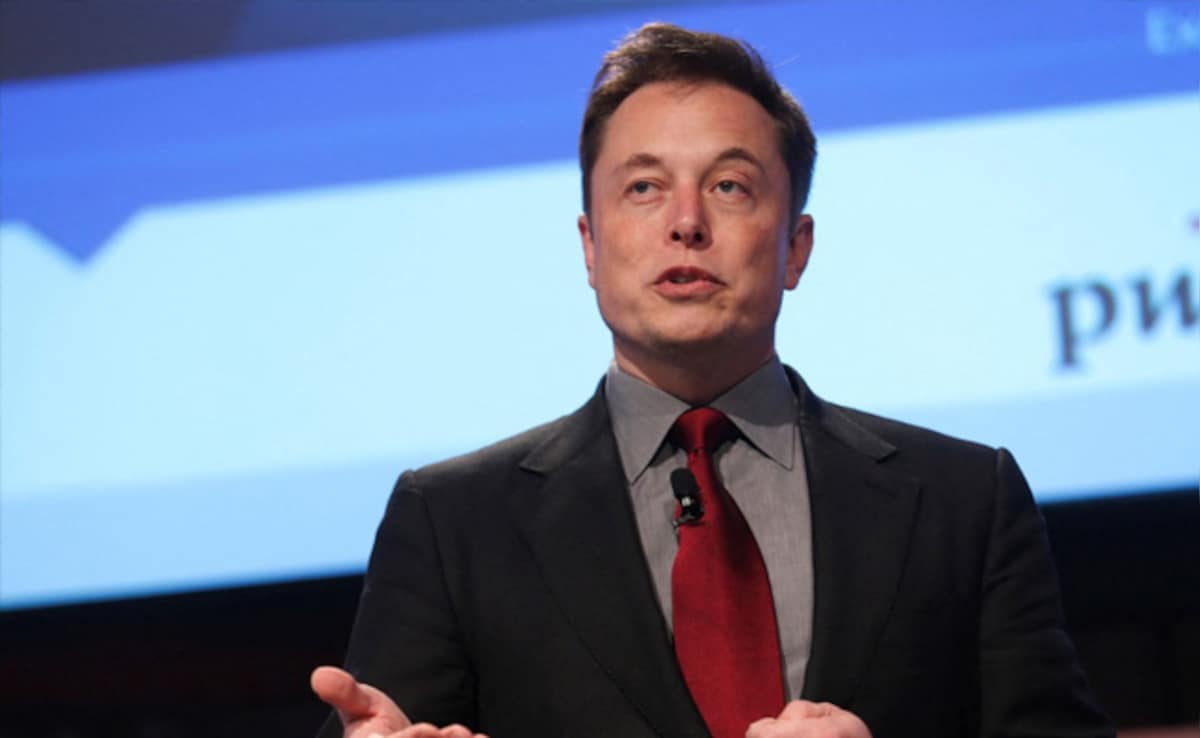
Walk through the gleaming corridors of a tech incubator in Shenzhen or a high-end coffee shop in Beijing’s Haidian District, and you will hear a name whispered with the kind of reverence usually reserved for historical revolutionaries. It isn't a local Party official or a traditional manufacturing tycoon. It is a man from Pretoria who builds rockets in Texas and electric sedans in Shanghai.
Elon Musk.
To the Western eye, Musk is a polarizing lightning rod—a billionaire whose tweets move markets and whose antics invite lawsuits. But across the Pacific, he occupies a space that is far more complex, shifting between the roles of a digital deity, a pragmatic partner, and a cautionary tale of Western hubris. To understand what China thinks of Musk is to understand the modern Chinese soul: a frantic, high-stakes tug-of-war between the desire for unbridled innovation and the absolute necessity of social stability.
The Iron Man of the East
For a generation of young Chinese engineers, Musk isn't just a CEO. He is Gui Gu Tie Xia Xia—the Silicon Valley Iron Man.
Consider a hypothetical twenty-four-year-old developer named Zhang. Zhang works "996"—9:00 AM to 9:00 PM, six days a week. He lives in a tiny apartment, eats takeout from a plastic container, and dreams of a China that leads the world not just in making things, but in inventing them. To Zhang, Musk represents the ultimate "first principles" thinker. While Chinese tech giants like Alibaba and Tencent spent years perfecting food delivery algorithms and gaming micro-transactions, Musk was busy trying to colonize Mars.
Zhang sees Musk as the antithesis of the "involution" (neijuan) currently paralyzing Chinese youth. Involution is the feeling of running on a treadmill that keeps speeding up while you stay in the same place. Musk, with his rockets and brain chips, represents the exit ramp. He is proof that a single mind can still break the cycle.
This idol worship isn't accidental. The Chinese government facilitated it. When Tesla’s Giga Shanghai rose from a muddy field to a functioning factory in less than a year, it was hailed as a miracle of "China Speed." For a brief window, the interests of the lone-wolf billionaire and the centralized state were perfectly aligned. China needed a "catfish"—a predator introduced into a stagnant pond to force the local fish to swim faster. Tesla was that catfish, intended to terrify local EV makers like BYD and NIO into excellence.
It worked.
The Cracked Pedestal
But idols are dangerous. They have a habit of speaking when they should listen.
The first cracks in the Musk-China romance didn't come from a policy shift, but from a growing sense of nationalist anxiety. In 2021, news broke that Starlink satellites had nearly collided with the Chinese space station. Suddenly, the "Visionary" was rebranded in the state-linked press as a "Space Litterbug" or, more darkly, a tool of the U.S. military-industrial complex.
The human element of this shift is visceral. Imagine the owner of a Model 3 in Chengdu. A year ago, she felt like she was driving the future. Today, she finds herself barred from entering certain government compounds or military neighborhoods because of "security concerns" over Tesla’s cameras. The car hasn't changed. The software hasn't changed. But the air has.
The Chinese public is incredibly sensitive to the "flavor" of a brand. When Musk’s behavior on social media becomes too erratic—too "American" in its disregard for institutional hierarchy—it creates a cognitive dissonance. China values the result of Musk’s genius but remains deeply suspicious of the process that produces it. They want the golden egg; they are less sure about the goose that keeps honking at the farmer.
The Pragmatic Villain
There is a term in Chinese business circles: Ziyuan. It roughly translates to resources or connections, but it implies a deep, reciprocal debt. For a long time, the narrative was that Musk was "China’s friend." He praised the Chinese people’s work ethic. He danced on stage in Shanghai. He stayed silent on political issues that would have seen any other CEO dragged before a congressional hearing.
However, the "Villain" label began to emerge as Musk became the owner of X (formerly Twitter). In a country where information is a managed resource, a man who champions "absolute free speech" is a liability.
The stakes here are invisible but massive. If Musk uses his platform to amplify voices that the Beijing leadership finds distasteful, his "catfish" status in the EV market won't save him. We are witnessing a slow-motion collision between two different definitions of power. One is the power of the individual to disrupt; the other is the power of the collective to preserve.
The Ghost in the Machine
Behind the headlines of trade wars and factory outputs lies a deeper, more human fear. Many in China look at Musk’s obsession with Artificial Intelligence and Neuralink and see a future that looks more like a dystopian sci-fi novel than a socialist utopia.
There is a growing debate on Chinese social media platforms like Weibo and Zhihu about whether Musk is actually "pro-human." While he claims to be saving the species, his critics in China point to his labor practices and his cold, data-driven worldview. They see a man who views humans as "legacy code" that needs to be upgraded or replaced.
In a culture that deeply values ancestral roots and the continuity of the family line, Musk’s vision of a multi-planetary, digitized humanity can feel alienating. He is an icon of progress, yes, but progress toward what?
The Silent Partnership
Despite the friction, the divorce hasn't happened. It can't.
China needs Tesla’s supply chain. Musk needs China’s market and manufacturing might. It is a marriage of convenience where both parties are sleeping with a knife under the pillow.
The average Chinese consumer is caught in the middle. They still buy Teslas in record numbers, not necessarily because they love Musk, but because the product is still the benchmark. Yet, they do so with a newfound cynicism. They know that the "Silicon Idol" could be toppled tomorrow if the political winds shift.
They have seen it happen to their own heroes. Jack Ma, the flamboyant founder of Alibaba, was once the "Musk of China." Then, he disappeared from public life for months after a single "unharmonious" speech. If the state can muzzle its own billionaires, what hope does an outsider have?
Musk knows this. His silence on certain topics is his loudest message. It is the sound of a man who understands that in the East, the "Visionary" is only allowed to exist as long as his vision doesn't blur the lines of the state’s blueprint.
The story of Musk in China isn't about cars or rockets. It is a mirror. When China looks at Musk, it sees its own reflection—its vaulting ambition, its terrifying speed, and its deep-seated fear that the very technology meant to liberate us might eventually be our undoing.
The light from the Shanghai factory floor burns late into the night, casting long, distorted shadows across the Pacific, where a man dreams of Mars while standing on a foundation made of Chinese steel and state permission.