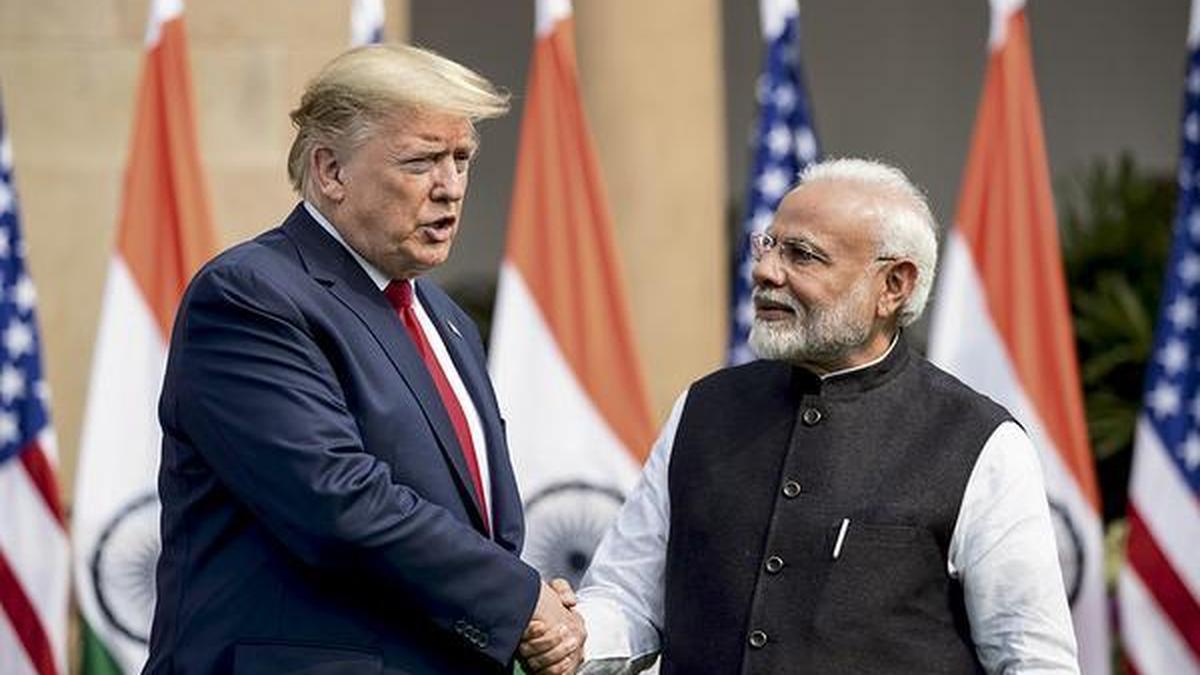
The air in the Oval Office usually carries a specific weight, a mixture of floor wax, old paper, and the static electricity of history. But when the phone rings and the voice on the other end belongs to Narendra Modi, the atmosphere shifts. This isn't just another diplomatic box to check. It isn't a dry exchange of trade data or a rehearsed script about regional stability. It is a collision of two of the most gravitational personalities on the planet.
Donald Trump hung up the phone and didn't reach for a briefing memo. He reached for the world's attention. He called the conversation "very good." In the language of high-stakes negotiation, those two words are a code. They signal a rare alignment of egos and interests that most world leaders spend decades trying—and failing—to manufacture.
The Chemistry of the Strongman
Diplomacy is often described as a game of chess, but between Trump and Modi, it feels more like a stadium rock concert. Think back to the "Howdy, Modi!" rally in Houston or the "Namaste Trump" event in Ahmedabad. Tens of thousands of people screaming, the heat of the sun, the roar of the crowd. Most leaders hide behind mahogany desks. These two prefer the spotlight.
This personal bond is the invisible engine driving the machinery of two superpowers. When Trump speaks of his "friend Modi," he isn't using the polite parlance of a State Department press release. He is describing a shared frequency. Both men rose to power by positioning themselves as outsiders fighting for a forgotten middle class. Both have mastered the art of the populist spectacle. When they talk, they aren't just discussing tariffs or visas; they are validating each other’s worldview.
Consider a hypothetical shop owner in Ohio and a software engineer in Bengaluru. On the surface, their lives share no common ground. But the conversation between their leaders dictates whether the shop owner’s goods become cheaper to export or if the engineer’s visa remains a valid ticket to the American Dream. The "good conversation" Trump referenced is the bridge between these two lives.
The Silicon and Steel Connection
Beyond the smiles and the firm handshakes lies a hard, metallic reality. India is no longer just a "developing nation" in the eyes of Washington. It is the essential counterbalance.
For the American side, the math is simple. The United States needs a massive, democratic partner in Asia to offset the rising influence of other powers. India, with its exploding tech sector and its strategic position on the Indian Ocean, is the only candidate that fits the bill. But this isn't a one-way street. Modi needs American investment to fuel his "Make in India" initiative, a massive project aimed at turning the country into a global manufacturing hub.
The dialogue between these two men often circles back to a few core tensions:
- Trade Barriers: Trump has long criticized India’s high tariffs on American products, famously citing Harley-Davidson motorcycles.
- Defense Contracts: India is pivotally shifting away from its historical reliance on Russian hardware, looking instead toward American predator drones and jet engines.
- Energy: The flow of American liquified natural gas to Indian ports is a quiet but massive part of the relationship.
When Trump describes a call as "very good," it usually means some friction in these areas has been smoothed over. It means the "Art of the Deal" has met the "New India," and both sides found a way to win.
The Ghost at the Table
You cannot talk about Trump and Modi without acknowledging the third chair at the table—the one occupied by the shadow of China.
Every word spoken in their recent exchange was echoed in the hallways of Beijing. For Trump, India is the ultimate leverage. For Modi, the U.S. is the ultimate security blanket. This isn't just about friendship; it is about survival. The Himalayan borders are cold, steep, and dangerous. The South China Sea is a powder keg. In this context, a "very good conversation" is a message to the rest of the world that the Indo-Pacific remains an American-Indian theater of influence.
Imagine the tension of a border patrol unit in the high altitudes of Ladakh. To them, the geopolitical posturing in D.C. isn't abstract. It is the difference between having the latest surveillance technology or standing alone in the snow. The warmth between the two leaders provides the political cover necessary for deep military intelligence sharing that would have been unthinkable twenty years ago.
The Human Cost of the Handshake
It is easy to get lost in the "Great Man" theory of history, believing that the world moves only when giants speak. But the ripples of a phone call between Trump and Modi eventually wash up on very small shores.
A "very good" talk can mean a sudden shift in H-1B visa processing, leaving thousands of Indian families in suburban New Jersey in a state of flux. It can mean a new factory in South Carolina that exists only because of an Indian conglomerate’s investment. It is a high-wire act. Trump’s "America First" and Modi’s "Self-Reliant India" are two ships sailing in the same direction, but they are constantly at risk of colliding.
The brilliance of their rapport is that they have managed to make these two nationalist ideologies feel complementary rather than contradictory. They have traded the language of globalism for the language of mutual respect between titans.
The Unwritten Future
The phone goes silent. The secret service agents resume their positions. The news cycle moves on to the next crisis. But the echoes of that "very good conversation" remain.
What we saw wasn't just a political update. It was a glimpse into a new world order where personal chemistry replaces institutional bureaucracy. Trump and Modi have realized that in an era of chaos, a direct line to a trusted peer is worth more than a thousand diplomatic cables.
They are two men who understand that power is not just about policy—it is about the story you tell. And right now, they are co-authoring a narrative that redrafts the map of the 21st century.
The sun sets over the Potomac while it rises over the Ganges. The distance between them is thousands of miles, but as long as that red phone keeps ringing, the world feels a little smaller, and the stakes feel much, much higher.
The dial tone fades, leaving only the heavy silence of a world waiting to see what happens when the two most powerful voices in democracy decide they are, finally, on the same page.