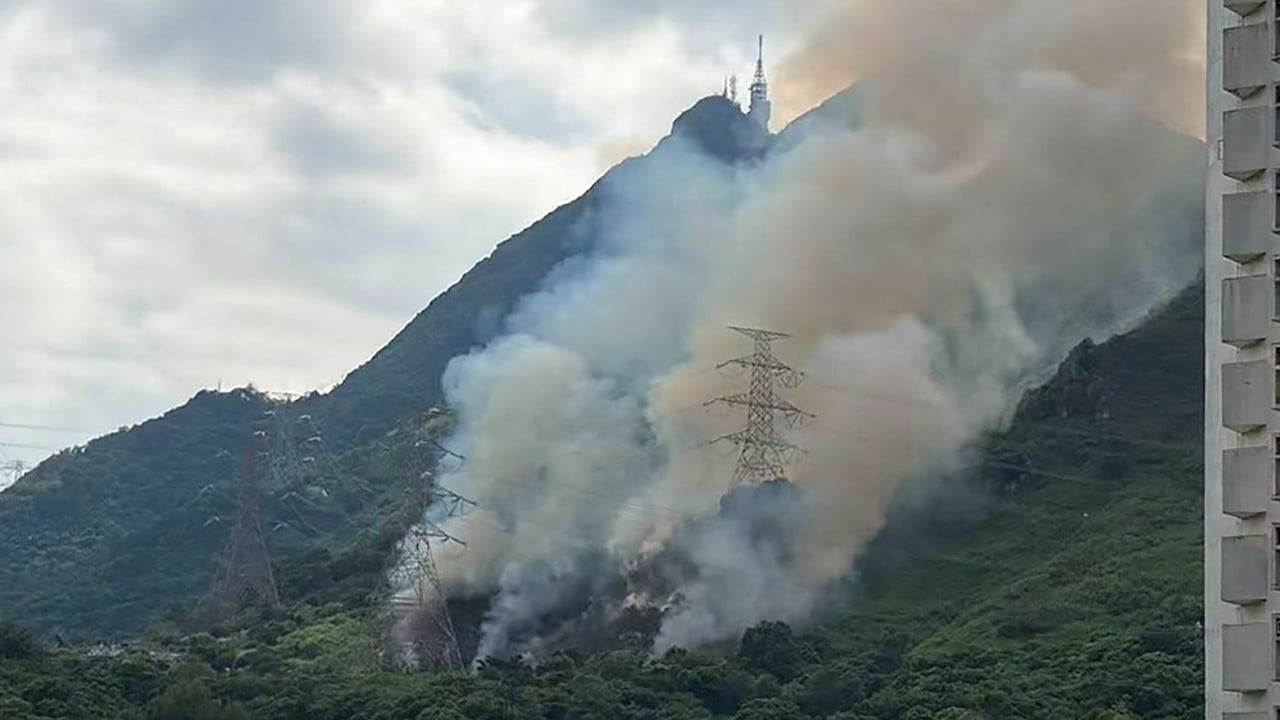
Smoke curling over the ridges above Tuen Mun isn't a rare sight during Hong Kong's dry autumn and winter months, yet every single blaze near residential estates sparks the exact same panic. You see the orange glow creeping down the scrubland toward high-rise towers, and the immediate assumption is that apartments are about to catch fire. They usually don't.
When firefighters battle a hill fire near a residential area in Tuen Mun, the real danger isn't flames jumping straight onto concrete balconies. It's the thick, suffocating smoke pouring into ventilation shafts, the chaotic bottlenecking of emergency vehicles on narrow estate access roads, and the bone-dry monsoon winds that turn a minor brush fire into a multi-ridge headache within minutes.
Why Tuen Mun Slopes Catch Fire So Easily
If you've ever hiked up Castle Peak, Tai Lam, or the ridges bordering Siu Hong and Fu Tei, you know the terrain. Steep. Covered in dense, tangled scrub grass. Packed with dry bamboo and withered ferns once the northeast monsoon kicks in around October.
Unlike dense tropical forests that hold moisture, Hong Kong's hillsides are largely secondary grassland and shrubland. Decades of historical deforestation and repeated seasonal burning have left slopes dominated by fast-burning grasses like Miscanthus (silvergrass). When humidity drops below 40 percent—a routine occurrence when the Hong Kong Observatory hoists the Red Fire Danger Warning—that vegetation turns into literal kindling.
Tuen Mun sits right in the crosshairs of this geography. Residential developments here are built directly into the foothills. Estates like Shan King, Leung King, Po Tin, and private housing clusters along Castle Peak Road sit mere meters away from country park boundaries and unmanaged hillside slopes. There's almost no flat buffer zone. A fire starting near a grave site or an illegal hillside trail doesn't have to travel far before it's looming directly behind someone's kitchen window.
How the Fire Services Department Actually Fights Hillside Blazes
Most people picture fire trucks pulling up to a hydrant and spraying water onto burning trees. On a Tuen Mun hillside, that's basically impossible. Fire engines can't drive up 45-degree slopes, and there aren't pressurized hydrants sitting halfway up Castle Peak.
Instead, the Hong Kong Fire Services Department (FSD) relies on brutal physical labor and specialized tactics that look very different from urban firefighting:
- Fire beaters and backpack pumps: Firefighters hike up steep, rocky trails carrying heavy water bladders on their backs and long-handled rubber fire beaters. They physically smother the advancing fire line along the flanks before it widens.
- Firebreaks and back-burning: Rather than chasing the head of a fast-moving fire uphill—which is suicidal because heat rises and pre-heats the grass above—crews cut vegetation lines ahead of the blaze to starve it of fuel.
- Government Flying Service (GFS) water bombing: When terrain is too sheer or the fire line stretches across multiple ridges, GFS helicopters (typically Airbus H175s) run continuous loops. They dip Bambi Buckets into nearby reservoirs like Tai Lam Chung Reservoir or the waters off Castle Peak Bay, dumping tons of water directly onto hot spots.
It's slow, exhausting work. A hill fire that looks small from the Tuen Mun Highway can easily keep crews pinned down overnight because underground roots and peat smolder long after visible flames die out. One gust of wind at 3 AM, and the whole slope flares up again.
The Real Risks to Nearby Residents
Let's be clear about what actually threatens people living near these fires. Modern Hong Kong residential towers are built of reinforced concrete. A brush fire burning 50 meters away isn't going to burn down a 30-story housing block.
The actual hazards are much sneakier.
First, smoke inhalation. Warm smoke rises, hits cooler air layers, and gets pushed sideways by valley winds straight into open windows and air conditioner intakes. Elderly residents and anyone with asthma or COPD bear the brunt of this almost immediately.
Second, falling embers. Burning leaves and twigs get lofted high into the thermal column and drift onto podium roofs, parked cars, or balconies cluttered with cardboard boxes, laundry, and plastic storage bins. That's how a hill fire turns into a structural fire—not from the main wall of flame, but from a single glowing ember landing on a pile of junk on a third-floor terrace.
Third, traffic gridlock. Whenever a major hill fire breaks out near Tuen Mun's residential zones, curious onlookers slow down on main roads, and poorly parked vehicles on estate perimeter roads can delay heavy FSD appliances from reaching staging areas.
What Most People Get Wrong About These Fires
There's a persistent myth that spontaneous combustion from glass bottles or intense sunlight causes most of Hong Kong's hill fires. The data says otherwise. According to the Agriculture, Fisheries and Conservation Department (AFCD), virtually all hill fires in Hong Kong are caused by human negligence.
Discarded cigarette butts along morning-walker trails. Unattended joss paper and incense during Chung Yeung and Ching Ming festivals. Illegal barbecues or campers clearing brush. Tuen Mun has dozens of hillside grave clusters and informal hiking paths woven right behind residential estates, which explains why incidents spike predictably during dry weekends and public holidays.
Another misconception is that rain instantly solves the problem. A light drizzle only wets the top layer of grass. Beneath that canopy, dead brush stays bone dry, and winds quickly evaporate surface moisture. Until Hong Kong gets sustained, soaking rainfall, the fire risk stays critical.
What You Should Do When Smoke Hits Your Estate
If you live in Tuen Mun—or anywhere bordering a Hong Kong country park—don't wait for an evacuation order that probably won't come. Take basic, immediate steps the moment you smell woodsmoke or see flames on the ridge behind your building:
- Shut every window and turn off exhaust fans. Kitchen and bathroom extractor fans create negative pressure inside your flat, actively sucking smoky outside air through window seals and door gaps.
- Switch air conditioners to recirculation mode. If your split-type AC doesn't draw outside air, you're fine. If you have a window unit, close the fresh-air vent immediately so it doesn't pump smoke into your bedroom.
- Clear your balcony and podium ledges. Bring in drying laundry, cardboard boxes, and anything flammable. If embers are drifting down, hose down exposed balcony surfaces if it's safe to do so.
- Stay off the trails and keep access roads clear. Never hike up to take photos or videos of the fire line. You'll block narrow paths needed by FSD crews carrying heavy gear, and shifting winds can trap you in a ravine in seconds.
- Check on vulnerable neighbors. Knock on the doors of elderly residents living alone on your floor to make sure their windows are closed and they aren't struggling with the air quality.
Keep a damp towel handy to seal bottom door gaps if smoke gets thick in the corridor, monitor official updates from the Fire Services Department and the Hong Kong Observatory, and let the crews on the hillside do their job without interference.