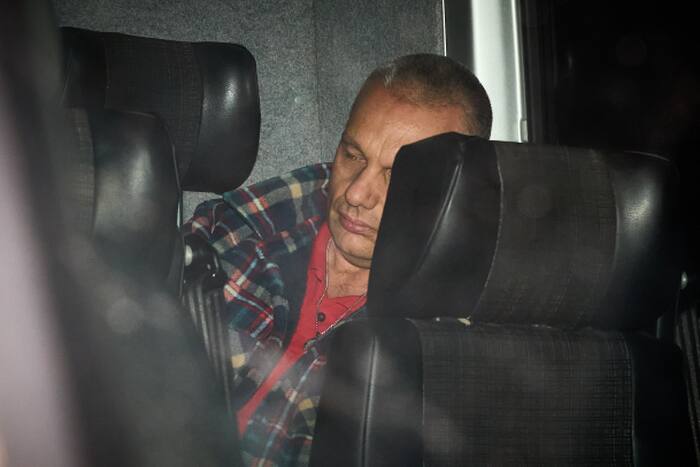
When Hungarian authorities detained Viktor Orbán's younger brother on November 9, 2026, most international headlines boiled the story down to a single sensational phrase—suspected human trafficking. That surface-level framing misses what actually makes this case so explosive in Budapest.
Áron Orbán wasn't picked up in a standard border patrol sweep. Counterterrorism officers raided four locations across Budapest, Fót, and Dunakeszi as part of a coordinated investigation by Hungary's National Bureau of Investigation (KR NNI) and the National Asset Recovery Office (NVVH). The case sits right at the intersection of alleged organized people-smuggling, influence peddling, a leaked audio recording from 2025, and a seismic political shift following Péter Magyar's rise to the prime minister's office. For another view, see: this related article.
If you only read the wire summaries, you get the arrest without the machinery behind it. Let's break down what investigators are actually alleging, how a visa facilitation network allegedly operated, and why Viktor Orbán immediately called the detention a political witch hunt.
The November 9 Raids and the Core Allegations
Police moved in early on Monday, November 9, 2026. Searches hit properties in Budapest and surrounding Pest County, including a site in Fótliget tied to a business connected to Áron Orbán. Authorities took four suspects into custody—Áron Orbán and three others—before escorting them to a pretrial detention facility in Budapest later that evening. Related reporting on the subject has been provided by NPR.
Hungarian police initially kept official statements tight, confirming searches and arrests in a human trafficking probe without immediately publishing full suspect rosters. Prime Minister Péter Magyar broke the political silence on Facebook, stating that press reports indicated Áron Orbán had been taken into custody on suspicion of human trafficking.
Look closer at the legal terminology here. In Hungarian criminal law and regional reporting, the offense translates across English outlets as both "human trafficking" and "organized people smuggling". They aren't identical concepts in everyday speech, and the distinction matters if you want to understand what prosecutors are building.
- People smuggling centers on facilitating illegal entry or irregular border transit for financial or material gain, often exploiting visa channels or transit loopholes.
- Influence peddling—the second major pillar of this probe—involves allegedly trading on political connections to secure unlawful advantages from public officials or business actors.
- Visa fraud and labor recruitment abuses form the practical mechanism investigators are examining, specifically tied to moving foreign nationals into Hungary.
Prosecutors requested pretrial detention for all four suspects. Because Hungarian law leaves the final call on extended pretrial custody to a judge, the initial police detention marked just the opening round of a much longer courtroom fight.
How the Alleged Vietnamese Visa Network Worked
This investigation didn't materialize out of thin air in November 2026. Its roots go back to investigative journalism and a leaked audio recording that surfaced in 2025.
Hungarian independent outlets, including Telex, previously linked a company associated with Áron Orbán to an alleged visa facilitation scheme targeting foreign workers—specifically Vietnamese nationals. Hungary faced severe domestic labor shortages in recent years, prompting the previous government to expand guest-worker programs for non-EU nationals. Where guest-worker quotas and consular bottlenecks exist, middlemen almost always try to monetize access.
According to reporting on the leaked 2025 recording, Áron Orbán complained during a conversation that Hungarian consuls had blocked certain visa applications even after a partner company in Vietnam had approved them. Investigators also questioned a Budapest-based Vietnamese interpreter who had accompanied him to a business meeting.
Here is what the alleged pipeline looks like based on investigative reporting and police disclosures:
- Recruitment and Upfront Fees: Foreign nationals in Vietnam paid money after being promised help securing Hungarian work visas and local employment.
- Consular Bottlenecks: When standard consular vetting slowed or rejected applications, political proximity allegedly became a selling point to clear administrative hurdles.
- Continued Collection: Reporting by Telex indicated that a company tied to Áron Orbán continued receiving money from Vietnamese applicants as recently as February 2026, even after scrutiny around the scheme had already become public.
- Transit Through Hungary: Prosecutors are examining allegations involving the organized movement of more than 100 Vietnamese nationals through Hungary, alongside claims that one suspect sought an unlawful benefit from the head of a labor recruitment firm by invoking political connections.
Notice the dual track. On one side, you have vulnerable workers paying steep fees for visas and jobs that either didn't materialize or bypassed legal rules. On the other side, you have allegations that state diplomatic channels—specifically consular visa processing—were pressured or manipulated during Viktor Orbán's premiership. Earlier reporting by Telex even alleged that under former Foreign Minister Péter Szijjártó, Hungary's Ministry of Foreign Affairs had instructed consuls in Vietnam to fast-track visa processing for companies linked to Áron Orbán.
Why Viktor Orbán Claims He Is the Real Target
Hours after news of the detention broke, former Prime Minister Viktor Orbán took to X with a blistering response. He didn't parse legal statutes or offer technical defenses of his brother's business dealings. Instead, he framed the arrest as an attack on himself.
"What is happening in Hungary is not accountability," Orbán wrote. "It is a political witch hunt. Whenever the government finds itself in an embarrassing situation, it resorts to the tactics of the communist-era secret police. The aim of this dirty political game is to eliminate opponents and establish a one-party state. I am the real target. My younger brother is simply being used to get to me."
His party, Fidesz, doubled down immediately. On the same day, Fidesz added Áron Orbán to a list of "political prisoners" published on the party's official website.
You have to understand Hungary's 2026 political reality to see why both sides are swinging so hard. After years of Fidesz dominance, Péter Magyar's government took office promising sweeping anti-corruption reforms, asset recovery, and the dismantling of what critics called an entrenched oligarchic network. The European Union even moved to unlock billions in frozen funds following post-Orbán institutional reforms.
At the exact same time, political tensions in Budapest were boiling over on multiple fronts in early November 2026:
- Communist-era state security archives had just begun opening to the public on November 4, triggering fierce historical and political battles.
- Immunity battles in Parliament saw lawmakers voting to lift immunity for key figures, including PM Magyar and two Orbán-era ministers.
- High-profile corruption probes were already underway against other Orbán-era heavyweights, including former central bank figures.
So when Fidesz labels Áron Orbán a "political prisoner," they're speaking directly to their domestic base. They want voters to view the NVVH and post-Orbán prosecutors not as independent anti-graft bodies, but as partisan weapons timed to distract from government controversies.
Separating Political Spin From Legal Reality
When a former prime minister's brother gets arrested, everyone immediately picks a side based on who they voted for. That's a mistake if you actually want to predict what happens next. Both narratives—pure political persecution versus an open-and-shut conviction—have serious weak spots.
First, look at the timing and optics. Prime Minister Péter Magyar announced or amplified the news of his chief rival's brother's arrest on Facebook while police were still executing raids. Critics argue that a sitting prime minister commenting live on an active criminal investigation blurs the line between executive politics and independent law enforcement. Fidesz seized on that exact dynamic, comparing the new anti-corruption apparatus to historical secret police tactics.
Second, look at the evidentiary trail. This wasn't a case cooked up overnight in November 2026. Journalists had documented the Vietnamese visa complaints, the leaked audio recording, and the corporate ties back in 2025—while Viktor Orbán was still in power. Financial transactions and consular records leave paper trails that don't care which party holds a parliamentary majority. If prosecutors have bank transfers from Vietnamese applicants alongside audio of suspects discussing blocked visas and political favors, defense lawyers will have a tough time arguing the entire case was fabricated out of thin air.
Third, remember how presumption of innocence works in Central European white-collar and trafficking prosecutions. Being detained on suspicion of an offense is not a conviction. In Hungarian criminal procedure, police can hold suspects briefly before a judge rules on formal pretrial detention, which itself is an investigative measure—not a verdict on guilt.
What to Watch as the Investigation Unfolds
If you're following this story for its legal substance rather than partisan noise, skip the social media rhetoric and track four concrete developments over the coming weeks:
- The Pretrial Detention Ruling and Appeals: Watch whether the Budapest court upholds extended pretrial custody for Áron Orbán and the three co-defendants, or places them under house arrest with electronic monitoring. Judges in Hungary weigh flight risk and witness tampering heavily in influence-peddling cases.
- Former Foreign Ministry Officials: Pay close attention to whether KR NNI investigators summon former diplomats or officials from the Ministry of Foreign Affairs. If the probe expands from private recruiters to state consular staff in Hanoi or Ho Chi Minh City, the political fallout escalates dramatically.
- Asset Seizures by the NVVH: Because the National Asset Recovery Office is directly involved alongside police, look for court filings freezing company accounts or real estate in Pest County. Asset freezes tell you how much money prosecutors believe moved through the scheme.
- EU Rule-of-Law Assessments: Brussels is watching how Hungary handles high-profile corruption and trafficking cases post-transition. Any sign of procedural shortcuts by prosecutors—or political interference in the courts—could complicate Hungary's ongoing efforts to secure and retain unlocked EU cohesion funds.
Follow the court filings, the consular witness lists, and the asset-recovery orders—because in Budapest right now, the paper trail matters far more than the press releases.
You can watch a brief news report summarizing the initial arrest details in Viktor Orban's brother detained in people-smuggling case. This clip provides a quick visual overview of the initial police custody announcement in Hungary.