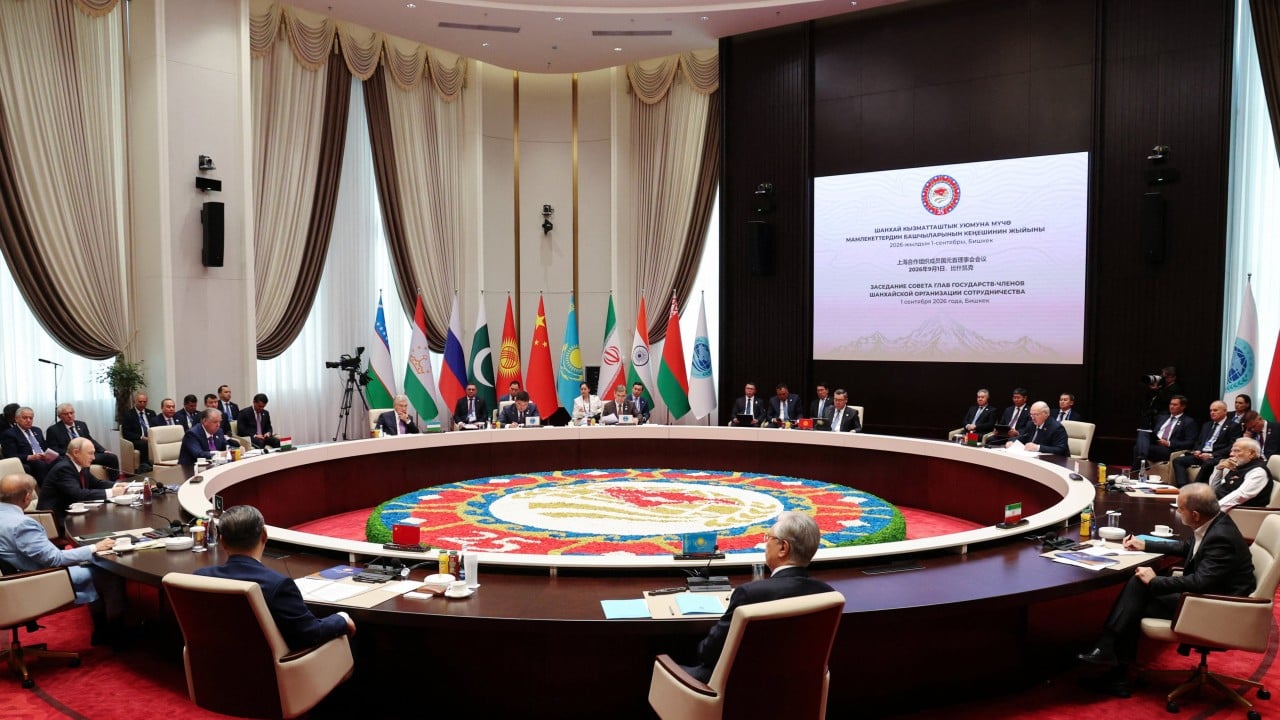
The traditional centers of Western geopolitical power are losing their grip on Southeast Asia. This is not a sudden development born of a single diplomatic crisis, but rather the cumulative result of a profound structural miscalculation by Washington and its European allies. For over a decade, Western capitals have approached the ten nations of the Association of Southeast Asian Nations with a rigid, binary worldview, demanding that these emerging economies choose a side in a grand ideological battle against Beijing. This strategy has backfired. Instead of isolating China, the West has managed to isolate itself from the fastest-growing economic corridor in the world, while ASEAN has quietly asserted control over its own strategic destiny.
The fundamental error lies in a total misreading of what regional capitals actually want. Western diplomats arrive in Jakarta, Bangkok, or Kuala Lumpur bearing checklists on governance, climate mandates, and security pacts designed to contain Chinese influence. Southeast Asian leaders, meanwhile, are looking for infrastructure financing, technology transfer, and open export markets to pull their populations into high-income status. When the West offers security alliances like AUKUS or the Quadrilateral Security Dialogue without matching them with serious economic engagement, it reveals a stark vulnerability. It shows a preference for military containment over mutual economic advancement. Learn more on a similar subject: this related article.
ASEAN has responded not by panicking, but by executing a masterclass in multi-vector diplomacy. The regional bloc refuses to be the stage for a new cold war. By maintaining a strict policy of neutrality and expanding its own web of trade networks, the association has transformed its apparent military weakness into a formidable diplomatic shield. The State of Southeast Asia survey highlights a profound shift in regional sentiment. For the first time, the bloc has surpassed the United States as the most trusted actor to uphold a stable, rules-based regional order.
The Flawed Logic of Western Minilateralism
Washington has grown increasingly fond of small, exclusive clubs. The creation of specialized security frameworks like the trilaterals between the United States, Japan, and the Philippines, or the defense partnership of AUKUS, reflects a growing Western impatience with broad, consensus-based institutions. Western policymakers view ASEAN as slow, indecisive, and hamstrung by its requirement for total unanimity among its members. They prefer smaller, targeted groupings that can deploy resources and military coordination quickly to counter Chinese maritime assertiveness. Additional analysis by Al Jazeera explores similar perspectives on the subject.
This impatience is a strategic blunder. By bypassing the central diplomatic architecture that Southeast Asia spent half a century building, Western initiatives inadvertently signal that local autonomy is secondary to American geopolitical priorities. It alienates middle powers like Indonesia and Malaysia, who view these exclusive military groupings as dangerous escalations that provoke Beijing rather than deter it.
Consider the contrasting approaches to regional integration. While the West builds exclusive security fences, China has integrated itself into the regional economic fabric through the Regional Comprehensive Economic Partnership and massive physical infrastructure investments. The United States walked away from the Trans-Pacific Partnership years ago and offered the Indo-Pacific Economic Framework as a substitute. Local trade officials widely view that framework as an empty shell because it lacks the one thing they desire most: increased access to the American consumer market.
Omni Enmeshment as a Survival Strategy
Southeast Asian diplomacy does not look for definitive victories. It looks for equilibrium. This approach is best understood through the concept of omni-enmeshment, a deliberate strategy where regional states draw all major global powers into their institutional orbit so that no single hegemon can dominate the geography.
The mechanism is simple but highly effective. By creating overlapping forums like the ASEAN Regional Forum and the East Asia Summit, the bloc forces rivals to sit at the same table. It dilutes the raw power of Washington and Beijing by forcing them to operate within a diplomatic framework managed by smaller states. This is not weakness disguised as process. It is a sophisticated survival mechanism practiced by nations that have historically been the battlegrounds for external empires.
The effectiveness of this strategy was on clear display during the high-level diplomatic engagements of recent months. Even as tensions rose in Eastern Europe and the Taiwan Strait, Southeast Asian leaders continued to engage across all geopolitical divides without receiving permission from the West. Vietnam provides a textbook example of this approach. Hanoi calls it bamboo diplomacy. It features a firm root system of national interest combined with flexible branches that bend with the geopolitical wind. Vietnam can sign a comprehensive strategic partnership with Washington while simultaneously upgrading its railway connections with China and welcoming top-level delegations from Moscow to secure its energy needs.
The Balance of Economic Reality
Economics always drives the diplomatic narrative. The West routinely underestimates the sheer scale of China's economic integration with the region, treating trade dependencies as structural flaws that can be erased through political rhetoric about friend-shoring. This ignores the physical reality of modern supply chains.
Southeast Asian nations are not passive economic dependencies. They have become the vital conduits for global manufacturing, absorbing factories and capital shifting out of the Chinese mainland to avoid Western tariffs. Malaysia has established itself as a critical node in global semiconductor packaging, while Indonesia has utilized its vast nickel reserves to become an indispensable player in the electric vehicle supply network. These countries are not looking to decouple from China. They are leveraging their unique positions to process Chinese inputs and export finished goods to Western markets.
+------------------+----------------------------------+----------------------------------+
| Diplomatic Metric| Western Approach                 | ASEAN Strategy                   |
+------------------+----------------------------------+----------------------------------+
| Alliance Structure| Exclusive, military-focused      | Inclusive, multi-vector forums   |
|                  | minilateralism (AUKUS, Quad).    | (East Asia Summit, ARF).         |
+------------------+----------------------------------+----------------------------------+
| Primary Leverage | Security guarantees, ideological | Trade agreements (RCEP), digital |
|                  | alignment demands.               | frameworks (DEFA), neutrality.   |
+------------------+----------------------------------+----------------------------------+
| Economic Focus   | Supply chain restriction,        | Deep regional integration,       |
|                  | infrastructure promises.         | supply chain diversification.    |
+------------------+----------------------------------+----------------------------------+
The data reflects a widening investment gap that Western initiatives have failed to bridge. The United States and its G7 partners introduced the Partnership for Global Infrastructure and Investment to offer an alternative to Beijing's capital. The initiative has struggled to move beyond press releases and mobilize the scale of private capital required for high-risk, long-term infrastructure projects in developing economies. China, by contrast, delivers tangible assets. Concrete highways, high-speed rail lines, and deep-water ports are visible symbols of commitment that resonate with local populations far more than abstract lectures on the international rules-based order.
Autonomy Over Alignment
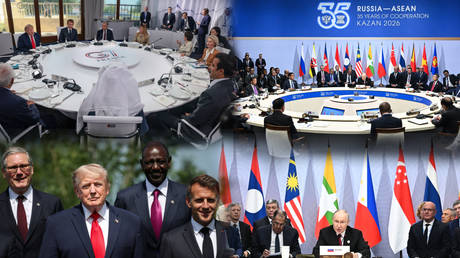
The collective defiance of Western pressure was demonstrated vividly at the Russia-ASEAN Summit held in Kazan. Despite years of intense Western efforts to diplomatically isolate Moscow and enforce sweeping economic sanctions, Southeast Asian leaders attended the summit at the highest levels. This included representatives from nations that maintain deep security ties with the United States, such as the Philippines and Singapore.
Their presence was not an endorsement of Russian foreign policy. It was a declaration of strategic autonomy. By finalizing the Comprehensive Plan of Action for the latter half of the decade and advancing agreements on civil nuclear energy and digital trade, ASEAN made it clear that its diplomatic calendar is not subject to Western veto. The region views unilateral sanctions as external disruptions that threaten its own economic stability and food security.
This commitment to independence is also reshaping internal dynamics. Malaysia and Indonesia are increasingly setting the regional agenda through their growing influence in international networks, expanding their foreign policy footprints into the Middle East and the broader Global South. They are driving the acceleration of the ASEAN Digital Economy Framework Agreement, which aims to create an integrated, cross-border digital market across the region. They are doing this on their own terms, establishing domestic data governance policies that reject both the total state control of Beijing and the corporate-dominated models of Silicon Valley.
Structural Limitations and the Path Forward
The ASEAN model is far from perfect. It contains internal contradictions that frequently threaten its relevance. The bloc’s reliance on absolute consensus means it struggles to respond decisively to acute crises within its own borders, such as the protracted civil conflict in Myanmar or escalating maritime confrontations in the South China Sea. Individual member states hold vastly different geopolitical leanings, with Cambodia and Laos heavily dependent on Chinese financial backing, while Manila increasingly leans on its mutual defense treaty with Washington to resist maritime pressure.
These internal fractures are real. Yet, the West misinterprets these vulnerabilities as signs of impending collapse or opportunities for polarization. Western strategists believe that by applying enough pressure, they can crack the bloc and force individual nations into formal anti-China coalitions.
This displays a fundamental ignorance of the regional consensus. Southeast Asian states recognize that their collective bargaining power disappears the moment ASEAN unity fractures. If the bloc splits into competing pro-Western and pro-Chinese factions, individual members will be reduced to mere client states, losing their agency entirely. Preserving the institutional core of the association is an act of national self-preservation for every leader in the region, regardless of their specific geopolitical alignment.
The West must abandon its lecturing tone and its insistence on binary choices if it wishes to stop its diplomatic decline in this critical region. Southeast Asia cannot be bought with vague economic frameworks that offer no market access, nor can it be intimidated by security pacts that ignore local economic realities. The region has outgrown the paternalistic frameworks of the post-Cold War era. It is building a multipolar order where the ability to talk to everyone is the ultimate form of power, and those who demand exclusion are simply left out of the conversation.