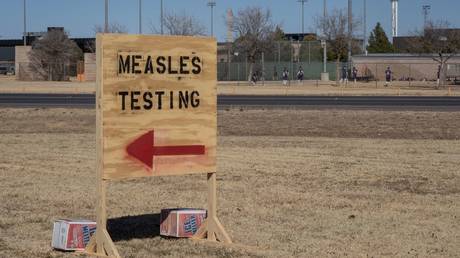
The United States has officially lost its measles elimination status after 26 years, a designation held continuously since 2000. Under World Health Organization criteria, a country forfeits this status when a single endemic strain of the virus circulates uninterrupted within its borders for more than 12 months. The reversal is not the result of a sudden viral mutation or a failure of modern medicine, but rather a prolonged collapse in localized childhood vaccination rates combined with chronic underfunding of county-level public health infrastructure.
For more than two decades, public health officials treated domestic measles outbreaks as temporary brushfires—imported by international travelers and quickly extinguished by local contact tracers. That defensive perimeter no longer holds. Sustained transmission chains have taken root in under-immunized pockets across multiple states, proving that national averages can mask catastrophic local vulnerabilities.
What Losing Elimination Status Actually Means
The terminology surrounding infectious disease often creates unnecessary confusion. Elimination is not eradication. Smallpox is eradicated; the virus no longer exists in nature anywhere on earth. Measles was eliminated in the United States in 2000, meaning the country had successfully interrupted continuous, year-round domestic transmission.
Cases still occurred after 2000, of course. Every year, unvaccinated travelers returned from abroad carrying the virus. When they landed in communities with high immunity, the virus hit a biological dead end. A few secondary cases might emerge among household contacts, and then the chain of transmission snapped.
Losing elimination status signals that the chain no longer snaps. When a single genetic lineage of the measles virus spreads continuously for a full year inside the country, the virus has re-established endemic transmission. The United States now joins nations where measles is no longer an imported anomaly, but a permanent domestic threat circulating independently of international travel.
The Math of Herd Immunity Failure
To understand why measles returned before other vaccine-preventable diseases, you have to look at the epidemiology. Measles is one of the most contagious human pathogens ever identified.
Epidemiologists measure contagiousness using the basic reproduction number, or R0. While seasonal influenza typically carries an R0 between 1 and 2, and the original SARS-CoV-2 strain hovered around 2.5 to 3, measles boasts an R0 between 12 and 18. In a completely susceptible population, one infected person will pass the virus to up to 18 others.
Because the virus is airborne and lingers in a room for up to two hours after an infected person leaves, the margin for error is razor-thin. Achieving herd immunity against measles requires at least 95 percent of a population to be immune.
The MMR vaccine—which protects against measles, mumps, and rubella—is extraordinarily effective. Two doses provide roughly 97 percent protection against infection. Yet for years, national kindergarten vaccination rates have drifted downward, slipping from the 95 percent threshold down toward 92 and 93 percent.
A two- or three-percentage-point drop sounds minor on a national spreadsheet. In practice, vaccine hesitancy does not distribute itself evenly across the map. It clusters. When a school district, religious community, or rural county drops to 75 or 80 percent coverage, herd immunity vanishes entirely. Those communities become dry tinder waiting for a single spark from an international airport.
The Anatomy of a Modern Outbreak
Consider a hypothetical scenario that mirrors real epidemiological investigations conducted over the past decade. An unvaccinated traveler returns from a country experiencing a measles surge. During the four-day window before the characteristic rash appears—when the patient is already shedding massive amounts of virus—they visit a crowded urgent care clinic, a regional shopping center, and a local school event.
If that traveler lives in a county with 96 percent MMR coverage, health officials might trace 300 contacts, isolate a handful of exposed infants too young to be vaccinated, and close the investigation in three weeks.
If that same traveler lives in a county where non-medical vaccine exemptions have climbed to 12 percent, the containment playbook collapses. Dozens of susceptible children are exposed simultaneously. Parents who distrust public health authorities refuse to quarantine exposed siblings or decline to answer calls from contact tracers. Within six weeks, the outbreak jumps county lines, seeding secondary clusters in neighboring jurisdictions. Once multiple generation chains overlap, health departments lose the ability to link new cases back to an original source. At that point, the virus is officially out of control.
Beyond Vaccine Hesitancy The Quiet Collapse of Local Public Health
Blaming misinformation alone is a convenient narrative, but it ignores a massive structural failure. You cannot contain an outbreak with vaccines alone; you need boots on the ground.
Every single measles case requires an intensive, resource-draining public health response. Epidemiologists must interview patients to reconstruct their movements hour by hour, notify everyone who shared indoor air space with them, verify the immunization records of hundreds of contacts, and administer post-exposure prophylaxis—either the MMR vaccine within 72 hours or immunoglobulin within six days—to vulnerable individuals.
This work is done by city and county health departments, the exact agencies that have suffered decades of budget cuts and massive workforce attrition. Following the acute phase of the COVID-19 pandemic, thousands of experienced public health nurses, disease intervention specialists, and local health directors left the field, driven out by burnout, stagnant wages, and political hostility.
When emergency federal pandemic funds expired, local departments were forced to leave critical positions vacant. Containing a single measles outbreak can easily cost a local health agency tens of thousands of dollars in overtime and laboratory testing—money that simply does not exist in baseline municipal budgets. Without rapid contact tracing and aggressive post-exposure containment, small clusters inevitably metastasize into sustained, multi-month transmission chains.
The Policy Shift That Opened the Door
The erosion of immunization rates did not happen in a vacuum. Over the last several years, state legislatures across the country systematically weakened school entry immunization mandates.
Historically, all 50 states required proof of vaccination for children entering public schools, with strict exemptions reserved primarily for documented medical contraindications, such as severe allergies or compromised immune systems. While most states also allowed religious exemptions, the administrative friction required to obtain them kept rates low.
That friction has largely disappeared. Several states expanded philosophical or personal belief exemptions, while others streamlined the paperwork to the point where opting out requires less effort than scheduling a pediatrician visit. Simultaneously, state lawmakers stripped local health officers of their authority to exclude unvaccinated students from classrooms during active outbreaks—one of the most effective historical tools for halting school-based transmission.
Public health experts have long warned that convenience drives compliance. When vaccine mandates are robust and exemptions require genuine administrative effort, busy or mildly skeptical parents vaccinate their children on schedule. When opting out becomes a frictionless checkbox, exemption rates climb steadily year after year.
Why Measles Is Never Just a Childhood Rash
A persistent myth suggests that measles is a benign rite of passage, an uncomfortable week of fever and spots that leaves children stronger. The clinical reality is starkly different.
Before the introduction of the measles vaccine in 1963, the virus infected an estimated three to four million Americans every year, resulting in 48,000 hospitalizations and 400 to 500 deaths annually. Nearly a thousand children developed encephalitis—swelling of the brain—each year, leaving many with permanent deafness or intellectual disabilities.
Even modern hospital care cannot eliminate the severe risks of the infection:
- Pneumonia: Roughly 1 in 20 children with measles develops viral or secondary bacterial pneumonia, the most common cause of measles-related death in young children.
- Hospitalization: Approximately 1 in 5 unvaccinated people in the United States who contract measles requires hospitalization for dehydration, respiratory distress, or neurological complications.
- Subacute Sclerosing Panencephalitis (SSPE): In rare cases, the virus lies dormant in the brain for seven to ten years after the initial recovery, only to reawaken and cause a progressive, universally fatal neurological degeneration.
- Immune Amnesia: Perhaps the most insidious effect of measles is its ability to wipe out the body's existing immunological memory. The virus infects and destroys memory B and T cells, erasing protection the patient had previously built up against other pathogens, leaving them vulnerable to severe bacterial and viral infections for up to three years post-recovery.
The Fragile Reality of Global Health Security
The United States did not lose its elimination status in isolation. Global measles cases have surged dramatically over the past five years as routine childhood immunization programs stalled in developing nations, disrupted by armed conflict, economic instability, and supply chain bottlenecks.
Because the United States is a global transit hub, domestic immunity is the only buffer separating the American population from international outbreaks. In 2019, the country came perilously close to losing its elimination status during massive, year-long outbreaks centered in New York. Health officials barely managed to halt transmission just days before the 12-month deadline expired.
That close call should have triggered a national reinvestment in immunization outreach and local public health capacity. Instead, the country entered a period of unprecedented polarization over vaccines, allowing childhood immunization rates to slide even further while dismantling the legal and financial tools needed to stop outbreaks early.
Reclaiming Elimination Status
Regaining measles elimination status is possible, though the path back is far harder than maintaining it. Under international guidelines, the United States must demonstrate at least 12 consecutive months without endemic transmission, backed by rigorous laboratory surveillance proving that any new cases are isolated importations rather than branches of an existing domestic lineage.
Achieving that requires addressing the twin failures that caused the collapse. Pediatricians and community health workers need sustained funding to run mobile clinics, combat localized misinformation through trusted neighborhood messengers, and catch up the millions of children who missed routine well-child visits. At the same time, state policymakers must confront the reality that infectious diseases do not respect individual exemptions, and that removing school entry guardrails inevitably shifts the burden of illness onto infants too young to be vaccinated and immunocompromised patients who rely on herd immunity to survive.
Until those local immunity gaps are closed and county health departments are rebuilt to handle rapid containment, measles will remain an endemic reality in American communities.