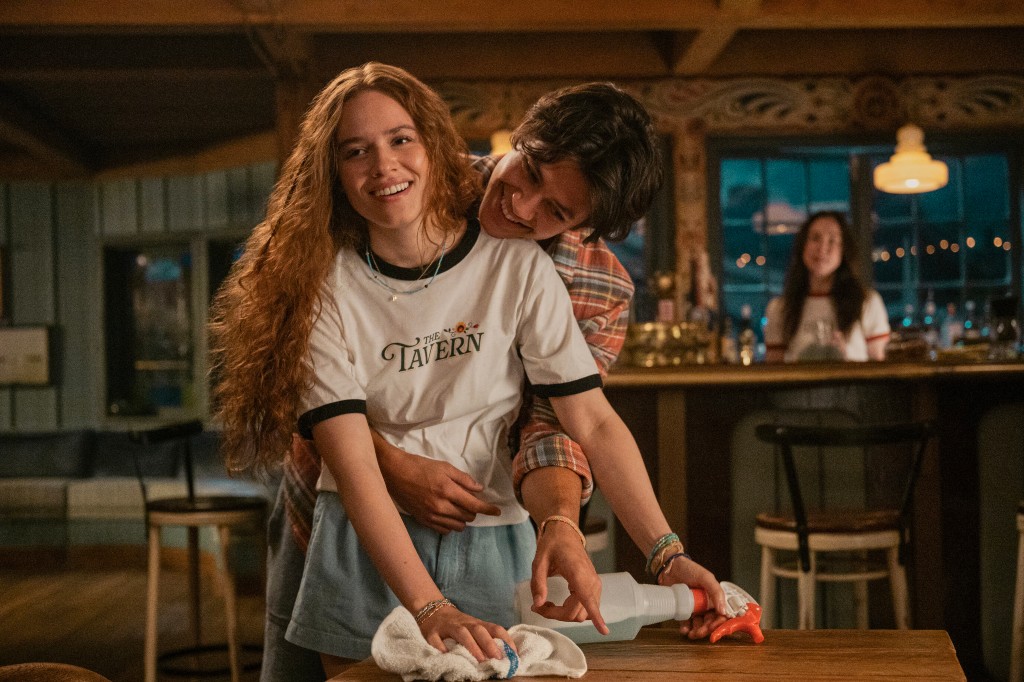
The global entertainment machine has a massive appetite for localized nostalgia, and Amazon Prime Video has found its latest target in the pristine lakes of Canada. The June 2026 release of Every Year After—the high-profile television adaptation of Carley Fortune’s smash-hit romance novel Every Summer After—has pushed the hyper-specific subgenre of "lake life romance" into the corporate spotlight. While casual viewers tune in to watch the angsty, decade-long romance between Percy Fraser (Sadie Soverall) and Sam Florek (Matt Cornett), industry insiders are watching a completely different drama play out behind the scenes. It is a story of tax incentives, geographic identity theft, and the aggressive monetization of the BookTok literary subculture.
The primary driver behind this sudden influx of streaming cash into Canadian-set narratives is not a sudden appreciation for regional literature. It is an calculated calculation designed to capture a highly loyal, digitally native audience while exploiting the economic advantages of northern production hubs. Amazon’s decision to greenlight the series was directly triggered by the original novel's massive footprint on TikTok, where the hashtag #EverySummerAfter generated more than 81 million views before a single frame was even shot. By converting these digital metrics into long-form television, streaming platforms are attempting to manufacture guaranteed hits in an era where original intellectual property feels increasingly risky.
The Geographic Shell Game
On the page, Carley Fortune’s narrative is inextricably linked to Barry's Bay, Ontario. It is a real, sun-bleached community of roughly a thousand residents located a few hours east of Ottawa. It represents the quintessential Ontario cottage experience, defined by rocky shorelines, dark pines, and calm, warm lakes.
Yet, if you look closely at the background of the Prime Video adaptation, the landscape tells a completely different story. The jagged, towering mountains and deep glacial fjords belong unmistakably to British Columbia.
+--------------------------------------------------------+
|                 THE PRODUCTION SPLIT                   |
+--------------------------------------------------------+
| LITERARY SETTING             | TELEVISION LOCATION     |
| Barry's Bay, Ontario         | Vancouver / Sunshine    |
|                              | Coast, British Columbia |
|------------------------------|-------------------------|
| Low, rolling hills           | Towering coastal ranges |
| Warm, shallow lake basins    | Deep, cold glacial paths|
| Dense pine & birch forests   | Massive Douglas firs    |
+--------------------------------------------------------+
This geographic swap highlights the fundamental tension at the heart of modern international co-productions. Showrunner Amy B. Harris openly acknowledged that shooting in the actual, remote town of Barry's Bay was logistically impossible for a Hollywood-scale crew. Instead, production was routed through the massive studio infrastructure of Vancouver and the surrounding coastal regions of British Columbia.
To appease the author and a vocal Canadian fanbase that is weary of seeing its homeland disguise itself as upstate New York or Minnesota, a compromise was struck. The fictionalized town in the series was written as Barry's Bay, British Columbia.
This adjustment satisfies the legal requirements of Canadian content definitions while completely altering the ecological aesthetic of the original book. It reveals an industry reality. Authenticity is a commodity that can be renegotiated based on proximity to major municipal airport hubs and soundstages.
Monetizing the Emotional Cliffhanger
The transition from a self-contained romance novel to an ongoing, multi-season streaming series requires radical narrative plastic surgery. A standard romance novel relies on the promise of a "Happily Ever After." Television networks, conversely, require unresolved emotional torment to justify future production budgets.
The adaptation of Every Year After highlights this structural conflict through a massive departure from Fortune's original ending.
- The Book Timeline: In the 2022 novel, the central betrayal—where Percy sleeps with Sam’s brother, Charlie, after an emotional misunderstanding—is processed, forgiven, and resolved. The story concludes with stability, capping off a definitive narrative arc.
- The Television Timeline: The first season of the Prime Video series weaponizes this betrayal. It leaves the revelation lingering into the final episodes, preserving the emotional fallout to act as a dramatic launchpad for a potential second season.
This structural shift is not an artistic accident. Showrunner Harris has already stated her intention to stretch the narrative ecosystem of Barry's Bay across five distinct seasons. The blueprint for this expansion already exists in corporate publishing pipelines. Fortune's 2025 follow-up novel, One Golden Summer, shifts the focus to Charlie Florek, providing Hollywood with a pre-built narrative expansion pack.
By transforming a single book into an open-ended cinematic universe, the streaming platform ensures that the audience's digital engagement does not evaporate once the initial romance is resolved.
The BookTok Pipeline and Corporate Risk Mitigation
To understand why a major media company would invest millions into a story about teenagers swimming in a Canadian lake, one must look at the shifting economics of the publishing industry. The traditional gatekeepers of literary fiction have been largely displaced by decentralized online communities. Authors like Fortune, who transitioned from a career in Canadian journalism to become a fixture on the New York Times bestseller list, represent a new class of highly bankable creative talent.
These authors do not just sell books. They build highly interactive, metrics-driven digital spaces. When Amazon MGM Studios options a property like Every Summer After, they are buying an insurance policy. The built-in audience provides a buffer against the erratic viewing habits of modern consumers. If a book has already proven its ability to hold the attention of millions of young adults on mobile screens, the risk of translating that property to a television screen drops significantly.
This strategy is visible across the entire industry. It mirrors Netflix's aggressive acquisition of similar romance properties and Amazon's own multi-million dollar investments in young adult romance series like The Summer I Turned Pretty. The focus on idyllic, regional settings serves as a visual counterweight to the gritty, dystopian content that dominated the previous decade of television. Viewers are actively seeking low-stakes, high-emotion escapism, and the corporate entertainment sector is rushing to purchase the real estate required to build it.
The Vulnerability of the Cottage Industry Genre
This hyper-accelerated production pipeline comes with clear structural risks. The split critical reception of Every Year After—with reviews swinging wildly between praising its atmospheric depth and dismissing it as a slow, overstretched drama—points to a deeper flaw in the adaptation strategy. A short, emotionally intense novel does not always possess the narrative density required to sustain eight hours of television without feeling padded.
When a network takes a story rooted in the quiet, specific realities of a tiny Ontario community and stretches it across five seasons of prestige television shot in British Columbia, something vital threatens to dissolve. The regional quirks that made the text distinct are inevitably smoothed over to appeal to an international demographic sitting in Los Angeles, London, or Tokyo. The characters stop feeling like real residents of a specific place and begin to resemble glossy archetypes moving through a beautiful, generalized wilderness.
The financial machinery backing these adaptations shows no signs of slowing down. Fortune’s newer bibliography, including her May 2026 release Our Perfect Storm, continues to dominate bestseller charts by using the exact same formula: high-stakes emotional intimacy set against iconic Canadian landscapes like the rugged coast of Tofino. As long as these regional romances continue to top digital sales charts, international production crews will keep arriving in western Canada with cameras, ready to transform local geography into global content. The actual lakes and towns remain mere backdrops for an industry that has learned to mine local nostalgia for maximum international return.