The World Health Organization just declared a Public Health Emergency of International Concern over a fast-moving Ebola outbreak in the Democratic Republic of the Congo, which has already claimed at least 134 lives. The virus has jumped the border into Uganda, hitting the capital city of Kampala. Bureaucratic delays, an absence of specialized vaccines, and weeks of misdiagnosis allowed a rare strain of the virus to spread undetected through highly mobile mining communities and major urban centers. To halt this trajectory, global health agencies must immediately shift resources away from standard Ebola protocols and deploy experimental trials specifically tailored to this neglected variant.
The standard playbook for managing an Ebola crisis is completely failing in eastern Congo. For weeks, health workers ran diagnostic tests that came back negative because they were looking for the wrong monster. They were screening for the Zaire strain, the most common culprit behind the region's historical outbreaks. Instead, they were dealing with the Bundibugyo virus, a rare species of Ebola that has caught the international medical community completely flat-footed.
By the time the National Institute of Biomedical Research in Kinshasa confirmed the Bundibugyo strain, the virus had already established a massive head start. It traveled along the informal transit networks of Ituri province, embedded itself in the major trading hubs of Bunia and Goma, and hitched a ride across the Ugandan border.
The Diagnostic Blind Spot
Public health infrastructure is built to fight the last war. Because the devastating 2018–2020 outbreak in North Kivu was driven by the Zaire strain, subsequent surveillance systems and stockpiles were optimized for that specific virus. When patients began showing up at clinics in the Mongbwalu mining zone in late April with high fevers and severe hemorrhaging, local staff utilized the rapid tools at their disposal. The negative results created a false sense of security.
Medical personnel continued treating patients without the strict level of personal protective equipment required for viral hemorrhagic fevers. The virus took full advantage of this exposure. At least four healthcare workers died within a matter of days, turning the very clinics meant to halt the disease into primary hubs of amplification.
Bundibugyo Outbreak Timeline (May 2026)
-----------------------------------------------------------------
April 24: First suspected case (health worker) dies in Bunia.
May 5:    WHO alerted to high-mortality illness in Mongbwalu.
May 14:   Samples analyzed by INRB in Kinshasa.
May 15:   Bundibugyo strain confirmed; DRC declares outbreak.
May 16:   WHO declares Public Health Emergency (PHEIC).
May 19:   Death toll reaches 134; suspected cases surpass 500.
-----------------------------------------------------------------
This structural delay highlights a deeper vulnerability in global health security. When an outbreak occurs in a highly volatile region, a multi-week lag between the first death and accurate genetic sequencing is a recipe for disaster. The Bundibugyo strain may have a historically lower case-fatality rate than Zaire—hovering between 30% and 50% rather than 60% to 90%—but its ability to fly under the radar makes it uniquely dangerous in an interconnected world.
The Vaccine Chasm
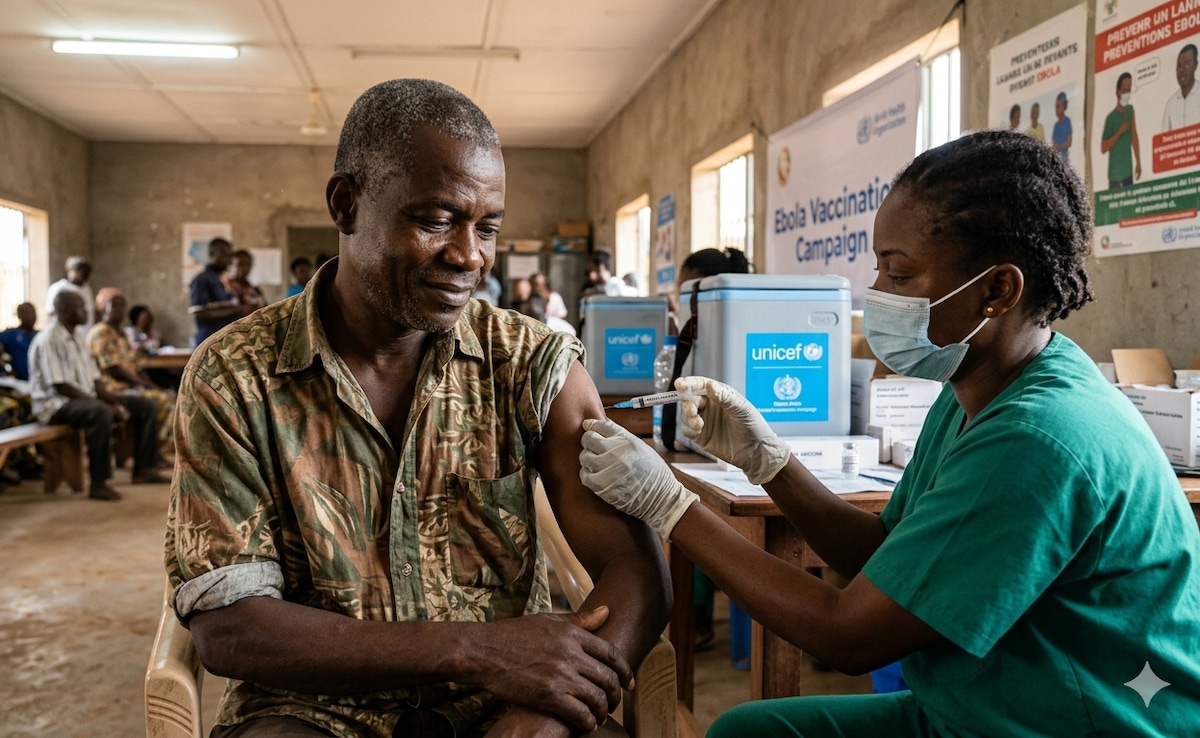
The most alarming reality of the current crisis is the total absence of a proven pharmaceutical defense. The widely praised Ervebo vaccine, which saved countless lives during recent West African and Congolese epidemics, offers zero protection against the Bundibugyo strain. It is entirely strain-specific.
Health officials are currently debating whether to deploy stockpiled Zaire vaccines in a desperate bid for cross-protection, or wait for experimental candidates developed by institutions like Oxford University. The logistics of the latter choice are grim. Even if British and American authorities fast-track shipments of these experimental vaccines to the frontline, experts on the ground admit it will take at least two months for the doses to arrive and become operationally viable.
Two months is an eternity when dealing with a pathogen that has an incubation period of just a few days.
"I don't see that in two months we will be done with this outbreak," warns Dr. Anne Ancia, the head of the WHO team in the DRC.
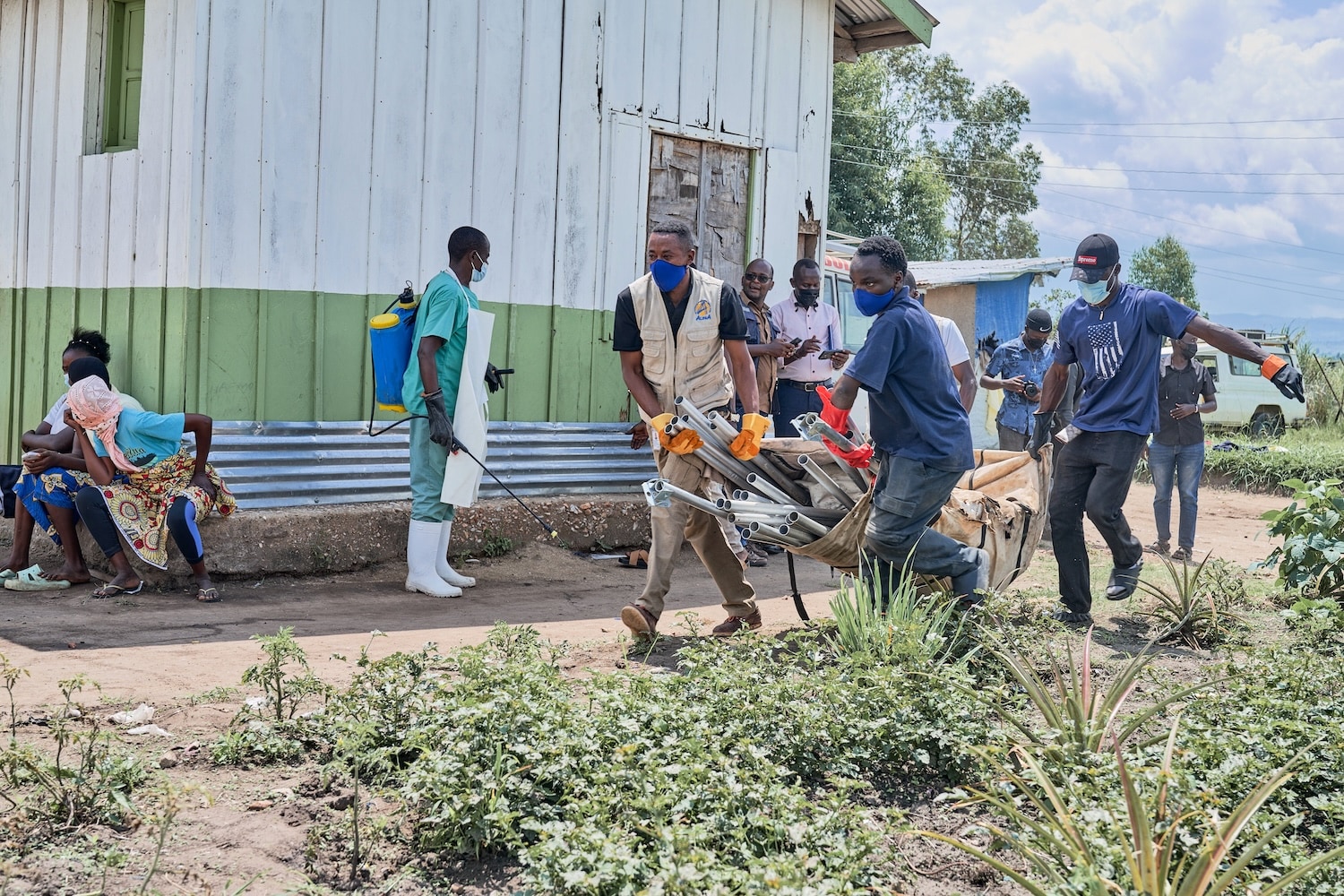
For now, the global health apparatus is fighting a twenty-first-century epidemic with nineteenth-century tools: soap, buckets of chlorine water, isolation tents, and appeals to a terrified populace to alter their traditional funeral customs.
Gold, Rebels, and Porous Borders
The geography of this outbreak complicates containment efforts exponentially. Mongbwalu is not an isolated jungle village. It is a booming, chaotic gold-mining hub characterized by a highly transient population. Thousands of informal miners move in and out of these artisanal sites weekly, living in cramped conditions and traveling long distances to sell goods or seek medical care when they fall ill.
When the virus hit the mines, infected individuals fled toward larger cities like Bunia and Goma to access better hospitals. This internal migration quickly transformed a localized cluster into an urban crisis.
Compounding the problem is the complex security environment of eastern Congo. Vast swaths of North Kivu and Ituri provinces are controlled by shifting coalitions of armed rebel groups. This insecurity makes contact tracing nearly impossible. When a suspected case dies in a rebel-held territory, epidemiologists cannot safely enter to list contacts, monitor symptoms, or enforce safe burial practices.
The proximity of the hotspot to neighboring countries turns a domestic crisis into a regional threat. The border between northeastern DRC and Uganda is defined by heavy trade, familial ties, and informal crossing points that bypass official health screening. The confirmation of two cases in Kampala proves that the virus has already exploited these corridors.
Shifting the Strategy
The international community cannot afford to wait sixty days for a specialized vaccine deployment while relying on basic hygiene kits to do the heavy lifting. A fundamental shift in strategy is required immediately.
First, decentralized molecular testing capacities must be deployed directly to the border regions and mining hubs. Waiting days for samples to be flown to Kinshasa for PCR sequencing destroys the critical window needed for effective quarantine. If local field labs can differentiate between Ebola strains within hours of admission, the diagnostic blind spot vanishes.
Second, the WHO must utilize emergency protocols to initiate ring-vaccination trials with experimental Bundibugyo candidates directly in the affected health zones, bypassing the typical regulatory inertia. Managing an epidemic in a conflict zone requires accepting a higher threshold of operational risk.
Finally, the response must adapt to the reality of the local private health sector. In eastern Congo, many people first seek care at small, informal drugstores or private clinics rather than state-run hospitals. International agencies like UNICEF and Doctors Without Borders need to supply these informal practitioners with basic personal protective equipment and training. If the frontline dispensers of medicine remain unprotected and uneducated on the specific presentation of the Bundibugyo virus, they will continue to serve as vectors for the disease.
The scale and speed of this outbreak are not just a reflection of the virus's biology. They are the direct result of a global health system that assumed the Ebola problem was solved because a vaccine existed for a single strain. Nature has exposed that complacency. The response must now catch up to a reality that is moving much faster than the bureaucracy assigned to contain it.