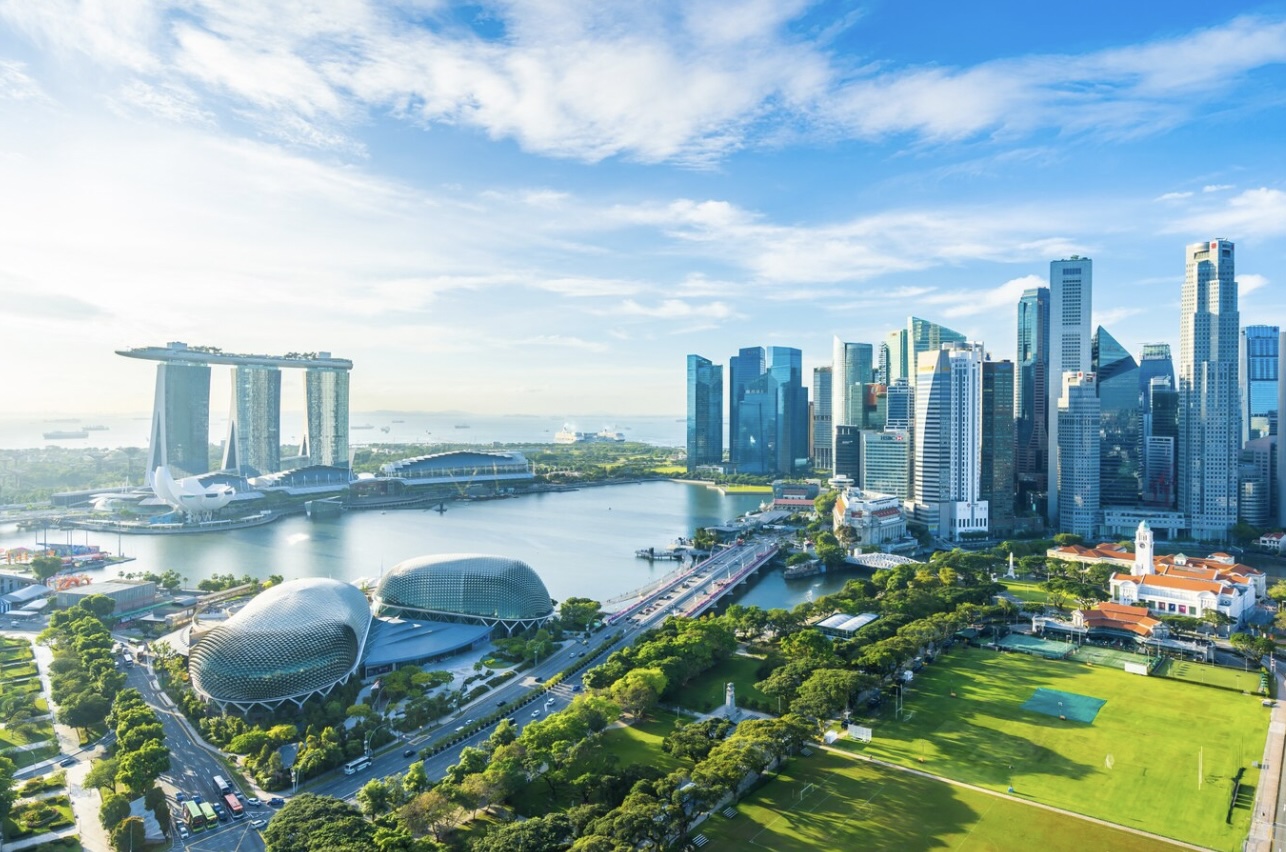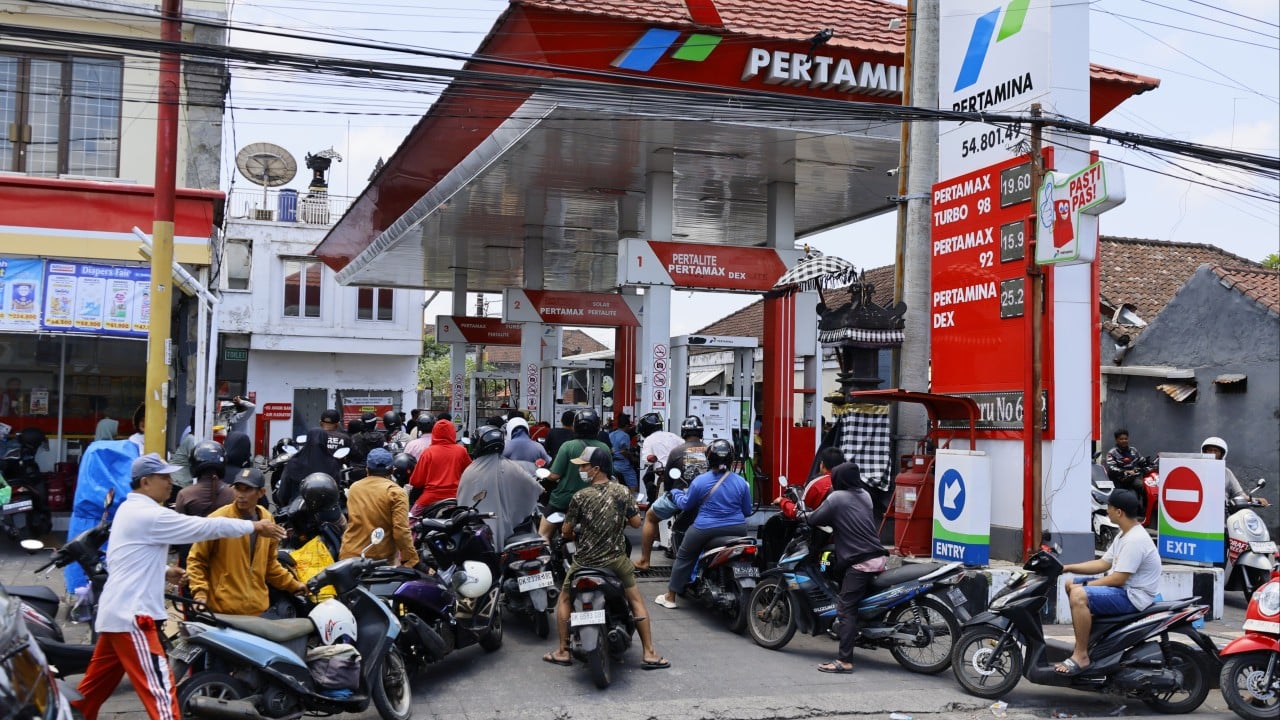
Indonesia is slashing piped natural gas exports to Singapore because Jakarta faces a brutal math problem where booming domestic industrial demand collides with aging upstream fields and expiring twenty-year contracts. While officials in Jakarta frame the pullback as a matter of legal compliance and domestic energy security, the reality beneath the subsea pipelines is far messier. Southeast Asia’s largest economy is scrambling to fuel its own smelter boom and power grid, leaving its wealthy neighbor scrambling for pricier liquefied natural gas (LNG) alternatives.
For two decades, the energy relationship between Indonesia and Singapore operated on a simple, lucrative bargain. Indonesia had stranded gas in South Sumatra and the Natuna Sea that its own archipelago lacked the infrastructure to consume. Singapore, a tiny city-state with zero domestic hydrocarbons and an insatiable appetite for electricity, needed cheap, reliable fuel to power its rapid economic ascent. Subsea pipelines were laid across the Malacca and Singapore Straits, locking both nations into long-term Gas Sales Agreements (GSAs). Those contracts became the bedrock of Singapore’s power sector, supplying roughly 95 percent of its electricity generation at the peak of pipeline dependence.
That era is ending in slow motion.
The Anatomy of a Contractual Reckoning
When Indonesian energy officials defend reduced gas flows to Singapore, they point first to the fine print. Most of the legacy pipeline agreements—most notably the massive flows from the Corridor Block in South Sumatra and the West Natuna fields—were structured around rigid take-or-pay volumes and strict expiration dates stretching through the mid-to-late 2020s.
In the oil and gas industry, reservoir depletion does not care about diplomatic pleasantries. Mature fields naturally lose pressure over time. Maintaining plateau production requires relentless capital expenditure: infill drilling, compression upgrades, and enhanced recovery techniques. International oil majors operating in Indonesia grew hesitant to sink billions into late-life fields when contract extensions were uncertain and regulatory terms kept shifting.
As natural decline curves set in, production volumes dipped closer to—and occasionally below—historical nomination levels. Jakarta’s position is straightforward. Under existing contracts, operators are obligated to deliver a specified Daily Contract Quantity (DCQ). Once a contract expires, or once a field’s commercial reserves decline beyond economic recovery without fresh investment, Indonesia has zero legal obligation to subsidize Singapore’s grid with molecules it desperately needs at home.
Jakarta’s Domestic Demand Explosion
The deeper driver behind the gas cuts has nothing to do with contract lawyers and everything to do with industrial policy. Over the past decade, Indonesia aggressively banned raw mineral exports to force foreign mining companies to build domestic processing plants. Nickel, bauxite, and copper smelters have sprouted across Sulawesi, Halmahera, and Java at breakneck speed.
Smelters are energy-hungry beasts. Running them requires massive, uninterrupted baseload power, and Indonesia’s state utility, PLN, alongside industrial estate operators, has been starving for gas to bridge the gap while coal plants face financing restrictions and renewables scale up too slowly.
At the same time, Jakarta has pushed hard to expand domestic fertilizer production to secure food supplies and keep agricultural subsidies manageable. Natural gas is the primary feedstock for urea and ammonia. Every cubic foot of gas sent south through a subsea pipe to Singapore is a cubic foot unavailable for a fertilizer plant in Palembang or a power turbine in West Java.
Domestic Market Obligation (DMO) rules in Indonesia legally mandate that upstream producers allocate a minimum percentage of their output—typically 25 percent, though often pushed higher in practice—to local buyers at government-capped prices. When domestic buyers clamor for fuel and international LNG spot prices spike, political survival dictates that any Indonesian administration will prioritize domestic factories and household electricity rates over export commitments.
The Infrastructure Bottleneck Nobody Mentions
Critics in Singapore and among international energy traders often assume Indonesia is simply hoarding gas out of resource nationalism. That view misses a critical physical reality. Indonesia’s gas crisis is largely a plumbing problem.
The archipelago’s remaining mega-discoveries—such as the massive Abadi Masela project in the Arafura Sea or deepwater finds off East Kalimantan and North Sumatra—are located thousands of kilometers away from the population and industrial centers of Java and Sumatra. Moving gas across an archipelago of 17,000 islands without an integrated pipeline network is extraordinarily expensive.
Because Indonesia cannot easily pipe gas from eastern Indonesia to western Indonesia, the government has turned to domestic LNG shipments and localized regasification terminals. Simultaneously, it is desperately trying to connect existing Sumatran gas grids to Java via long-delayed transmission pipelines like the Cirebon-Semarang (Cisem) project. Until those domestic links are fully operational and fed by new upstream developments, the easiest molecules for Jakarta to redirect are the ones already flowing through pressurized pipes in Sumatra—the exact pipes that feed Singapore.
Singapore’s Expensive Insurance Policy
Singapore’s Energy Market Authority (EMA) saw this cliff approaching years ago, which is why the city-state has not plunged into blackouts despite falling Indonesian pipeline volumes. Still, preparation does not make the transition painless.
To offset declining piped gas from both Indonesia and Malaysia, Singapore built a massive LNG import terminal on Jurong Island and aggressively diversified its supply portfolio. Today, LNG accounts for a steadily growing share of Singapore’s gas mix, sourced from Australia, the United States, Qatar, and West Africa.
The catch is cost and volatility.
| Metric | Legacy Piped Gas | Imported Spot/Contract LNG |
|---|---|---|
| Pricing Mechanism | Indexed to crude oil (HSFO/Brent) with negotiated slopes | Linked to Henry Hub, JKM (Japan-Korea Marker), or Brent |
| Infrastructure Cost | Sunk capital (pipelines amortized over 20 years) | High ongoing liquefaction, shipping, and regasification fees |
| Supply Flexibility | Rigid point-to-point delivery | Global cargo sourcing, vulnerable to maritime chokepoints |
| Price Volatility | Predictable lagged adjustments | Exposed to extreme seasonal and geopolitical spikes |
Let us look at a hypothetical example to illustrate the financial shock. Suppose a Singaporean power generation company previously bought piped Sumatran gas indexed at a modest slope to Brent crude, landing at roughly $8 to $10 per million British thermal units (MMBtu). When global LNG markets tighten—as happened during the European energy crisis—spot LNG cargoes into Asia can surge past $20 or $30 per MMBtu. Even under long-term LNG contracts, the added costs of super-cooling gas to minus 162 degrees Celsius, shipping it across oceans, and regasifying it at Jurong Island structurally raise Singapore’s baseline electricity generation costs.
Singapore has passed these costs on to consumers and businesses while tightening regulatory oversight on power retailers. Several independent electricity retailers collapsed during recent wholesale price spikes, forcing the EMA to establish a Standby LNG Facility and centralize gas procurement for power generation companies to prevent market failures.
The Geopolitics of Electrons and Molecules
The friction over piped gas is quietly reshaping regional energy diplomacy. For years, ASEAN leaders talked grandly about the ASEAN Power Grid and the Trans-ASEAN Gas Pipeline, visions of seamless cross-border energy sharing. The gas pullback proves that when domestic supply tightens, national interest trumps regional integration every single time.
Yet Singapore and Indonesia remain locked in an asymmetric interdependence that neither side can afford to break. Indonesia still needs foreign capital, subsea engineering expertise, and carbon capture technology to monetize its harder-to-reach gas reserves. Singapore sits on deep pools of institutional capital, project finance banks, and maritime logistics dominance.
In a telling pivot, the two countries are now negotiating cross-border electricity trade deals and carbon capture and storage (CCS) partnerships. Singapore wants to import low-carbon electricity—primarily solar power generated in Indonesia’s Riau Islands—to help meet its net-zero targets. Indonesia wants Singaporean emitters to pay to pump captured carbon dioxide into depleted Indonesian oil and gas reservoirs, including some of the very fields in South Sumatra and the Natuna Sea that used to send gas north.
Upstream Investment Realities in Indonesia
Jakarta’s defense of its gas cuts rests on the assumption that domestic supply will eventually catch up to demand. That bet carries serious execution risk.
Indonesia’s upstream oil and gas sector has struggled for over a decade to attract the level of exploration capital required to replace maturing giants. Frequent shifts between traditional Cost Recovery production-sharing contracts and the Gross Split fiscal regime confused investors and stalled final investment decisions. Land acquisition delays, overlapping ministerial jurisdictions, and rigid local content rules further slowed project timelines.
Recent discoveries—such as Eni’s massive Geng North find in the Kutei Basin and Mubadala Energy’s Layaran-1 discovery off Aceh—have injected fresh optimism into Jakarta’s energy ministry. Both finds hold multi-trillion cubic feet of gas potential. However, discovering gas in deep water is only the beginning. Moving from discovery to first gas typically takes five to eight years under ideal conditions. In Indonesia, regulatory bottlenecks routinely stretch that timeline closer to a decade.
During that interim window, Indonesia’s domestic gas balance will remain razor-thin. If industrial demand grows faster than expected, or if a major domestic field suffers an unplanned outage, Jakarta will have no spare cushion to offer regional buyers.
What Happens When the Contracts Expire
Most of the remaining legacy pipeline contracts between Indonesia and Singapore expire between 2023 and 2029. While select extensions have been negotiated—such as partial extensions for Corridor Block gas—they come at significantly reduced volumes and higher, market-aligned prices.
Indonesia is no longer willing to act as Singapore’s discounted utility supplier. The days when Jakarta signed twenty-year fixed-volume pipeline deals at favorable rates simply to monetize stranded reserves are dead. Any future gas flowing from Indonesia to Singapore will be priced closer to global LNG parity and subject to strict domestic priority clauses that allow Jakarta to curtail exports during local shortages.
For Singapore, the strategic imperative has shifted entirely from securing cheap Indonesian molecules to managing global LNG exposure while accelerating grid interconnections with Malaysia, Laos, Cambodia, and eventually Australia. Singapore’s power sector is learning to live without its historical safety net, paying a structural risk premium for energy independence.
The subsea pipes crossing the Singapore Strait will not be ripped out tomorrow, and reduced trickles of gas will continue to flow under modified commercial terms. Yet the underlying power dynamic has permanently inverted. Jakarta now holds the valves, domestic industry claims the first drop, and Singapore is paying the global market price for every megawatt it keeps online.