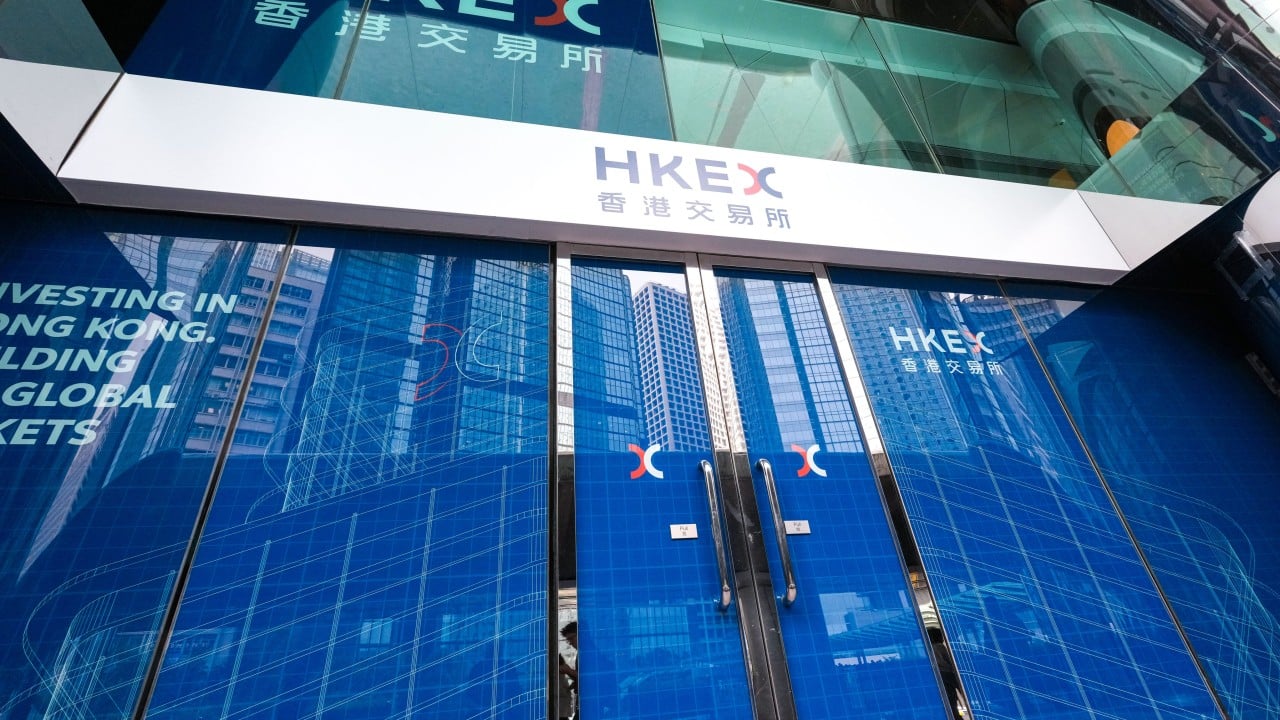
Hong Kong is fighting an invisible migration of capital. For decades, the Hang Seng Index served as the undisputed barometer for international money entering Chinese markets, but that legacy framework has broken down under the weight of an artificial intelligence revolution that it was never built to measure. As global capital floods into silicon and software, Hong Kong’s benchmark has remained weighed down by traditional banking giants, property developers, and old-economy conglomerates. The result is a structural valuation disconnect that has forced Hong Kong Exchanges and Clearing to take an unprecedented step. The exchange operator is aggressively building its own proprietary index business to prevent the city from becoming an archival market.
By launching products like the HKEX Tech 100 Index and rolling out dedicated exchange-traded funds tracking these home-grown baskets, the exchange is attempting to engineer a massive reallocation of liquidity. This is not just a routine expansion of product lines. It is a direct challenge to the legacy index providers that have historically controlled the gatekeeping of institutional flows. In similar updates, we also covered: Why Europe's Play for Brazilian Rare Earths Disrupts the Washington and Beijing Duopoly.
The Failure of Legacy Benchmarks
The financial architecture of Hong Kong was designed for a different era of capital accumulation. When the Hang Seng Index was formulated, economic power was concentrated in brick-and-mortar institutions. Commercial banks, real estate dynasties, and state-owned energy companies formed the bedrock of the listing environment.
This composition created a severe structural vulnerability when generative software and advanced semiconductors began rewriting corporate valuations globally. While western markets surged on the back of massive balance sheets dedicated to computational infrastructure, Hong Kong’s main gauge lagged. It was a mismatch of mechanics. Institutional asset managers mandated to track the benchmark found themselves heavily exposed to decelerating retail banking margins and a corrections-plagued real estate sector, while missing the explosive re-rating of regional computing architecture. The Economist has analyzed this important issue in great detail.
Legacy index compilers operate under rigid committee structures that prioritize historical longevity over rapid economic shifts. Rebalancing schedules take months to execute. By the time a fast-growing technology enterprise meets the legacy criteria for inclusion, its primary growth phase has frequently passed, leaving public market investors to buy into the maturity phase at inflated multiples. The exchange saw this structural lag as an existential threat to its trading volumes.
The Mechanics of the New Index Ecosystem
The decision by HKEX to construct its own indices changes the competitive dynamic of the Asian financial ecosystem. It turns a market operator into an active architect of investment themes.
+-----------------------------------------------------------+
|               HKEX PROPRIETARY DATA ENGINE                |
+-----------------------------------------------------------+
                              |
                              v
+-----------------------------------------------------------+
|                    HKEX TECH 100 INDEX                    |
|  (Captures AI, Robotics, Biotech, Smart Driving, etc.)    |
+-----------------------------------------------------------+
         |                    |                    |
         v                    v                    v
+-----------------+  +-----------------+  +-----------------+
|   ETF Issuers   |  | Future Options  |  |  OTC Derivatives|
|   (Hong Kong /  |  |  Contracts      |  |  Market Makers  |
| Mainland China) |  |                 |  |                 |
+-----------------+  +-----------------+  +-----------------+
The flagship HKEX Tech 100 Index bypasses traditional market-capitalization calculations by incorporating specific theme-based filters. Instead of looking purely at the scale of a company's balance sheet, the methodology targets businesses explicitly embedded in six distinct technological ecosystems. These include artificial intelligence, advanced robotics, biotechnology, and intelligent driving systems.
The real advantage lies in execution speed. The exchange has instituted a fast-entry mechanism that permits newly listed companies to enter the index outside the standard semi-annual review cycle. If a highly anticipated artificial intelligence firm lists in Hong Kong, it can be integrated into the benchmark almost immediately. This minimizes the tracking gap that has long plagued institutional investors who want immediate exposure to fresh capital listings.
Crucially, the index requires its components to be eligible for Southbound Stock Connect. This detail is not accidental. By tying the index directly to the cross-border trading pipeline, the exchange ensures that mainland Chinese retail and institutional investors can seamlessly purchase the underlying assets. It creates a closed-loop ecosystem where liquidity from Shanghai and Shenzhen can directly support the valuations of technology firms listed in Hong Kong.
Liquidity Fragmentation and the Conflict Over Fees
The monetization of financial market data has become a high-stakes battleground. For decades, traditional index providers generated massive revenue streams by licensing their brand-name benchmarks to asset managers, who then charged fees on ETFs and mutual funds. By stepping into this market, HKEX is cutting out the middleman.
This shift creates immediate friction with existing index compilers. These firms rely on the exchange's raw trading data to construct their own products, but they now find themselves competing directly against the very entity that supplies their raw materials. The exchange holds a definitive structural advantage. It sits on the ultimate repository of real-time order book data, transaction histories, and clearing records.
This data repository allows the exchange to construct highly specialized, cross-market benchmarks that independent providers struggle to match. Recent launches include joint initiatives like the HKEX Tech & US Tech 100 and the HKEX KRX Semiconductor Index. These products allow asset managers to build complex hedging strategies that span multiple jurisdictions, all cleared through a central counterparty.
The risk, however, is liquidity fragmentation. When a market has too many competing indices tracking similar technological themes, investment capital splits. Instead of a single, highly liquid pool of capital concentrated in one definitive vehicle, assets are scattered across multiple, smaller ETFs. This fragmentation increases the bid-ask spreads for investors, making it more expensive to enter and exit large positions.
The Geopolitical Pipeline
The underlying driver of this transformation is geopolitical. As international regulatory scrutiny alters the listing dynamics for Chinese technology firms in New York, Hong Kong has become the primary destination for companies seeking public capital. Many of these firms specialize in enterprise automation, localized cloud architecture, and domestic semiconductor applications.
These businesses do not fit neatly into traditional international indexing models. Global index providers must balance their portfolios across multiple emerging markets, often limiting the total weight allocated to a single country or sector to manage regional risk. Hong Kong’s proprietary indices face no such constraints. Their explicit mandate is to reflect the innovation ecosystem of China.
"The changing nature of our listing market demands tools that can adapt in real time. We are no longer just an administrative platform for trading; we are defining how capital categorizes growth."
This strategy relies heavily on the behavior of mainland capital. Southbound inflows have steadily become the stabilizing force in Hong Kong’s equity markets, frequently offsetting capital outflows from western institutional funds. Mainland investors possess a fundamentally different risk appetite and a deeper familiarity with domestic technology brands than their western counterparts. By tailoring indices to assets that these investors understand, the exchange is building a defensive wall against global macroeconomic volatility.
Institutional Skepticism and the Tracking Error Challenge
The strategy is ambitious, but its success is far from guaranteed. Institutional asset managers are notoriously conservative when it comes to switching benchmarks. A pension fund or insurance company cannot simply move billions of dollars from an established index to a new, unproven alternative without extensive historical data.
The primary concern is tracking error. Because the HKEX Tech 100 and its associated products utilize rapid-entry rules and specific thematic overlays, their volatility profiles differ significantly from broad-market gauges. During periods of regulatory adjustment or macroeconomic stress within the technology sector, these indices can experience sharp drawdowns that diverge wildly from the broader market.
| Index Metric | HKEX Tech 100 Index | Traditional Broad Benchmark |
|---|---|---|
| Rebalancing Frequency | Quarterly | Semi-Annually |
| Fast-Entry Mechanism | Yes (Dynamic) | No (Strict Waiting Period) |
| Stock Connect Mandate | Mandatory for all components | Optional / Varies |
| Sector Concentration | Focused (6 Tech Themes) | Diversified (Multi-Sector) |
Asset managers are also closely calculating the total cost of ownership. While the exchange may offer attractive licensing terms to jumpstart its index ecosystem, the underlying costs of rebalancing a portfolio that shifts rapidly can eat into fund returns. Every time a fast-entry stock is added, fund managers must sell existing positions to reallocate capital, incurring transaction fees and potential market impact costs.
The Structural Realignment of Risk
The long-term implications extend far beyond the fee structures of asset managers. By taking control of the indexing infrastructure, Hong Kong is attempting to decouple its market valuation from the sentiment of traditional global fund managers. It is an acknowledgment that the old model of relying on global macro funds to drive market liquidity is coming to an end.
The future of the market relies on its ability to price the highly specialized assets of the automated economy. As automated trading systems, algorithmic market makers, and machine-learning models handle an increasing percentage of daily trading volumes, the data feeds themselves must evolve. Baskets of stocks must be grouped by technological affinity, data dependency, and computational supply chains rather than arbitrary industrial classifications.
This shift requires a fundamental re-engineering of the exchange's internal architecture. It means treating index construction not as a marketing exercise, but as a core technological infrastructure project. The exchange must ensure its matching engines, data dissemination networks, and clearing houses can handle the increased velocity of products derived from these dynamic benchmarks.
The expansion into the index business represents a calculated gamble that ownership of the data infrastructure is more valuable than ownership of the trading venue alone. By defining the benchmarks, HKEX determines what constitutes a technology company in the regional economy, directly influencing where the next generation of capital will settle.