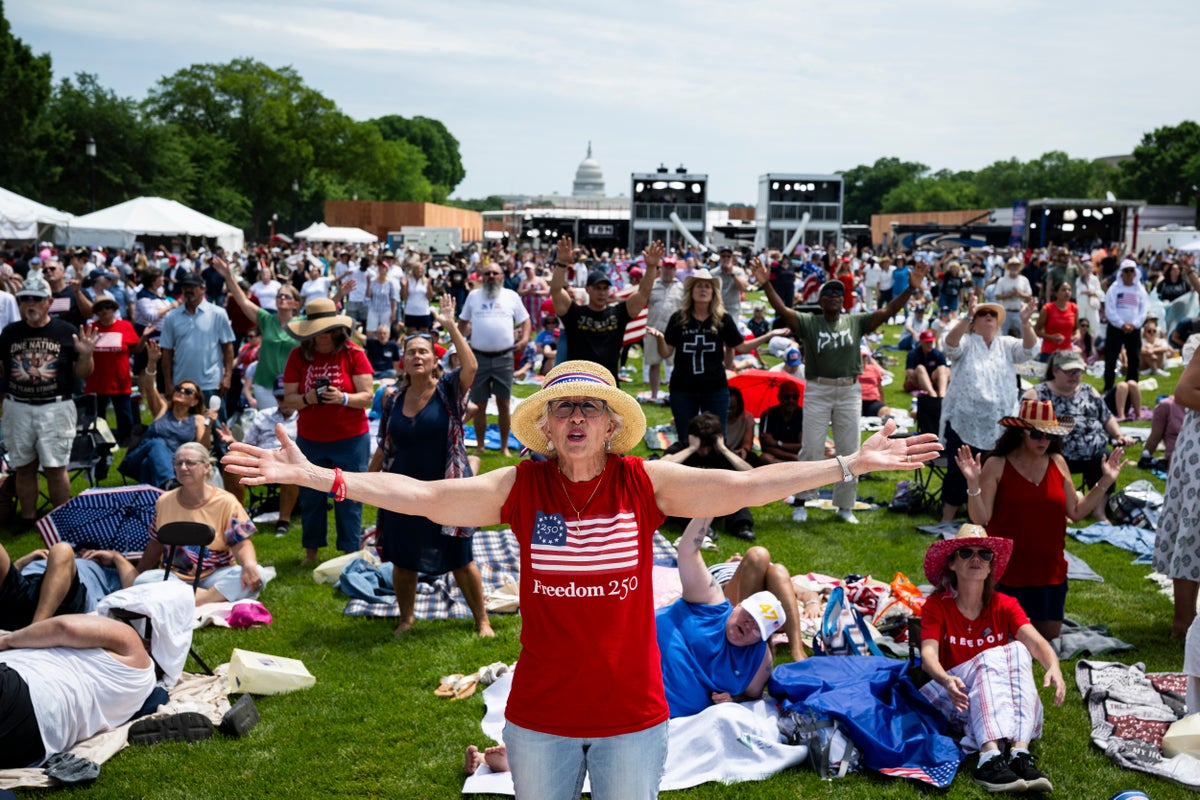
The corporate machinery behind major music festivals has spent decades perfecting the art of the apolitical bubble, but Washington is proving that some brand alignments cannot be scrubbed clean. The recent mass exodus of heritage acts from the upcoming Freedom 250 concert series on the National Mall reveals a deep disconnect between how government operatives and performing artists view the business of nostalgia. While rapper Vanilla Ice doubled down on his commitment to the event by publicly stating he would perform for anyone, including Vladimir Putin, his peers are fleeing a production that has become a political lightning rod.
This is not a simple dispute over scheduling or contracts. It is a fundamental clash over who owns the narrative of America's semiquincentennial.
The Illusion of the Nonpartisan Stage
Freedom 250 launched with an ambitious mandate. Structured as an offshoot of an executive order to commemorate the nation's 250th anniversary, the organization billed its 16-day Great American State Fair as a unifying, cross-cultural celebration. Promotional materials promised a sprawling exhibition of state pavilions, fair attractions, and nostalgic concerts designed to transcend partisan divides.
The booking strategy for the June 26 lineup relied heavily on 1980s and 1990s nostalgia. Artists like Young MC, Morris Day and the Time, and The Commodores were signed to anchor the event. The calculation seemed straightforward. Bring in beloved acts with timeless hits, draw a massive multi-generational crowd, and keep the tone strictly celebratory.
The strategy collapsed when the administrative reality of the festival became clear. Despite claims of nonpartisanship, reporting from trade publications quickly highlighted the heavy involvement of the White House, with Donald Trump serving as the official chair of the underlying task force. For many of the contracted musicians, discovering that a national celebration was structurally bound to a specific administration felt less like a public service and more like a political endorsement.
The Speed of the Cultural Retreat
Musicians today operate in an ecosystem where brand association carries immediate financial consequences. The speed with which the Freedom 250 roster dissolved demonstrates how risky political proximity has become for heritage artists. Within 48 hours of the festival's structural ties becoming public, the lineup suffered catastrophic losses.
- Young MC withdrew completely, explicitly citing reports that tied the festival's leadership directly to the administration.
- Morris Day and the Time quietly cancelled their appearance, removing their names from the promotional materials.
- The Commodores pulled out of the R&B and funk showcases, leaving massive gaps in the primary schedule.
- Bret Michaels and Martina McBride followed suit shortly after, signaling that the discomfort spanned across rock, country, and pop genres.
The standard industry practice for handling a booking crisis involves behind-the-scenes renegotiations or quiet contract buyouts. Instead, this unraveling played out in real time across social media and cable news, forcing the remaining acts to either join the exit or defend their participation in highly visible public forums.
The Vanilla Ice Exception and Nostalgia Economics
While his contemporaries scrambled to distance themselves from the capital, Robert Van Winkle, known globally as Vanilla Ice, chose a completely different public relations strategy. In a series of media appearances, Van Winkle dismissed the political controversy entirely, framing his decision to stay on the bill as a matter of professional duty and national pride.
His defense rested on an old-school industry maxim. An entertainer's job is to perform, not to vet the politics of the venue or the audience. Van Winkle took this logic to its absolute extreme, telling interviewers that he does not vote and would willingly perform in Iran or for Vladimir Putin if booked.
"You play for your fans. We don't get a chance to pick our fans. They pick us. You're just an entertainer. Don't ever try to think you're anything beyond that."
This stance highlights a widening generational and philosophical divide within the entertainment industry. For Van Winkle, whose touring revenue depends entirely on 1990s nostalgia tours and corporate appearances, the stage is a transactional space. He views his performance as a product delivered to ticket holders, entirely decoupled from the governance of the organization cutting the check.
Yet, this transactional view ignores the reality of modern media consumption. In a hyper-connected environment, an artist's presence on a stage is routinely interpreted as validation of the host organization. Van Winkle's assertion that music can remain entirely divorced from its context is a luxury that few modern managers believe their clients can afford.
White House Pushback and the Rally Alternative
The sudden collapse of the musical lineup did not sit well with the festival's architects. The administration's response to the cancellations shifted the event's narrative from an inclusive national birthday party to a familiar cultural battleground.
Through social media statements, the White House criticized the departing musicians, accusing them of getting "the yips" due to online pressure. The rhetoric quickly escalated, with official statements dismissing the legacy acts as overpriced and boring performers whom the public no longer wanted to hear.
To salvage the opening dates of the festival, organizers began floating a contingency plan that would completely alter the nature of the gathering. Rather than attempting to replace the missing multi-platinum artists with similar musical acts, discussions shifted toward replacing the musical entertainment with a massive political rally. The proposed pivot would feature a headline address from the president, transforming a faltering pop-culture festival into a direct-to-voter political event.
The Fragility of Government Co-Branding
The Freedom 250 booking crisis offers a stark lesson for both event production companies and talent agencies. Large-scale public celebrations funded or directed by political entities carry inherent operational risks that standard commercial ventures do not face.
When a private promoter launches a festival, the primary risks are financial, logistical, and weather-related. When a government entity launches a festival, every booking, corporate sponsorship, and venue choice is filtered through a political lens. Agencies representing heritage artists are becoming increasingly cautious about committing their clients to events where the primary stakeholder is a political figure, regardless of how lucrative the performance fees may be.
For the acts who walked away, the potential loss of future corporate gigs, streaming revenue, and cross-over fan support outweighed the immediate payday of a National Mall performance. For the few who remained, like Vanilla Ice and Fab Morvan of Milli Vanilli, the calculation was different. They bet that their core audiences care more about hearing the hits than analyzing the logistics of the festival's executive task force.
The National Mall will still see activity this summer, but the festival that takes the stage will look nothing like the nonpartisan cultural melting pot its original press releases promised. It will be a leaner, highly politicized demonstration of cultural division, where the empty spaces on the stage speak far louder than the acts remaining on the bill.