Discolored, heavily concealed bruises on Donald Trump’s hands during recent high-profile appearances, including a massive UFC celebration on the White House South Lawn, have triggered a fresh wave of public speculation regarding the 79-year-old president's physical well-being. Viral social media close-ups of purple blotches and thick makeup have fueled rumors of hidden, severe medical crises. However, the medical reality behind the discolored skin is far less mysterious, rooted in a combination of standard geriatric skin changes, aggressive self-medication, and an official diagnosis of chronic venous insufficiency. While online commentators often jump to extreme conclusions, specialized clinicians point to the predictable physiological consequences of a senior citizen taking high-dose aspirin while maintaining a demanding public lifestyle.
Understanding the phenomenon requires looking beyond the hyperbole of internet diagnostics and examining the specific clinical mechanisms at play.
The Chemistry of High Dose Self Medication
The primary driver behind the dark purplish lesions on the president's hands is not an undisclosed acute illness, but rather his daily pharmaceutical regimen. Trump has openly acknowledged taking 325 milligrams of aspirin every single day.
This is not a standard dose for routine cardiovascular prevention in older adults.
Most modern clinical guidelines recommend a low dose of 81 milligrams, often colloquially called baby aspirin, if they recommend it at all. For individuals over the age of 70, routine aspirin use is frequently discouraged by medical societies due to the elevated risk of gastrointestinal and subcutaneous bleeding. Trump has publicly stated that he prefers the maximum over-the-counter strength because he is superstitious about his heart health, disregarding standard medical advice to lower the dosage.
Aspirin works by permanently disabling cyclooxygenase enzymes within blood platelets. This blockade stops the production of thromboxane, the chemical signal that tells platelets to bind together and form a clot. Because platelets live for roughly ten days and cannot repair themselves, a single full-strength aspirin compromises clotting efficiency for over a week.
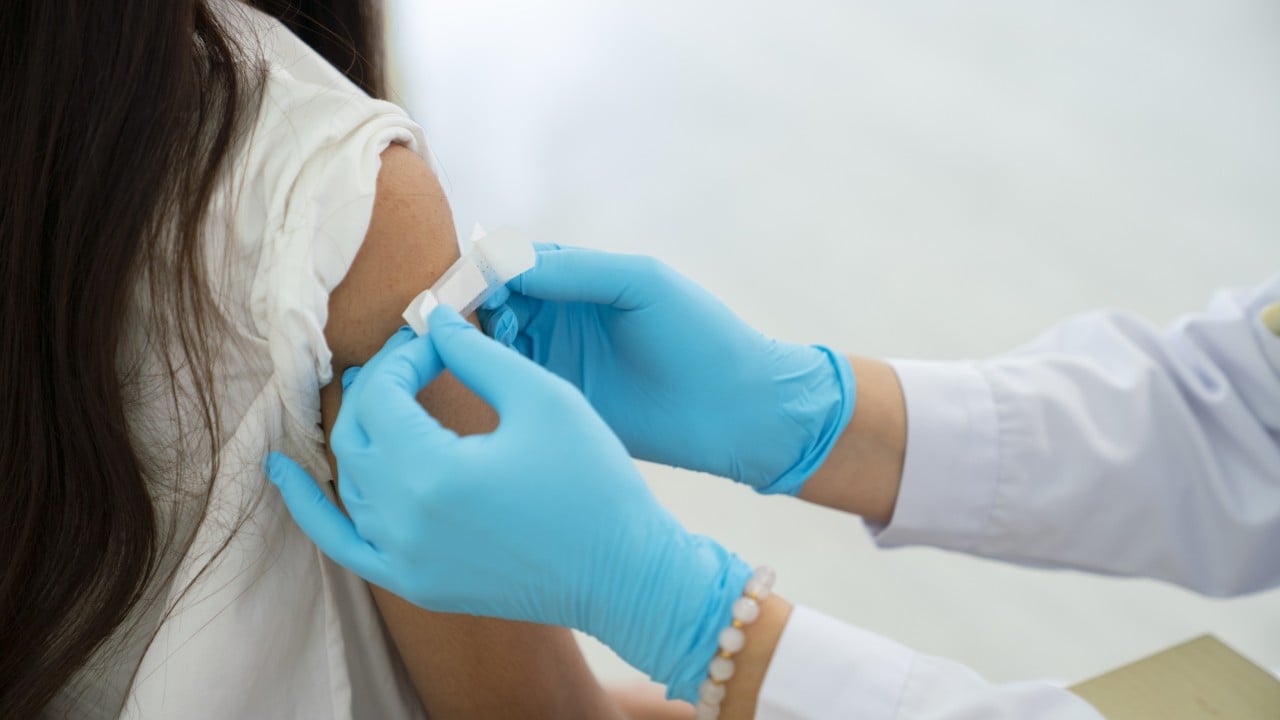
When an individual on high-dose aspirin bumps against a hard surface, blood escapes damaged vessels with almost no resistance, spreading beneath the skin to create unusually large, dark hematomas.
Senile Purpura and the Physics of Aging Skin
The second half of the equation involves a benign but highly visible dermatological condition known as senile purpura, or solar purpura. This affects a significant percentage of adults over the age of 70, particularly those with a history of extensive outdoor sun exposure from activities like golf.
As human skin ages, it undergoes distinct structural changes:
- The subcutaneous fat layer, which acts as a protective cushion for blood vessels, thins drastically.
- Collagen and elastin fibers degrade, weakening the cellular matrix that anchors blood vessels to the surrounding tissue.
- The walls of the microvascular capillaries themselves become fragile and brittle.
Under these conditions, even negligible friction can tear the tiny blood vessels. White House statements have repeatedly blamed the bruising on "minor soft tissue irritation from frequent handshaking." While a handshake seems harmless, the physical grip of hundreds of supporters exerts enough mechanical shearing force on fragile, un-cushioned senior skin to rupture blood vessels.
The resulting bruises take weeks to fade. As the trapped red blood cells break down, they leave behind an iron-rich pigment called hemosiderin. This causes a long-lasting, copper or brown discoloration that remains visible long after the initial swelling subsides, leading observers to believe a new injury has occurred.
The Vascular Complications of Chronic Venous Insufficiency
The public scrutiny intensified following an official White House medical update confirming that Trump was evaluated for lower leg swelling. Navy Captain Dr. Sean Barbabella diagnosed the president with chronic venous insufficiency (CVI).
CVI occurs when the internal, one-way valves in the veins of the lower extremities weaken or fail. Instead of pumping blood efficiently back up toward the heart, the damaged valves allow blood to pool in the legs, generating localized venous hypertension. This fluid backup causes noticeable swelling, aching, and skin darkening around the lower legs and ankles.
While the White House has treated the leg swelling and the hand bruising as entirely separate issues, vascular mechanics suggest they are loosely related. CVI itself does not directly cause bruising on the upper extremities. However, the presence of systemic venous insufficiency often correlates with broader cardiovascular management strategies.
If an individual has a history of deep vein thrombosis or clotting risks associated with poor circulation, physicians often look closer at blood thinners. While Trump's medical team noted that diagnostic imaging ruled out arterial disease or deep clots, the management of his circulation directly intersects with his insistence on maintaining a highly thinned blood profile through daily aspirin.
Sifting Fact From Internet Rumor
Every time a political figure shows physical signs of aging, online speculation fills the informational void with worst-case scenarios. Commentators have suggested the marks are evidence of regular intravenous access lines, advanced malignancies, or neurological decline.
The clinical timeline directly contradicts the theory of routine intravenous therapy. Hematologists point out that a standard bruise from a routine blood draw or a temporary IV catheter typically resolves completely within ten to fourteen days. The markings on the president's hands have been a recurring feature for over a year, shifting from the right hand to the left hand, matching the exact pattern of recurrent senile purpura rather than clinical venipuncture.
Managing a highly visible, benign condition under the constant glare of high-definition cameras presents a unique public relations challenge. White House aides have frequently resorted to heavy applications of cosmetic concealer to mask the discoloration before public appearances. When the makeup rubs off during long events, the contrast between the natural bruised skin and the surrounding cosmetic coverage creates an unnatural, mottled appearance that looks more alarming on a broadcast screen than it does in person.
The medical reality is straightforward. A 79-year-old man with sun-damaged skin who insists on taking four times the medically recommended daily dose of aspirin will inevitably experience persistent, dramatic bruising from basic daily movements.