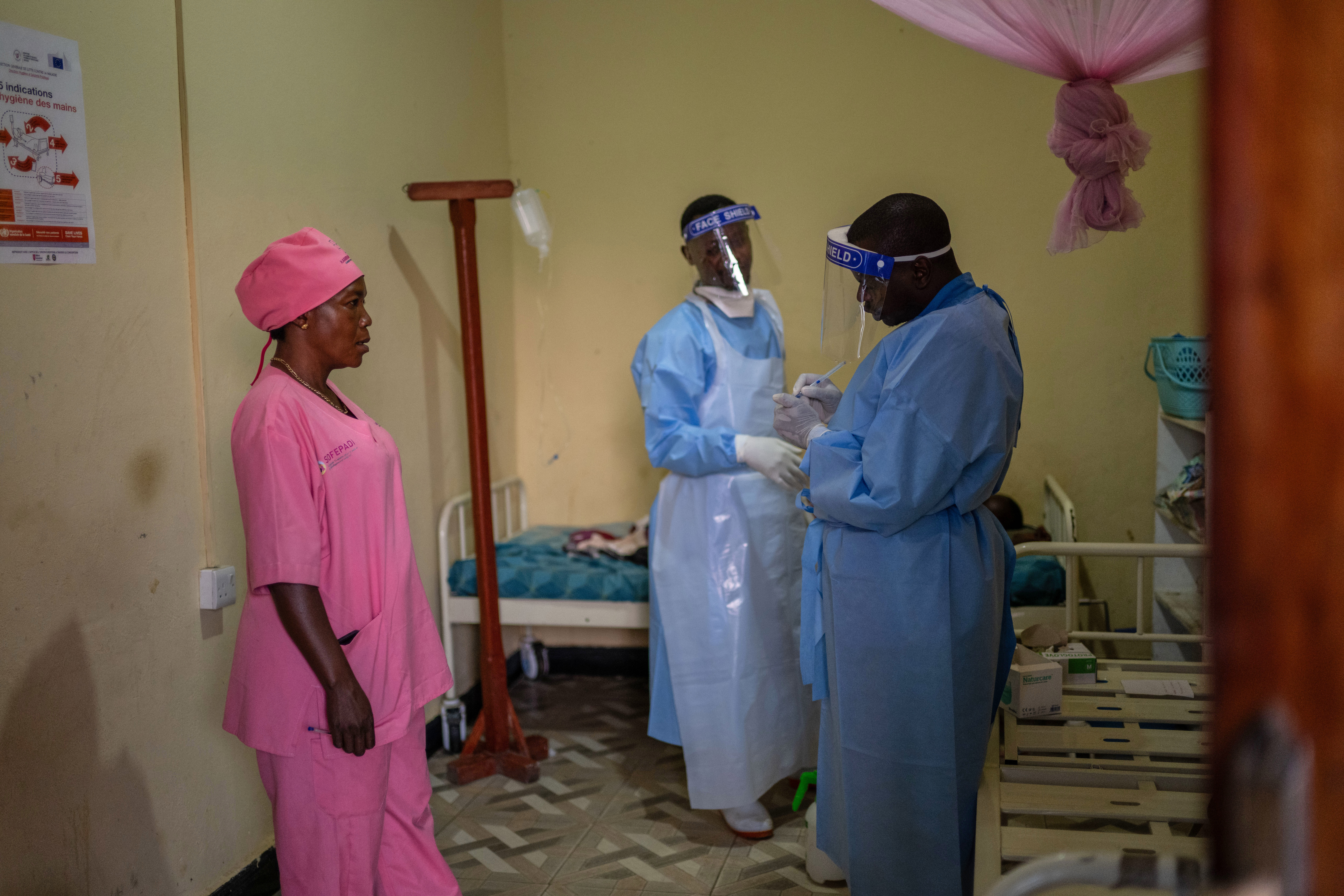
The containment of the latest Ebola outbreak in the eastern Democratic Republic of the Congo is failing because the international health apparatus is repeating a decade-old mistake: treating a deep-seated crisis of political trust and economic survival as a mere medical emergency. When an epidemic hits a war zone, standard epidemiological playbooks fall apart.
By late May 2026, health authorities had tracked over 1,000 suspected cases of the Bundibugyo strain of the Ebola virus across the eastern provinces of Ituri, North Kivu, and South Kivu, with the infection already spilling over the border into Uganda. The World Health Organization (WHO) quickly upgraded the national risk assessment to very high, declaring it the third-largest Ebola outbreak on record. Yet, the real disaster is unfolding not in the isolated treatment tents, but in the crowded markets, primary schools, and transit hubs of Bunia, where the price of a single 500-milliliter bottle of hand sanitizer has doubled from five to ten American dollars. In a region where a vast majority of the population lives on less than two dollars a day, basic hygiene has been priced out of reach, rendering institutional directives on infection control practically useless.
The Ghost of Bundibugyo
Unlike the more common Zaire strain that tore through West Africa a decade ago and struck the eastern Democratic Republic of the Congo (DRC) during the protracted 2018–2020 outbreak, the Bundibugyo virus presents a distinct clinical and logistical nightmare. There is no licensed vaccine. There is no approved antiviral therapy.
During previous outbreaks, response teams could deploy the highly effective Ervebo vaccine to create a protective ring of immunity around confirmed cases and contacts. That pharmaceutical shield does not exist for this strain. Instead, the response relies entirely on early detection, aggressive isolation, and supportive hydration therapy.
Bundibugyo Ebola Response Framework:
[Active Case Detection] -> [Isolation] -> [Supportive Clinical Care] -> [Community Contact Tracing]
                                 ^
                                 |--- Stalled by Border Closures & Local Distrust
This absolute lack of a biomedical silver bullet places the entire burden of containment on human behavior and public cooperation. If a community refuses to report a feverish relative, or if a family hides a body to conduct a traditional burial, the transmission chain multiplies unchecked. The medical community knows how to treat the symptoms of the virus, but they remain profoundly unequipped to manage the social friction that occurs when armed health workers try to enforce isolation in areas that have been ignored by central authorities for decades.
The Self Defeating Border Closures
As panic spreads through East Africa, neighboring nations have responded by slamming their borders shut and imposing strict travel bans. This political reflex to seal off the DRC is actively undermining the medical response on the ground, creating a secondary crisis that UN humanitarians warn could worsen regional transmission.
When official border checkpoints are closed, regular commerce does not stop; it simply goes underground. Traders, farmers, and displaced families avoid the established crossings—where health workers routinely monitor temperatures and test for symptoms—and instead use unmonitored bush paths. The virus moves with them, completely invisible to the surveillance network.
Furthermore, these travel restrictions are strangling the supply chains required to keep the response alive. Critical shipments of personal protective equipment, laboratory reagents, and basic sanitation supplies are stuck at closed border crossings. Personnel deployment has slowed to a crawl. By attempting to isolate the outbreak, the international community is choking the very infrastructure needed to choke the virus.
Why Community Trust Cannot Be Bought
In the capital city of Ituri province, Bunia, international dignitaries arrive at the airport with promises of solidarity and funding. Public health officials emphasize that community ownership is what will bring this outbreak to an end. However, these statements overlook the stark reality of life in eastern DRC, where a quarter of the population is internally displaced and ongoing violence from armed groups makes survival an hourly calculation.
To an displaced person living in a makeshift camp in Ituri, a sudden influx of heavily funded international health workers looks less like a rescue mission and more like a foreign occupation. For years, these communities have begged for protection from armed massacres, yet those pleas went largely unanswered. When a deadly pathogen appears, millions of dollars suddenly materialize for vehicles, isolation centers, and high-tech mobile laboratories. This creates deep suspicion. Local residents naturally ask why the international community cares so much about a virus that might kill them, while remaining indifferent to the militias that actively slaughter them.
This trust gap is worsened by localized economic exploitation. When hand sanitizer vanishes from shop shelves and reappear at double the price, the average citizen sees the epidemic as an economic racket benefiting merchants and corrupt officials. School headmasters struggle to find daily allocations of clean water and soap to protect their pupils, while emergency vehicles cruise past with full fuel tanks.
The Squeezed Health Care System
The focus on Ebola is systematically destroying the rest of the fragile regional healthcare system. The UN Reproductive Health Agency (UNFPA) has noted that local clinics are redirecting their limited personnel, infrastructure, and protective gear exclusively toward the Ebola response.
As a result, routine but life-saving medical procedures are collapsing.
- Emergency caesarean sections are being delayed or refused because staff lack protective equipment.
- Neonatal care units are left understaffed as nurses are reassigned to isolation wards.
- Childhood immunization campaigns for measles and polio have ground to a halt.
Historical data from the 2014 West African outbreak shows that malaria, respiratory infections, and maternal mortality killed far more people than Ebola because routine medical services were abandoned. The eastern DRC is currently on track to repeat this statistic.
The strategy of treating an epidemic in isolation from general healthcare is fundamentally flawed. A community will not trust an Ebola treatment center if the clinic next door lacks the basic antibiotics to treat a child's pneumonia. Containment can only happen when the response addresses the community's overall survival, rather than focusing exclusively on the single disease that threatens global health security.
Breaking the Cycle of Containment Failures
To stop the spread of the Bundibugyo strain, the response must pivot away from top-down medical mandates and move toward an aggressive stabilization of the local economy and basic healthcare infrastructure.
First, the international community must pressure regional neighbors to lift counterproductive border closures, replacing them with standardized, well-funded cross-border health screening protocols. Second, the inflation of sanitation supplies must be curbed through direct subsidies or public distribution networks, making infection prevention a free public utility rather than a luxury item. Finally, health agencies must integrate Ebola isolation units into comprehensive primary care facilities that address everyday health crises simultaneously. Until the response values the lives of the population as much as it fears the transmission of the virus, containment will remain an elusive goal.