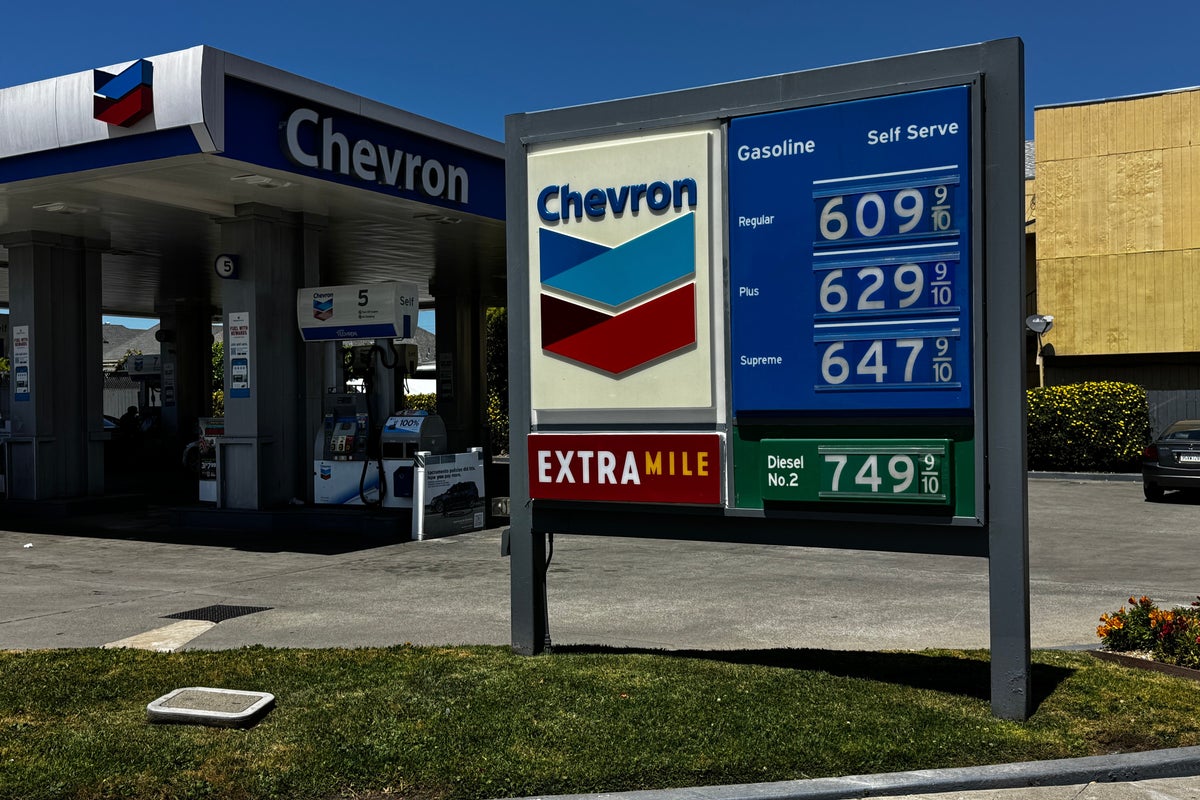
California drivers pulling up to the pump this Memorial Day weekend face a brutal reality: a statewide average of $6.14 per gallon for regular unleaded. Seeking to redirect voter fury, Governor Gavin Newsom’s office issued an unprecedented holiday advisory, urging Californians to completely boycott Chevron stations and buy cheaper, unbranded gasoline instead. The administration argues that Chevron artificially inflates its prices by 60 to 80 cents per gallon compared to unbranded fuel.
But this public spat obscures a much harsher economic truth. While Chevron commands a brand premium, the underlying architecture of California’s energy market—characterized by isolated infrastructure, aggressive environmental mandates, and the highest fuel taxes in the nation—guarantees that gas prices remain astronomical regardless of where drivers insert their credit cards.
The Mirage of the Brand Boycott
The governor’s advice relies on a basic truth of the refining industry. Unbranded gasoline often originates from the exact same regional refineries, pipelines, and storage tanks as branded options. Base gasoline is fungible; it must meet strict state specifications to legalistically sell at any pump. The core difference at a branded station is a proprietary package of detergent additives blended into the fuel truck before delivery.
[Crude Oil Source] ➔ [California Refinery] ➔ [Common Pipeline/Tank]
                                                    │
                   ┌────────────────────────────────┴────────────────┐
                   ▼                                                 ▼
     [Unbranded Tanker Truck]                           [Chevron Tanker Truck]
  (No proprietary additives added)                 (Proprietary detergent package added)
                   │                                                 │
                   ▼                                                 ▼
      [Independent Fuel Pump]                              [Chevron Branded Pump]
By framing the issue as mere corporate greed, the administration sidesteps how the retail fuel market functions. The vast majority of the hundreds of Chevron stations dotting California are not owned or operated by the multinational corporation. They are run by independent franchisees. These local business owners set their own retail margins based on local real estate costs, labor rates, credit card processing fees, and regional wholesale pricing. Telling consumers to bypass these stations squeezes local entrepreneurs far more than it hurts a corporate balance sheet.
Furthermore, a 60-cent brand premium does not explain why California gasoline costs $1.58 more than the national average. To understand that structural gap, one must look at the regulatory wall isolating the state from the rest of the domestic fuel supply.
The Island Economy and the Refiner Exodus
California operates as a regulatory island regarding energy. Because of stringent environmental laws, the state requires a highly specific, clean-burning fuel blend known as the California Reformulated Gasoline mix. No other state uses this exact formula, meaning external refineries cannot easily ship surplus fuel to California during a supply crunch. If a local refinery goes offline for planned or unplanned maintenance, supply drops instantly, and prices spike.
This isolation has become perilous as refining capacity shrinks. Two major California refineries recently announced plans to cease operations or transition away from traditional petroleum processing, effectively wiping out roughly 18% of the state’s internal refining capacity.
The rationale behind these closures is clear. Energy companies are reading the regulatory writing on the wall. The California Air Resources Board is aggressively pushing forward with amendments to its cap-and-invest program, aiming for a 90% carbon reduction target by 2045. Chevron explicitly warned the administration that these shifting rules undermine the economic viability of traditional refining within state lines.
When capacity drops in an isolated market, structural scarcity takes over. The state attempted to pass legislation giving regulators the power to mandate minimum fuel reserves to cushion against maintenance spikes, but the implementation of those rules has stalled. Regulators also delayed a planned penalty system for "excess profits" until 2030, quietly acknowledging that punitive measures could trigger more refinery closures and accelerate supply shortages.
Taxes, Geopolitics, and the Rejection of Relief
Beyond the physical constraints of supply, state fiscal policy plays a direct role in what drivers pay. California levies a 70-cent-per-gallon gas tax, the highest in the United States. When combined with underground storage tank fees, sales taxes, and the embedded costs of the state's low-carbon fuel standards, fixed government costs make up a significant portion of the price gap between California and neighboring states.
Despite mounting pressure from consumer groups and economists to institute a temporary gas tax holiday to relieve working-class families, the governor flatly rejected the idea. The administration argues that cutting the tax would jeopardize funding for critical infrastructure projects and clean-air initiatives. Instead, political rhetoric has shifted toward blaming external forces, pointing to international conflicts affecting global crude supplies and corporate opportunism.
Global crude prices have indeed risen due to the ongoing shipping bottlenecks in the Middle East, which have constrained oil tanker movements through vital trade corridors like the Strait of Hormuz. But those global pressures hit every state equally. The national average sits around $4.54 per gallon. The extra $1.60 extracted from California drivers is home-grown, driven by a policy framework designed to make fossil fuels expensive as a mechanism to force a transition to electric vehicles.
The Real Cost of a Policy Shift
The current standoff between Sacramento and the energy sector highlights a fundamental friction in the state’s economic planning. Policymakers want lower prices at the pump for voters today, yet they simultaneously design long-term regulations intended to phase out the very infrastructure required to deliver that fuel cheaply.
Opting for unbranded fuel may save a driver a few dollars on a holiday road trip, but it does nothing to alter the structural realities of the California market. As long as the state maintains its isolated fuel standard, high tax rates, and a regulatory posture that discourages domestic refining investment, six-dollar gasoline will remain the baseline reality for the foreseeable future.
