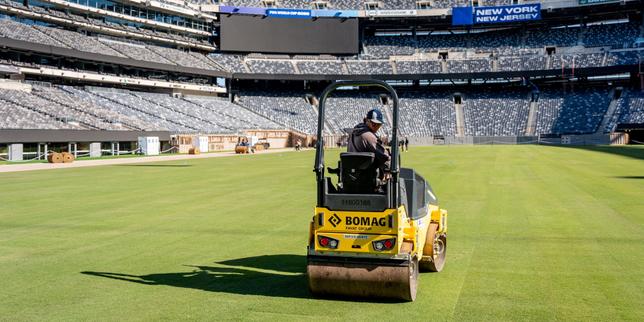
FIFA spent nearly a decade and tens of millions of dollars trying to outsmart the laws of agronomy for the 2026 World Cup. The primary goal was to create sixteen completely identical, natural-grass surfaces across three massive nations. But as the tournament progresses through its opening weeks, that uniform dream is fracturing. From the dry, parched patches at MetLife Stadium during the France-Senegal match to the slow ball roll in Atlanta, players and coaches are voicing a familiar frustration. The pitches are uneven, inconsistent, and failing to mimic the elite European venues where these athletes play their club football.
This is not a simple story of groundskeepers neglecting their duties. It is a story of structural incompatibility. The 2026 World Cup is being played largely inside colossal architectural marvels built explicitly for American football, a sport where the ball rarely rolls along the ground and players prioritize brute traction over technical finesse. Forcing a soccer ball to zip flawlessly across a temporary lawn inside an indoor dome in Dallas or Atlanta requires fighting against inadequate sunlight, compromised airflow, and radical climate differences. FIFA attempted to engineer its way out of this dilemma using high-tech hybrid turf systems, but the opening matches have exposed the brutal truth. Mechanical engineering cannot fully replace natural biology. Recently making headlines in this space: The Heartwarming World Cup Visa Narrative Is a Complete Lie.
The Architecture Incompatibility Problem
Most of the American venues selected for this expanded forty-eight-team tournament feature permanent artificial turf. To satisfy FIFA requirements, stadium operators had to rapidly transition these hard, synthetic fields into lush, organic carpets. The process involves laying down intricate plastic drainage crates, piling on ten inches of specialized sand, rolling out sod grown at remote turf farms, and then stitching the field together with artificial fibers.
The physical geometry of an NFL stadium is fundamentally hostile to natural grass. These structures are built with steep, towering seating bowls designed to trap acoustic noise and keep fans as close to the gridiron as possible. A standard soccer stadium features a wider bowl that lets light and wind sweep across the playing surface. In places like Dallas, the lack of natural sunlight forced engineers to hang massive grids of pink grow lights from the ceiling to keep the grass alive. More details regarding the matter are detailed by FOX Sports.
Air movement is just as critical as sunlight for turfgrass. Without a constant breeze, moisture pools on the blades of grass, creating a humid microclimate that triggers fungal diseases and weakens the roots. When roots weaken, the sod shifts. A player making a sharp cut at high speed will tear a divot straight out of the ground, exposing the unstable sand layer beneath.
The Myth of the Identical Pitch
FIFA tasked agronomists from the University of Tennessee and Michigan State University with formulating a standardized playing experience. The plan dictated that a pass hit with the same force in the humid heat of Monterrey, Mexico, should travel the exact same distance on the field in chilly Vancouver, Canada.
To achieve this, scientists selected two distinct grass profiles. Warmer, southern climates received aggressive Bermuda grass blends. Cooler northern regions and indoor stadiums with retractable roofs were outfitted with a mixture of Kentucky bluegrass and perennial rye.
+--------------------------+-----------------------+------------------------+
| Climate Zone             | Grass Species Blend   | Target Stadiums        |
+--------------------------+-----------------------+------------------------+
| Hot / Humid (Southern)   | Bermuda Grass         | Miami, Monterrey       |
| Cool / Indoor (Northern) | Bluegrass / Rye Blend | Seattle, Los Angeles   |
+--------------------------+-----------------------+------------------------+
| Hybrid Component         | 5-10% Synthetic Fiber | All 16 Venues          |
+--------------------------+-----------------------+------------------------+
This dual-track strategy looks flawless on paper, but grass is a living organism that reacts dynamically to its immediate surroundings. A stadium like MetLife Stadium in New Jersey sits in a transitional climate zone. During the summer, it experiences scorching heat alongside unpredictable afternoon downpours. The pitch installed there has drawn complaints for being noticeably dry, thick, and sluggish. When a surface is too thick, it drags against the ball, killing the passing speed that modern, possession-heavy teams rely on to break down defensive blocks.
The hybrid technology itself has created unintended consequences. The system utilizes specialized machinery to inject thousands of synthetic fibers twenty centimeters deep into the root zone. The natural roots are supposed to wrap around these plastic threads, locking the sod into place.
The bond requires time to mature. In traditional European stadiums, these hybrid fields are cultivated over many months, allowing the root architecture to bind deeply with the subsoil. For this World Cup, several stadiums could not install their turf until late May due to packed event schedules and concert bookings. The roots have not had the time required to knit properly. The result is a surface that looks like a pristine green carpet from the commentary box but behaves like a series of loosely connected rugs under the boots of elite athletes.
The Ghost of Copa America
The current tournament friction was entirely predictable. Over the past two summers, international tournaments held on American soil served as an explicit warning. During the 2024 Copa America and the subsequent 2025 FIFA Club World Cup, international managers and players repeatedly blasted the playing surfaces.
Passes died mid-trajectory. Players slipped constantly on seams where separate rolls of sod met. The fundamental flaw in those tournaments was the reliance on traditional sod laying, where heavy rolls of grass are unrolled directly over concrete or artificial turf just days before kickoff.
FIFA claimed its 2026 approach would remedy this by introducing the deeper sand-and-fiber root zones. Yet, the governing body underestimated the sheer wear and tear of an expanded tournament format. With forty-eight teams playing a total of 104 matches, some venues are hosting up to eight games over a span of a few weeks.
When a pitch is heavily used without adequate recovery time, the sand base compacts. Compaction prevents water from draining evenly, leading to a surface that is bone-dry on the high spots and slick and muddy in the depressions.
The Logistics of Moving Lawns
The logistical supply chain behind these pitches introduces an entirely separate layer of volatility. The grass cannot simply be grown outside the stadium gates. It is cultivated at ten highly specialized turf farms across North America, often thousands of miles away from the host venues.
For the matches in Los Angeles, the grass blend was grown in Colorado, matured in Washington state, and then loaded onto fleet after fleet of refrigerated flatbed trucks. These trucks traveled across state lines to deliver the sod to California just one month before the opening match.
Any temperature fluctuation during transport can shock the grass. If a cooling unit fails on a long desert haul, the turf arrives at the stadium in a state of stress, making it highly susceptible to immediate yellowing and structural failure under heavy athletic use.
Engineers have deployed high-vacuum drainage systems underneath the fields in cities like Seattle and Vancouver to mitigate weather anomalies. These systems can literally suck thousands of gallons of water out of the soil during a torrential downpour to prevent a match from being delayed. But while these systems control moisture, they do nothing to solve the underlying issues of grass density and friction.
The Commercial Reality After the Final
The long-term future of these high-tech systems shows exactly where the priorities lie. Once the tournament concludes in July, these multimillion-dollar natural turf fields will be torn out.
The stadium operators have no commercial incentive to maintain them. In the multi-billion-dollar ecosystem of American sports, these venues make their steady revenue from NFL games, massive stadium concerts, and dirt-heavy monster truck rallies. Those events require the durability of synthetic turf or the flexibility of an empty concrete floor.
The temporary grass will be ground up, recycled, or sold off to municipal projects and local golf courses. The stadiums will quickly re-install their preferred artificial turf in time for August NFL training camps.
This transient nature is precisely why the pitches are struggling. True elite soccer turf is an investment in time, weather continuity, and architectural harmony. By attempting to install, utilize, and discard a living ecosystem within a sixty-day window, FIFA prioritized commercial scale over athletic perfection. The players on the pitch are paying the price for that calculation with every unstable footing and unpredictable bounce.