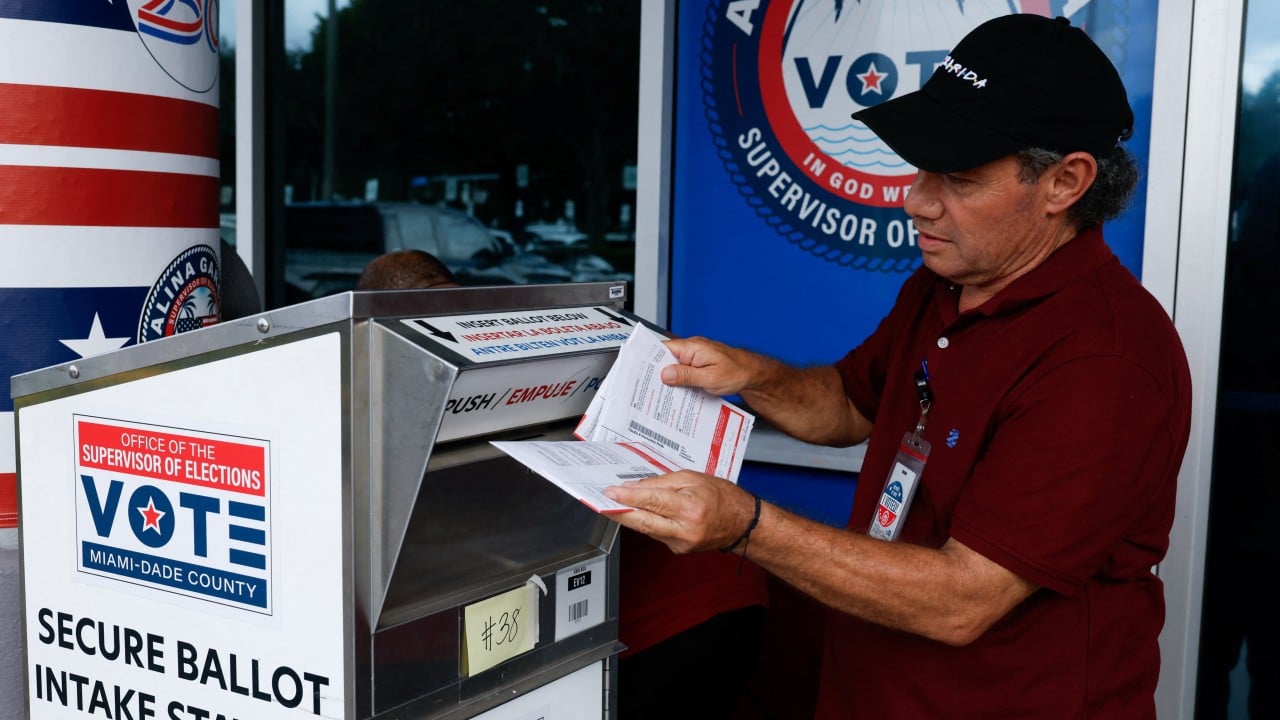
American voters delivered a historic rebuke to President Donald Trump on November 3, 2026, stripping Republicans of both chambers of Congress and shattering a political map that stood unchallenged for decades. By late November, Democrats had secured at least 258 House seats—a net gain of 44 districts and their largest majority since 1992—alongside a commanding 56-to-44 Senate majority after flipping nine Republican seats without losing a single incumbent. While surface-level coverage credits a generic backlash against Trump’s rhetoric, the actual mechanics of this collapse point to a far deeper structural failure: a toxic collision of military overreach in Iran, tariff-driven inflation, and self-inflicted candidate sabotage in deep-red strongholds.
The Anatomy of a Map-Breaking Rout
Standard midterm history tells us the president's party almost always loses ground. What happened in 2026 violated every rule of modern geographic polarization.
For the past twenty years, American elections have been fought inside an increasingly narrow corridor of seven or eight swing states. Nationalization turned Senate and House races into predictable extensions of the presidential map. That wall crumbled overnight. Democrats did not merely sweep traditional battlegrounds; they breached Republican fortresses across the Sun Belt, the Great Plains, and the Deep South. Eight of the nine Senate seats Democrats flipped—Alaska, Iowa, Kansas, Mississippi, North Carolina, Ohio, South Carolina, and Texas—were in states Donald Trump carried in the 2024 presidential election.
Look at Texas. For 38 years, Republicans treated the Lone Star State as an impenetrable electoral firewall. On November 3, Democratic state representative James Talarico defeated Republican Attorney General Ken Paxton by more than 12 percentage points, becoming the first Democrat sent to the U.S. Senate from Texas since 1988. In the same sweep, Democrat Gina Hinojosa ousted three-term Governor Greg Abbott, ending 36 years of Republican control in the Austin mansion.
Kansas followed the exact same script. Pastor Adam Hamilton unseated Republican incumbent Roger Marshall, giving Democrats their first Senate victory in the state since 1932. Down the ballot, the carnage was uniform. Democrats flipped 12 state legislative chambers across nine states, including both chambers in Arizona, New Hampshire, and Wisconsin, while Republicans failed to flip a single legislative chamber anywhere in the country. Even aggressive mid-decade gerrymandering in states like Texas, Florida, North Carolina, and Tennessee failed to insulate the GOP. When a wave hits double-digit margins, partisan map-drawing backfires—turning safe Republican districts designed to win by five points into razor-thin traps that collapse simultaneously.
How Foreign Conflict Collided With Kitchen-Table Pain
Pundits love single-variable explanations. Depending on the network, the 2026 blue wave was either strictly about grocery prices or strictly about Donald Trump’s personality. Both theories miss how those forces fused into an inescapable trap for Republican incumbents.
Voters returned Trump to the White House in 2024 on a specific, transactional promise: he would end foreign entanglements and bring down the cost of living. Instead, the administration’s military conflict with Iran shattered both pillars of that pitch at once. As hostilities escalated in the Middle East, global energy markets convulsed, driving fuel prices sharply higher across the American heartland. That energy shock landed on top of broad import tariffs that were already squeezing household budgets at the grocery store and the hardware aisle.
For working-class and independent voters, the connection was immediate and visceral. You cannot tell a voter in Ohio or Iowa that their purchasing power is protected while they are paying war-driven premiums at the gas pump. Republican strategists saw the internal polling bleed out weeks before Election Day, yet the White House doubled down. Rather than pivoting to domestic affordability, Trump spent October staging massive rallies urging supporters to close their eyes and pretend he was on the ballot.
The strategy backfired catastrophically. By making the midterms an explicit referendum on his personal authority while presiding over an unpopular war and stubborn inflation, Trump turned his own rallies into mobilization engines for Democratic and independent voters.
The Primary Trap and Candidate Quality Failure
A wave of this magnitude requires more than an unfavorable macro environment. It requires the losing party to actively dismantle its own defenses.
Throughout the 2026 primary cycle, the Republican Party systematically purged electable incumbents and replaced them with polarizing loyalists who could win a closed partisan primary but could not survive a general election. Nowhere was this self-sabotage clearer than in Texas and Louisiana. In Texas, four-term Senator John Cornyn—an institutional fundraiser with a long record of winning general elections—was forced into a bruising primary runoff and defeated by Ken Paxton, whose tenure as attorney general was defined by impeachment proceedings, felony securities fraud indictments, and constant legal turmoil.
When national GOP operatives warned that Paxton was radioactive in the booming suburbs of Dallas, Houston, and Austin, Trump intervened to elevate him anyway. The result was predictable. Suburban college-educated voters fled the Republican ticket in droves, dragging down not only Paxton and Abbott, but also dozens of down-ballot House and
The Suburban Revolt That Broke the GOP Grip on Congress
news
American voters just delivered a decisive rebuke to Donald Trump, handing control of Congress to the Democratic Party in a sweeping midterm shift driven by suburban defections, economic anxiety, and voter exhaustion with executive volatility. While cable news panels frame the results as a sudden ideological awakening, the reality on the ground is far simpler and much more mechanical. Independent voters in battleground districts did not suddenly fall in love with progressive orthodoxy. They simply decided that single-party rule under the current administration carried too high a price for their daily stability.
I have covered six midterm cycles from the press risers of local gymnasiums and county election boards. Every wave election looks mysterious on television until you examine the precinct spreadsheets. What happened across the Rust Belt, the Sun Belt, and the outer-ring suburbs was not a fluke of polling errors or weather patterns. It was a classic thermostatic correction. When an executive branch pushes aggressively on tariffs, deregulation, and institutional norms without a legislative check, the American electorate instinctively reaches for the emergency brake.
The Anatomy of a Thermostatic Electorate
Political scientists have studied the thermostatic public for decades, yet campaign strategists routinely ignore it until the morning after an election. Think of the electorate like a household thermostat set to seventy degrees. When one party takes control and cranks the heat up to eighty-five through rapid executive actions and polarizing rhetoric, voters do not necessarily want a blizzard. They just turn the dial back down to cool the room.
This dynamic explains why the Democratic surge occurred simultaneously in districts with wildly different cultural profiles. In affluent suburban counties outside Philadelphia, Atlanta, and Phoenix, college-educated voters cited institutional stability and healthcare costs as their primary motivators. Meanwhile, in manufacturing-heavy districts across Michigan and Wisconsin, union households reacted to supply chain disruptions and consumer price pressures tied to aggressive trade policies. The unifying thread was not a shared manifesto. It was a shared desire for a referee on the field.
Consider a hypothetical swing voter in a collar county outside a major Midwestern city. Two years ago, this voter backed the Republican ticket out of frustration with inflation and border security. Over the past twenty-four months, however, their grocery bill remained stubbornly high, their small business faced unpredictable import costs, and their evening news became an endless cycle of administrative chaos. When they stepped into the voting booth, they did not vote to endorse every plank of the Democratic platform. They voted to hire an oversight committee.
Why the Suburbs Abandoned the GOP Coalition
For the past decade, the Republican strategy relied on a delicate mathematical trade. The party traded away high-propensity, college-educated suburbanites in exchange for low-propensity, non-college-educated rural and working-class voters. That math works brilliantly when Donald Trump is at the top of the ticket driving massive rural turnout. It collapses entirely in a midterm environment.
Midterm electorates are older, wealthier, and disproportionately concentrated in suburban precincts. You cannot win a national House majority by running up the score in rural counties with forty thousand residents while losing suburban counties with eight hundred thousand residents by double digits. Yet that is precisely what happened across the decisive battlegrounds.
The Erosion of the Economic Advantage
Historically, Republicans have relied on a built-in trust advantage regarding the economy and fiscal stewardship. Whenever voters felt anxious about their wallets, the GOP held the upper hand. This cycle broke that rule because voters began connecting White House policy directly to their household friction.
Tariff threats, erratic regulatory rollbacks, and battles over federal spending created a climate of prolonged uncertainty. Businesses paused capital investments. Mortgage rates refused to budge. For middle-class families watching their purchasing power stagnate while corporate consolidation continued unchecked, the administration's economic pitch stopped matching their bank statements. Democrats capitalized on this gap by running fiercely localized campaigns focused on kitchen-table predictability rather than abstract national crusades.
The Turnout Asymmetry Trap
Grassroots infrastructure still matters, even in an era of multi-million-dollar digital ad buys. Over the last two years, Republican state parties across several key battlegrounds diverted massive resources toward legal battles, internal purity tests, and loyalty enforcement rather than traditional voter registration and field operations.
Democrats, chastened by previous losses, poured money into boring, unglamorous precinct work. They funded local organizers twelve months before Election Day. They tracked mail-in ballot curing down to the individual apartment building. When the final week arrived, the Democratic ground game efficiently harvested votes from sporadic supporters, while the GOP relied heavily on earned media and national rallies that failed to move the needle in hyper-local House races.
The Overlooked Role of Down-Ballot Candidates
National commentators love to reduce every congressional race to a referendum on the president. That framing misses half the story. Candidate quality remains the single most underrated variable in American politics, and this cycle exposed a glaring disparity between the two parties' recruitment pipelines.
Democratic leadership spent the cycle recruiting pragmatic candidates with deep local roots—former prosecutors, military veterans, school board members, and small business owners. These candidates routinely distanced themselves from the national party brand when necessary, focusing relentlessly on local infrastructure, water quality, and healthcare access.
In contrast, brutal Republican primaries frequently produced nominees tailored for cable news appearances rather than general election persuasion. In swing districts decided by three or four thousand votes, nominating a candidate who spends October relitigating past grievances instead of addressing local property taxes is political malpractice. Voters noticed the difference. Ticket-splitting is rarer than it used to be, yet thousands of voters still proved willing to back local Republicans for county commissioner while rejecting their congressional counterparts.
What Divided Government Actually Changes in Washington
Handing Congress to the opposition immediately alters the gravitational pull of Washington. The era of sweeping, party-line legislative packages pushed through on narrow majorities is officially over for the next two years. What replaces it is a grind of institutional trench warfare, subpoena power, and budget brinkmanship.
First and foremost, subpoena power shifts hands. Congressional committees will no longer serve as protective shields for cabinet secretaries and agency heads. Expect immediate, exhaustive investigations into federal contracting, regulatory exemptions, ethical compliance, and executive branch staffing. For an administration accustomed to operating with minimal internal resistance, mandatory public hearings under oath represent a profound operational hazard.
Second, the legislative calendar will narrow to the bare essentials. Major judicial confirmations and executive appointments will face grueling bottlenecks if the Senate margin holds for the opposition, while House leadership will hold absolute veto power over appropriations bills. Every government funding deadline will become a high-stakes negotiation over policy riders, forcing the White House to compromise or risk economically damaging shutdowns.
Third, the incoming Democratic majority faces an immediate internal test of discipline. A wave election inevitably brings together moderate lawmakers from Trump-won districts and progressive representatives from deep-blue urban centers. Keeping that coalition unified requires ruthless focus. If the new majority spends its political capital on symbolic messaging bills that die on arrival, the very suburban voters who handed them the gavel will grow disillusioned just as quickly as they turned on the GOP.
The Dangerous Trap of Misreading the Mandate
Every party that wins a wave election convinces itself that voters have fallen permanently in love with its ideology. It is the oldest delusion in American politics, and it almost always leads to overreach within eighteen months.
Democrats did not win a mandate to remake the American economy overnight. They won a mandate to restore institutional guardrails, lower the political temperature, and address basic cost-of-living pressures. The voters who swung these districts are fundamentally pragmatic, impatient, and unsentimental. They view political parties as service providers, not family members.
Meanwhile, the Republican Party faces a structural reckoning it has postponed for years. Relying on a single figure's personal magnetism to paper over declining suburban support is not a sustainable long-term strategy for holding legislative majorities. Until the GOP figures out how to speak to educated, metropolitan voters without alienating its rural base, it will remain vulnerable to sharp midterm corrections whenever the political winds shift.
The ballot boxes have been sealed, the provisional ballots are being tallied, and the victory speeches are already fading into the news cycle. Yet the underlying warning sent by the American electorate remains crystal clear for whichever party holds power next. Voters are tired of chaos, immune to spin, and entirely willing to fire anyone who forgets who they work for.


