Humidity clings to the glass towers along Victoria Harbour long after the sun drops behind Lantau Island. Inside a high-floor conference room in Central, the hum of air conditioning mingles with the soft clink of porcelain teacups and the quiet rustle of briefing folders. Outside, a ferry slices through dark water, its wake catching the neon pulse of Kowloon.
Listen.
That is the sound of a city built to absorb shock.
For years, anyone watching global trade and finance has grown used to a steady drumbeat of friction—tariff threats, supply chain reroutings, shifting interest rate expectations, and diplomatic frost across the Pacific. When treasury officials and economic ministers gather under the banner of Asia-Pacific Economic Cooperation, known as APEC, most headlines reduce the event to a predictable script: communiqués, photo ops, and carefully parsed talking points.
Yet Hong Kong's hosting of an APEC gathering—and the promise by treasury leadership that the meeting will showcase China's voice in stability—carries a weight that rarely shows up on a wire-service ticker. Stability is not an abstract macro-metric sitting neatly inside a spreadsheet. It is a mood in a room. It is whether a factory manager in Dongguan or a logistics coordinator in Penang sleeps through the night without recalculating freight margins before dawn.
I have spent enough time around trading desks, customs brokers, and port terminals to know how quickly calm evaporates. One afternoon, everything looks orderly—containers stacked in neat rows, invoices clearing on schedule, currencies trading inside narrow bands. By the next morning, a single policy signal or geopolitical rumor sends spreads widening and buyers freezing orders. When markets lose their footing, nobody waits around for a white paper. People pull back first and ask questions later.
That is why a pledge to project stability from a stage in Hong Kong matters more than a routine diplomatic phrase. It is an attempt to anchor expectations in a region where twenty-one economies—spanning vast manufacturing hubs, resource exporters, island nations, and financial centers—depend on predictable rules of the road.
Why Stability Is Never Just a Word on a Podium
Economists often talk about certainty the way sailors talk about wind: you cannot see it, yet every sail depends on it.
To make that invisible force concrete, picture a hypothetical character—let's call her Mei-Ling, a mid-sized electronics components buyer working out of a cramped office in Kwun Tong. Mei-Ling does not trade sovereign bonds or sit in ministerial bilaterals. Her world is measured in microcontrollers, wiring harnesses, copper prices, and shipping lead times between mainland factories, Southeast Asian assembly lines, and buyers across the Pacific.
When currency swings widen unexpectedly or trade rules feel suddenly conditional, Mei-Ling faces an immediate bind. If she locks in supplier contracts too early, a sudden shift in demand or tariffs can leave her holding expensive inventory nobody wants right away. If she waits too long, component shortages or freight bottlenecks can stall her customers' production lines and cost her hard-won accounts.
Multiply Mei-Ling by tens of thousands of small exporters, port workers, warehouse operators, and credit officers across the Asia-Pacific region. Suddenly, "stability" stops sounding like bureaucratic jargon. It becomes oxygen.
When Hong Kong's treasury chief frames an APEC gathering around showcasing China's voice in stability, the subtext is unmistakable: amid noisy global rivalry and rapid economic transition, Beijing and Hong Kong want to be read as a steady hand on regional commerce and financial order. Whether every listener agrees with that framing or tests it against their own balance sheets, the signal itself is a deliberate bid to calm nerves.
Consider what happens next: words alone never settle a nervous market. Traders and business owners watch for alignment between speech and action—consistent regulatory signals, smooth cross-border capital and trade flows, and practical cooperation on shared headaches like supply chain resilience and financial risk.
Hong Kong as the Stage and the Bridge
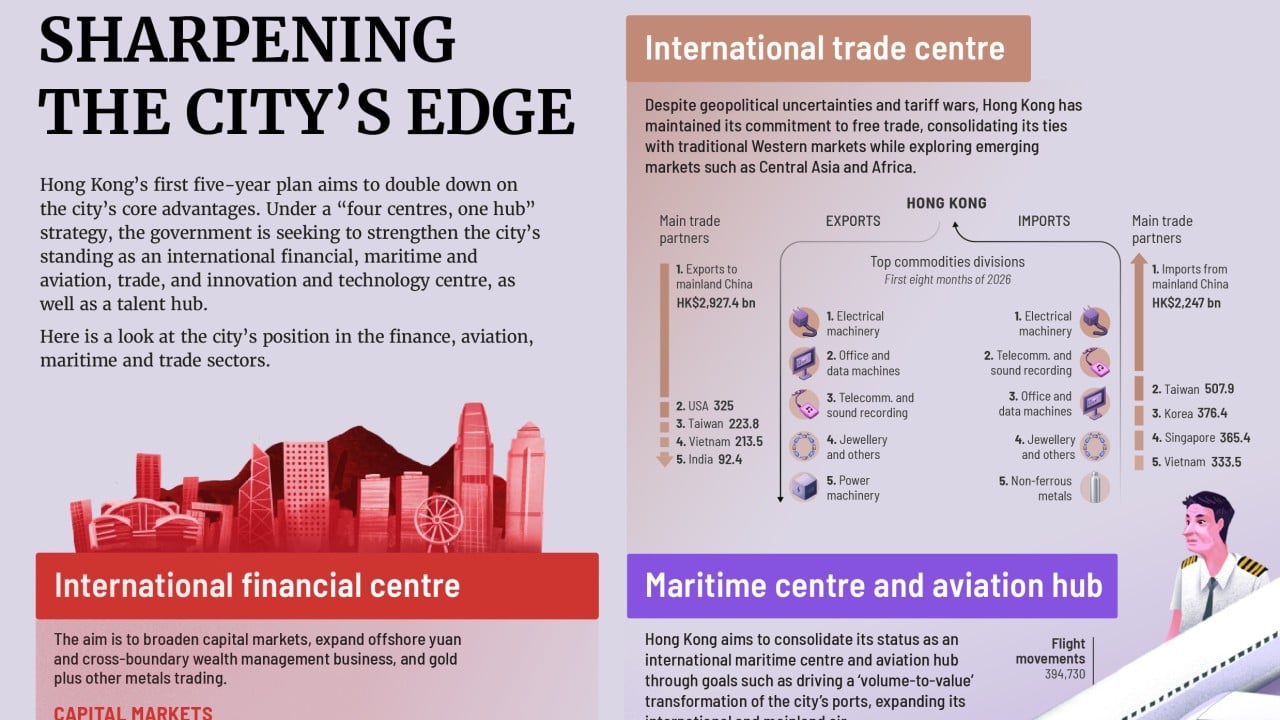
Choosing Hong Kong for high-level economic dialogue is never accidental. Even as global finance evolves and alternative hubs compete for attention, Hong Kong remains a distinct meeting point where mainland policy priorities intersect with international capital, common-law commercial norms, and deep regional connectivity.
Walk past the bustling piers of Wan Chai or watch cargo vessels line up near the western approaches, and you feel the city's dual identity. One foot stands firmly in China's economic orbit; the other faces outward toward global markets, foreign banks, and multinational supply chains. Hosting APEC gatherings here allows officials to speak to a regional and international audience from a venue steeped in trade history.
I still remember standing on a concrete seawall near Tsim Sha Tsui during a squall a few years back, watching a container ship hold steady against a crosswind while smaller boats bobbed sharply beside it. Mass matters in rough water. A large economy with deep industrial roots and major financial gateways carries enormous gravity across Asia. With that gravity comes scrutiny—and responsibility.
When treasury officials emphasize stability in this setting, they are addressing two audiences at once. The first is domestic and regional: signaling continuity as China navigates structural shifts, property and local-debt adjustments, green transition costs, and changing export patterns. The second is broader APEC counterparts—economies ranging from the United States and Japan to ASEAN members, Chile, and New Zealand—that rely on open trade channels and predictable financial plumbing even when political disagreements flare elsewhere.
The Quiet Questions Behind Every Communiqué
Whenever senior finance officials promise stability, smart observers ask a set of grounded questions—not out of cynicism, but out of survival instinct.
First, what kind of stability is on offer? In economics, calm can come from genuine, durable resilience—healthy demand, transparent rules, and balanced growth—or from rigid control that merely suppresses pressure until it vents somewhere else. Market participants look closely at details like fiscal support, monetary policy coordination, and cross-border payment ease to judge which version is taking shape.
Second, how does stability coexist with change? The Asia-Pacific economy is not frozen in amber. Supply chains are diversifying, digital trade and green manufacturing are expanding, and demographic shifts are reshaping labor markets. True stability in a fast-moving region cannot mean locking yesterday's model in place; it has to mean managing transitions without triggering sudden shocks.
Let's use a simple metaphor to keep that distinction clear. Picture a suspension bridge across a wide river. A rigid slab of cast iron might look rock-solid on a calm day, yet high winds or thermal expansion can stress it past its limit. A well-engineered suspension bridge sways slightly—it flexes with the wind—while its cables and anchorages keep the roadway safe and passable. Good economic policy aims for that kind of disciplined flexibility rather than brittle stiffness.
Third, what does this mean for ordinary households and businesses far from the conference halls? A communiqué signed in Hong Kong will not lower a family's grocery bill on its own or erase a firm's borrowing costs overnight. Yet policy tone shapes credit conditions, investment appetite, and trade friction over quarters and years. When major economies lean toward predictability rather than escalation, the room for constructive negotiation widens.
Where Uncertainty Still Lingers
Honesty requires admitting what we do not know. Global economics in 2026 is not a neat textbook problem with a single right answer. Geopolitical tensions, protectionist impulses, shifting industrial policies, and uneven domestic recovery across major economies create real cross-currents that no single summit can wish away.
Sometimes, even seasoned analysts get whiplash. A policy move praised one week as decisive stabilization can draw debate the next over long-term debt or trade imbalances. If you feel a touch of fatigue watching high-stakes summits promise calm while headlines keep shouting crisis, you are in good company. Uncertainty is exhausting, and readers have every right to separate grand rhetoric from measurable follow-through.
Still, dismissing diplomatic gatherings as empty theater misses how trust is built—or lost—in international affairs. Relationships among finance ministries, central banks, and business leaders depend on repeated contact, clear channels during stress, and shared pragmatic interests. APEC has long served as a forum where economies with very different political systems can still talk shop on trade facilitation, digital economy standards, and economic resilience.
What Makes a Promise Stick
Back in that imagined Kwun Tong office, Mei-Ling checks her screen one more time before closing her laptop. A shipment from southern China is cleared for loading; a buyer in Southeast Asia has confirmed next quarter's forecast. Nothing has magically become effortless—shipping rates still fluctuate, and competition remains fierce—but the ground under her feet feels slightly firmer than it did last month.
That is the real test of any stability pledge. Not how grand the speech sounds inside a convention hall, nor how sharp the camera angles look on evening news, but whether real people on real docks, factory floors, and trading desks find a little more room to plan, invest, and build.
Out on Victoria Harbour, the city lights keep reflecting across dark water—thousands of small beacons held steady by cables, pilings, and tides that never stop moving.