Map rooms rarely smell like panic. They smell like cold coffee, stale air, and the dull hum of fluorescent lights. On a mahogany table in a secure basement thousands of miles away from the western Pacific, a strategist slides a small plastic marker across a digital relief map.
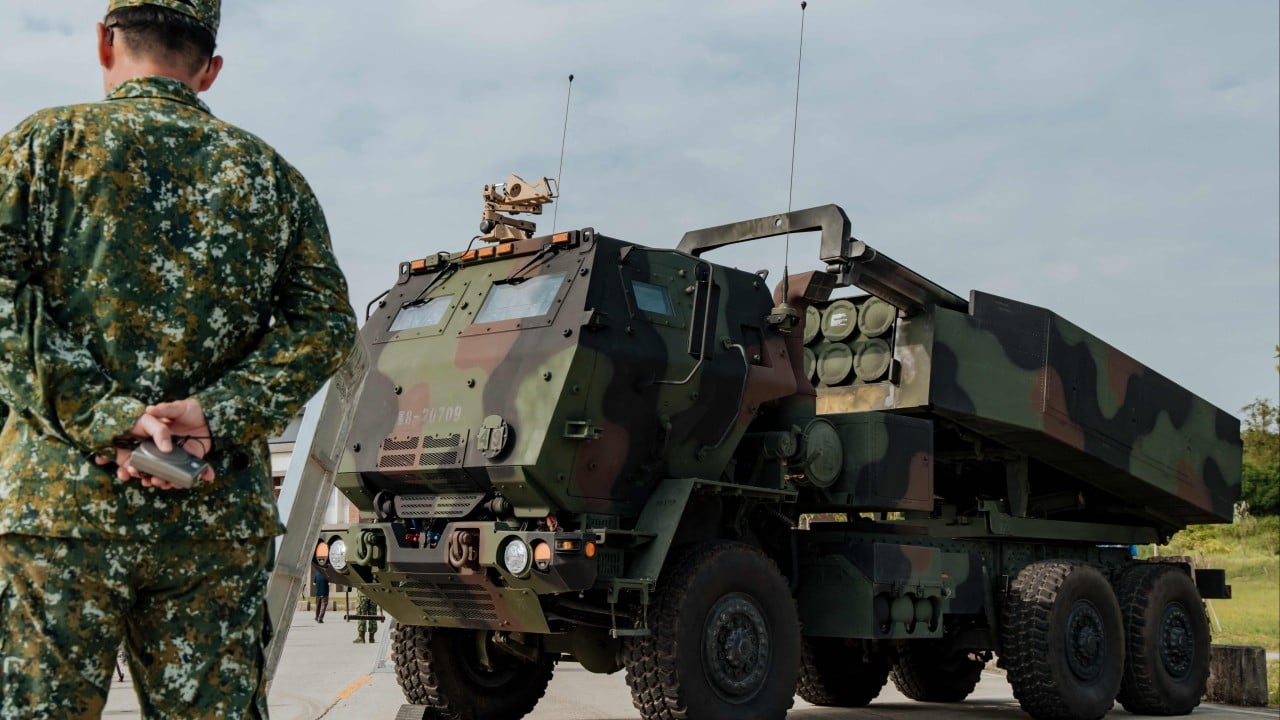
It represents a battery of High Mobility Artillery Rocket Systems. Better known as Himars. Meanwhile, you can read other stories here: Tokyo and the Fractured Order: Inside Japan's Quiet Strategic Pivot.
In theory, these truck-mounted launchers are designed to move quickly, strike with pinpoint accuracy, and vanish before an adversary can react. They have become the modern symbol of tactical flexibility. But on this map, the markers are static. There are not enough of them to cover the expansive jagged coastline across the Taiwan Strait. And more critically, the steel-cased precision rockets that feed them are running dangerously thin.
Supply chains are invisible until they snap. To understand the bigger picture, we recommend the recent article by USA Today.
To understand why a shortage of rocket artillery thousands of miles from American shores matters so deeply, you have to look beyond the factory floors in Arkansas or Texas. You have to look at the geometry of geography.
Imagine standing on the rugged western shore of Taiwan on a clear morning. Across the water lies a mainland coast that possesses an industrial manufacturing engine of staggering proportions. For decades, military planners have studied this narrow strip of ocean—roughly one hundred miles wide—as one of the most volatile geopolitical flashpoints on Earth. It is a body of water watched by satellites, patrolled by destroyers, and measured constantly in minutes and seconds.
In a conflict scenario, time is the only currency that matters.
Defense analysts use cold metrics to describe what happens when deterrence fails. They talk about attrition rates, munition expenditure per day, and industrial surge capacity. But behind those sterile terms lies a human reality: the soldiers tasked with defending an island democracy rely entirely on a pipeline of high-tech hardware that takes years to build.
Consider the anatomy of a precision guided rocket. It is not something you can assemble overnight in a makeshift garage. It requires microelectronics, solid rocket propellant, specialized titanium alloys, and guidance systems built to withstand extreme gravitational forces. When defense contractors report production bottlenecks, they are not just talking about corporate earnings reports. They are talking about a fragile ecosystem of specialized suppliers where a single missing component can halt the final assembly line for months.
For years, military assistance to partners and allies functioned on a quiet assumption. The assumption was that defense industrial bases could idle in peacetime and roar to life during a crisis like a sleeping dragon waking up.
That assumption has collided with reality.
Global conflicts in Eastern Europe have already drawn heavily on stockpiles of advanced artillery and precision munitions. Factories that were built to produce equipment at a modest peacetime rate suddenly found themselves supplying a high-intensity, industrial-scale war of attrition. The warehouses emptied faster than the production lines could refill them.
When a shipment of Himars launchers or their associated Guided Multiple Launch Rocket Systems is delayed, the ripple effect reaches the western Pacific instantly. Military planners in Taipei look at their defensive posture and make hard choices. Do they distribute their existing assets more thinly? Do they ration training exercises to save precious ammunition? Do they alter defensive doctrines that rely on counter-battery fire?
Every choice carries weight.
Military deterrence is an exercise in psychology. It relies entirely on convincing an adversary that the cost of aggression is impossibly high. When key capabilities face shortfalls, the psychological equation shifts. An adversary watching from across the water calculates the same numbers. They notice the delivery delays, the congressional debates over defense spending, and the strained capacity of foreign shipyards and munitions plants.
This is the invisible stake of the current shortage. It is not just about metal and electronics. It is about credibility.
To bridge this gap, military leaders are being forced to rethink how they fight. Innovation born of necessity is unfolding in real-time. Engineers are looking at ways to extend the lifespan of existing components, while software updates attempt to maximize the efficiency of every single rocket fired. But software cannot create physical steel. It cannot bypass the laws of chemistry required to mix propellant or the time needed to cast a rocket motor.
The challenge also forces a hard look at allied industrial cooperation. Defense manufacturing can no longer be viewed as a purely domestic enterprise. Security relies on resilient, interconnected supply chains that span multiple nations, sharing the burden of production before a crisis ever begins.
Back in the map room, the strategist lifts the small plastic marker and looks at the clock. The lights hum quietly overhead. Outside, the world goes about its morning routine, largely unaware of the complex equations balancing peace and conflict across an ocean.
The rockets are still being built, one deliberate, painstaking component at a time. Whether the factories can outpace the ticking clock of geopolitics remains the defining question of our era.