The fluorescent lights of a community room in Silver Lake hummed with a low, persistent buzz on a Tuesday evening. Outside, the traffic along Sunset Boulevard moved at its usual, relentless crawl, headlights bleeding through the twilight like a slow-moving river. Inside, forty people sat on folding chairs, holding paper cups of lukewarm coffee, arguing about a stretch of sidewalk three blocks away.
One man, a retired carpenter named Arthur—let us call him Arthur to stand in for the thousands of longtime Angelenos who feel their neighborhoods slipping away—held up a printed photo of an encampment near an elementary school. His hands shook slightly, not from anger, though he was angry, but from exhaustion. Across the aisle sat Elena, a hypothetical stand-in for the city's younger, rent-burdened workforce, a graphic designer paying sixty percent of her income for a studio apartment with a broken radiator. She was holding a folder filled with eviction notices from her building.
Neither of them hated the other. Both of them were terrified. And for years, the political machinery of Los Angeles had treated their fears as mutually exclusive, forcing them into opposite corners of a ring while the city itself grew harder, sharper, and more expensive to inhabit.
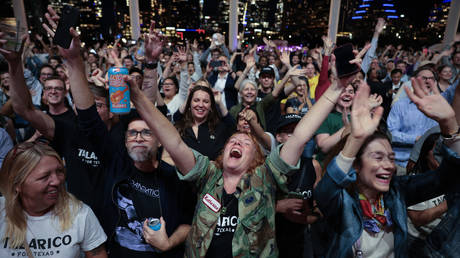
When news broke that City Councilmember Nithya Raman had defeated incumbent Mayor Karen Bass in the Los Angeles mayoral race, the immediate headlines reduced the event to a simple scoreline. A progressive challenger had unseated a sitting mayor. A political upset. An electoral earthquake.
Those headlines miss the point entirely.
To understand what actually happened in Los Angeles, you have to step away from the tally sheets and look at the pavement. You have to look at why a city famous for projecting dreams onto the rest of the world suddenly decided to rewrite its own script.
The Weight of the Incumbent's Promise
Four years earlier, Karen Bass had arrived at City Hall carrying the hopes of a city desperate for a steady hand. Having spent decades in community organizing, the California State Assembly, and the United States Congress, Bass offered a reassuring brand of institutional competence. She knew how Washington worked. She knew how Sacramento worked. When she declared a state of emergency on homelessness on her very first day in office and launched Inside Safe, her signature initiative to move unhoused residents from street encampments into motels and transitional housing, the relief across Los Angeles was palpable.
For a time, it looked like the machinery was finally moving. Motels were leased. Tents came down in high-profile corridors. City officials pointed to metrics showing thousands of people brought indoors.
Yet living in Los Angeles over the last few years meant experiencing a strange, disorienting split screen. On one screen, the official press releases celebrated unprecedented collaboration between city, county, and federal agencies. On the other screen, the daily reality for residents like our hypothetical Arthur and Elena felt stubbornly, painfully unchanged.
Consider what happens when a city relies on temporary fixes for structural fractures. Moving someone into a motel room is a vital emergency measure, much like applying a tourniquet to a bleeding wound. The bleeding slows. The immediate panic subsides. If, however, there is no operating room waiting down the hall—no permanent, affordable housing stock being built at scale, no streamlined permitting process to keep small landlords and developers from drowning in red tape—the tourniquet eventually becomes a permanent way of life, draining resources without healing the underlying injury.
Reports from city controllers and independent auditors began raising uncomfortable questions about the cost per bed under Inside Safe and the rate at which participants returned to the streets. Meanwhile, the broader cost of living continued its relentless climb. Small businesses along Melrose and Vermont boarded up windows, citing rising commercial rents and slow city permitting. Tenants watched corporate landlords buy up older rent-stabilized buildings, finding loopholes to push out longtime residents.
Voters did not necessarily stop respecting Karen Bass. Many still admired her grace, her work ethic, and her deep roots in the city's civic life. What eroded was the belief that working inside the existing system, using the traditional levers of political consensus, was enough to save a city in crisis.
The Urban Planner Who Refused the Script
Enter Nithya Raman.
Before she ever ran for office, Raman was an urban planner who studied poverty and infrastructure, co-founding a grassroots homelessness coalition in Los Angeles after seeing firsthand how fragmented the city's response was. When she won her seat on the Los Angeles City Council in 2020, defeating an entrenched incumbent in District 4, many political insiders dismissed her victory as a fluke—a localized wave of pandemic-era frustration confined to the trendy neighborhoods of Los Feliz and Silver Lake.
They underestimated her stubbornness.
Inside City Hall, Raman quickly gained a reputation that irritated allies and opponents alike. She refused to play the quiet game of councilmanic deference, the unwritten rule that councilmembers stay out of each other's districts and avoid rocking the boat on routine votes. She questioned police budget expansions when basic city services were languishing. She pushed aggressively for tenant protections, arguing that stopping evictions was the cheapest, most effective form of homelessness prevention available. She demanded transparency on how homelessness funds were spent, insisting on data over political theater.
To her critics, she was idealistic, uncompromising, and occasionally out of step with the immediate demands of residents who wanted encampments cleared first and questions asked later. To her supporters, she was the only person in the building treating the housing crisis like an actual emergency rather than a public relations problem.
Think of Los Angeles governance as an old, sprawling house with faulty wiring. For decades, city leaders have argued over which rooms deserve new paint and which lightbulbs need replacing, all while ignoring the fact that the breaker box in the basement is overloaded and sparking. Bass tried to manage the house carefully, ensuring the lights stayed on in the main hallways through sheer diplomatic effort. Raman walked into the basement with a flashlight and insisted on rewiring the entire panel, even if it meant plunging a few rooms into temporary darkness while the work got done.
The Invisible Stakes of the Ballot
Why did that message resonate across a city as vast, fractured, and famously apathetic about local elections as Los Angeles?
Because the invisible stakes of this election were never about ideology. They were about survival and dignity.
Walk down any commercial corridor in the San Fernando Valley, South Los Angeles, or the Eastside, and you will see the quiet fatigue etched into the faces of people waiting at bus stops. Los Angeles is a city where millions of people work full-time jobs and still sit one medical bill or one blown transmission away from living in their cars. When politicians talk about "housing production" or "zoning reform," those words sound dry, technical, almost bloodless.
In reality, zoning is the invisible hand that decides whether a nurse can live in the neighborhood where she works, or whether she has to commute ninety minutes each way from the Inland Empire. Permitting reform is the difference between a local baker opening a storefront on a struggling block or giving up after two years of paying rent on an empty space while waiting for city inspectors to sign off on a sink.
During the campaign, Raman managed to connect those abstract policy levers to the visceral, everyday frustrations of Angelenos. Instead of pitting Arthur's desire for safe, clean sidewalks against Elena's need for affordable rent, her platform argued that both problems stemmed from the exact same root: a city that had made it nearly impossible to build housing, slow to deliver mental health care, and overly reliant on expensive, reactive policing rather than preventative infrastructure.
It was a risky argument. In a city where public safety anxieties run deep, questioning traditional enforcement strategies can be political suicide. Opponents painted Raman as soft on crime and overly sympathetic to street encampments, warning that her policies would invite chaos.
Yet as the campaign wore on, something unexpected happened. Voters began comparing the promises of traditional toughness with the reality they saw outside their front doors. They looked at billions of dollars spent over the past decade with little visible improvement on the streets. They realized that sweeping an encampment from one corner to another two blocks away was not a solution; it was an expensive illusion.
The Mechanics of a Coalition
Victories in a city of nearly four million people do not happen by accident, nor are they won on vibes alone.
While political pundits focused on television ads and endorsements from downtown business groups or major labor unions, a different kind of campaign was unfolding on the ground. Thousands of volunteers—teachers, baristas, retired engineers, college students—spent weekends knocking on doors in apartment complexes that rarely see a campaign canvasser.
In Los Angeles, local elections have historically been decided by a small, older, predominantly homeowning electorate. Renters, who make up the majority of the city's population, have long been treated as an afterthought because they vote at lower rates. Raman's campaign treated them as the main event.
They talked to tenants about rent stabilization. They talked to small business owners about cutting bureaucratic fees. They talked to commuters about dedicated bus lanes and safer crosswalks in a city where traffic fatalities have climbed to grim highs.
Slowly, precinct by precinct, the math of Los Angeles politics began to bend. The coalition that emerged was not just the progressive enclaves of the Eastside; it stretched into working-class neighborhoods in the Valley and South LA, where residents were tired of feeling like their neighborhoods received the least investment and the slowest city services.
The Heavy Crown of Victory
Winning an election is one thing. Governing Los Angeles is another beast entirely.
Anyone who tells you that a single mayor can fix Los Angeles overnight is selling snake oil. The city's charter disperses power across fifteen fiercely independent City Council members, a county Board of Supervisors that controls health and social services budgets, and a sprawling bureaucracy that moves with glacial caution.
Nithya Raman now inherits a city facing massive budget deficits, looming infrastructure deadlines ahead of major international sporting events, and a housing market that remains brutally unforgiving. The same progressive voters who carried her into office will demand immediate, tangible results. Meanwhile, business leaders, homeowners' associations, and police unions will scrutinize every appointment, every budget line, and every ordinance she proposes.
If she moves too slowly, she risks alienating the grassroots movement that gave her power, falling into the exact same trap of incrementalism that doomed her predecessor. If she moves too aggressively without building consensus on the City Council, she risks legislative gridlock, watching her boldest proposals stall in committee while the streets remain unchanged.
The true test of this political shift will not be measured in election night speeches or national media profiles. It will be measured in quiet, unglamorous moments over the next four years.
It will be measured in whether a permit for an affordable apartment building takes six months instead of three years. It will be measured in whether a person experiencing a mental health crisis on a street corner is met by a trained clinician who actually has a bed to offer them, rather than a pair of handcuffs or an empty promise.
Morning on Sunset Boulevard
The morning after the votes were counted, the sun rose over the San Gabriel Mountains, casting a pale, golden light across the concrete sprawl of the basin.
Along Sunset Boulevard, the coffee shops opened their doors. Delivery trucks rumbled past murals painted on brick walls. At a bus stop near Vermont Avenue, a woman in scrubs waited for the 720 Rapid, checking her watch as the morning traffic began to thicken. A block away, a city sanitation crew worked quietly along the curb, sweeping up the debris from the night before.
Nothing had magically changed overnight. The rent was still due on the first of the month. The freeways were still jammed. The challenges facing Los Angeles remained massive, tangled, and stubbornly real.
Yet as the morning rush gathered speed, there was an unmistakable sense that the city had finally stopped looking backward for someone to restore a past that no longer existed, and had chosen instead to bet on the uncertain, difficult work of building something new.