Rain hits the asphalt on Georgia Avenue differently than it hits the marble steps of the Capitol.
Up on the Hill, a downpour is an inconvenience for tourists ducking into the Smithsonian museums and aides rushing between office buildings with black umbrellas. Four miles north, in Brightwood Park and Petworth, that same rain pools in the storm drains outside corner laundromats, slicks the stairs of rent-controlled brick walk-ups, and slows the 70 bus to a crawl while night-shift nurses check their watches at the shelter.
For more than a decade, Washington, D.C., lived inside the gravitational pull of a single political era. Muriel Bowser, first elected in 2014, built an administration defined by big-ticket economic development, downtown revitalization plans, and a centrist pragmatism that reassured federal overseers and major real estate developers alike. Yet as the city moved into the mid-2020s, a widening fault line opened beneath the District’s glittering waterfronts and newly constructed luxury towers.
Then came the 2026 mayoral race, and with it, a decisive shift in who gets to hold the keys to the John A. Wilson Building.
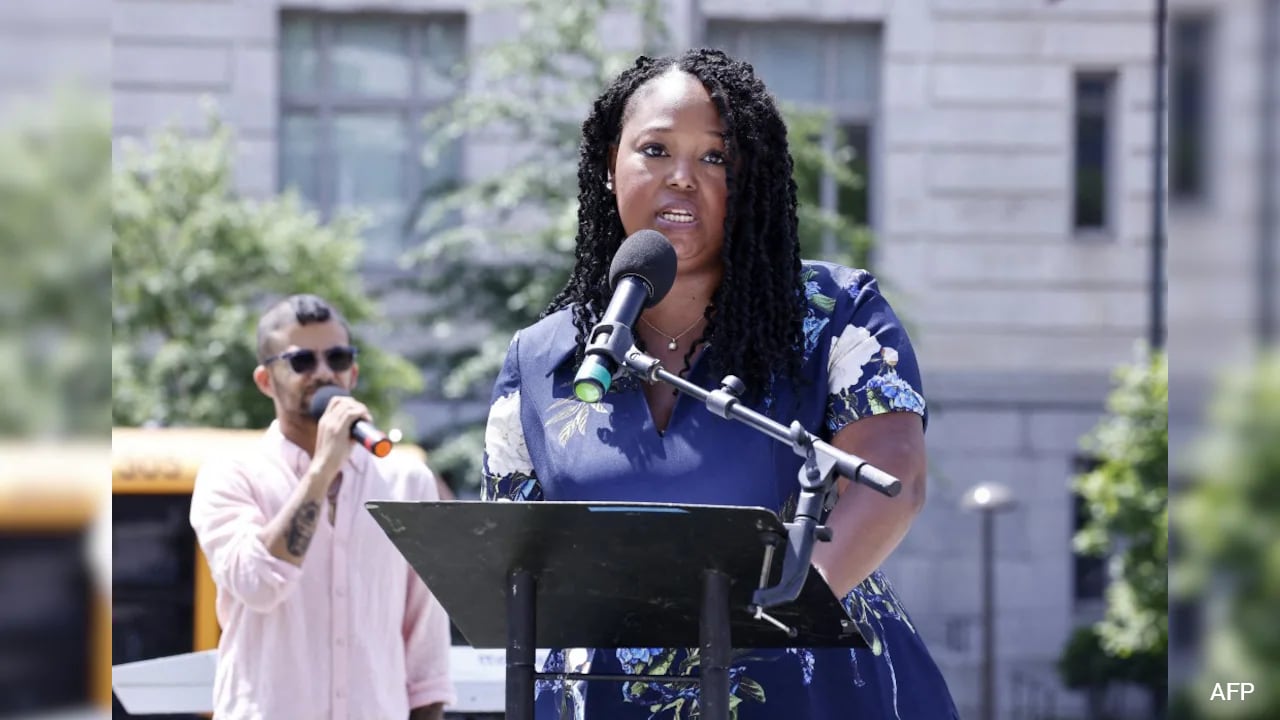
According to election results and reporting from local outlets covering the District’s municipal contests, Democrat Janeese Lewis George—a native Washingtonian, former prosecutor in the D.C. Attorney General’s office, and two-term Ward 4 Councilmember—emerged victorious as Washington’s next mayor. Her rise from a neighborhood-level progressive challenger in 2020 to the city’s top executive marks more than a routine transfer of municipal power. It represents a fundamental rethinking of what a capital city owes the people who actually live inside its borders.
Two Cities Sharing One Zip Code
To understand why voters turned toward Lewis George, you first have to stand at the intersection of hope and exhaustion that defines everyday life in the District.
Consider a hypothetical composite of the kind of resident whose frustrations shaped this election—let’s call him Marcus, a thirty-eight-year-old transit mechanic who grew up near Takoma and now rents a two-bedroom apartment just off Kennedy Street. Marcus makes a solid union wage. On paper, he is part of the thriving urban middle class that city brochures love to celebrate. In reality, every lease renewal feels like a coin toss against displacement, every grocery run costs noticeably more than it did three years ago, and every evening walk home from the Metro station comes with a quiet calculation about which blocks are well-lit and which storefronts have gone dark.
For years, Marcus heard two competing stories about his hometown.
One story, championed by the outgoing administration and business coalitions like the Federal City Council, argued that Washington’s survival depended on tax revenue generated by commercial office towers, sports arenas, and attracting corporate headquarters. In that telling, public safety meant expanding police hiring and tightening criminal penalties, while fiscal responsibility meant resisting tax hikes on high earners so the city wouldn't lose its tax base to Northern Virginia or Maryland.
The other story—the one Janeese Lewis George carried from porch to porch across all eight wards—insisted that a city cannot trickle its way down to prosperity while hollowing out its working families.
Listen. You can feel the tension between those two philosophies in almost every budget hearing held inside the Wilson Building over the past six years.
When Lewis George first unseated longtime Ward 4 Councilmember Brandon Todd in the 2020 Democratic primary, political observers treated her victory as a localized upset—a sign that democratic socialist organizing had found a foothold in one northern ward. Critics dismissed her platform as too idealistic for a city uniquely subject to congressional interference and budgetary oversight. Supporters, meanwhile, saw a third-generation Washingtonian who understood the District’s neighborhoods not as zoning maps or revenue projections, but as living ecosystems.
The Architecture of a Coalition
Politics is often described like a chess match, all cold calculation and clean angles. Anyone who has actually walked a precinct in July humidity knows it feels much more like plumbing—messy, pressurized, and entirely dependent on whether the pipes hold when the storm hits.
Lewis George’s path to the mayoralty was built on years of legislative groundwork that frequently put her at odds with Mayor Bowser’s executive branch. During her tenure on the D.C. Council, where she chaired the Committee on Facilities and Family Services, Lewis George focused relentlessly on the mechanics of daily life: housing voucher delays, shelter conditions for unhoused families, school maintenance backlogs, and violence interruption programs.
According to public Council records and local reporting from DCist, The Washington Post, and Washington City Paper, her legislative record combined progressive economic policies with targeted constituent services. She pushed for expanded funding for affordable housing production and preservation, advocated for the Early Childhood Educator Pay Equity Fund, and pressed city agencies to account for unspent funds meant for vulnerable residents.
At the same time, her critics—including business leaders, moderate Democrats, and several fellow lawmakers—raised pointed warnings throughout the campaign. They argued that aggressive progressive policies could chill private investment at the exact moment downtown Washington was struggling with post-pandemic office vacancies. They questioned whether a platform emphasizing social investment over traditional policing strategies could reassure residents rattled by spikes in violent crime and carjackings during the early 2020s.
Those doubts were real. Pretending otherwise would be dishonest.
Even among voters who admired her authenticity, plenty hesitated in the voting booth, wondering how a progressive mayor would navigate a hostile Congress—where lawmakers from outside the District routinely threaten to overturn local D.C. laws and block municipal budget autonomy—while simultaneously managing a multi-billion-dollar city bureaucracy where trash collection, 911 dispatch times, and permitting delays remain stubborn daily headaches.
Why the Old Playbook Stopped Working
To see why Lewis George ultimately overcame those reservations, look back at Washington’s political rhythm over the past half-century.
Since gaining Home Rule in 1973, D.C. politics has swung like a pendulum between eras of rapid physical transformation and eras of fierce demands for equity. Marion Barry built a coalition rooted in Black political empowerment and municipal employment. Anthony Williams stabilized city finances and sparked a wave of downtown redevelopment that brought tens of thousands of new residents into the city. Adrian Fenty accelerated school reform and neighborhood gentrification, only to lose in 2010 to Vincent Gray after voters in Wards 5, 7, and 8 felt left behind by the pace of change.
Muriel Bowser’s three terms brought rare stability and visible civic investment, from new libraries and recreation centers to major housing initiatives. Yet by the middle of this decade, the bill for two decades of market-driven growth had come due.
Longtime Black Washingtonians had watched the city’s demographic makeup shift dramatically, losing its historic status as a majority-Black city while median home prices climbed past $600,000. Service workers, teachers, and municipal employees found themselves commuting in from Prince George’s County because they could no longer afford to live near the neighborhoods they served.
Think of a city’s budget like the foundation of an old rowhouse. You can renovate the kitchen with imported marble and add a rooftop deck that looks magnificent from across the street, but if the joists underneath are rotting from water damage, eventually the whole floor begins to slant.
Lewis George spoke directly to that structural slant. In debates and town halls across Anacostia, Columbia Heights, Capitol Hill, and Chevy Chase, she framed affordability, public safety, and government competence not as competing priorities, but as intertwined halves of the same promise. Her argument was straightforward: safe neighborhoods require both accountable policing and real investment in youth programs, mental health response, and stable housing. A thriving downtown requires a thriving middle and working class with money left over after paying rent.
Inside the Transition Ahead
Winning an election in Washington, D.C., where Democratic primary voters effectively decide the general election in a heavily Democratic city, is only the opening chapter of a much harder test.
As Lewis George prepares to take office, the challenges waiting on her desk have no ideological shortcuts:
- The Downtown Reset: With remote and hybrid work permanently altering federal and private office demand, Washington faces long-term pressure on commercial property tax revenues. Converting empty office buildings into housing and revitalizing corridors like Gallery Place and Chinatown will require cooperation with the very real estate developers who viewed her candidacy with skepticism.
- Public Safety and Trust: Residents across every ward want two things simultaneously—faster emergency response times and constitutional, community-rooted policing. Reforming the Office of Unified Communications (the city’s troubled 911 center) and coordinating between the Metropolitan Police Department and violence interruption teams will test her management chops immediately.
- Federal Friction: Unlike any state governor or big-city mayor, the Mayor of Washington, D.C., governs under the constant shadow of Article I, Section 8 of the U.S. Constitution, which grants Congress ultimate authority over the District. Protecting local autonomy on budgets, criminal justice, and reproductive rights will demand strategic discipline as much as conviction.
- The Affordability Squeeze: Delivering on promises around social housing, childcare, and tenant protections while keeping municipal finances balanced will force tough choices when revenue growth slows.
What makes this moment compelling isn't certainty. Nobody who truly loves Washington—and has watched promising initiatives stall inside agency red tape—would promise effortless transformation.
What makes it compelling is the undeniable shift in who sits at the head of the table.
A Different Kind of Morning on Georgia Avenue
Step back outside onto Georgia Avenue after the rain clears.
The streetlights reflect off the wet pavement in long streaks of amber and white. Behind the counter of a neighborhood bakery, someone is already pulling trays of bread from the oven before dawn. Down the block, a grandmother waits with her grandson for the school bus, tightening the zipper on his jacket against the morning chill.
For years, people in neighborhoods like this watched decisions about Washington’s future get made in boardrooms and press conferences that felt a world away from their front stoops. Now, the person stepping into the mayor’s office grew up walking these exact sidewalks, riding these same buses, and arguing over the future of this city at kitchen tables where every dollar had a name on it.
Whether Janeese Lewis George can turn a historic electoral mandate into cleaner streets, safer blocks, and apartments working families can actually afford remains the defining question of Washington’s next four years. The campaign speeches are over. The real work begins the moment the doors of the Wilson Building swing open on inauguration morning, and four miles north on Georgia Avenue, the first bus of the day pulls away from the curb.