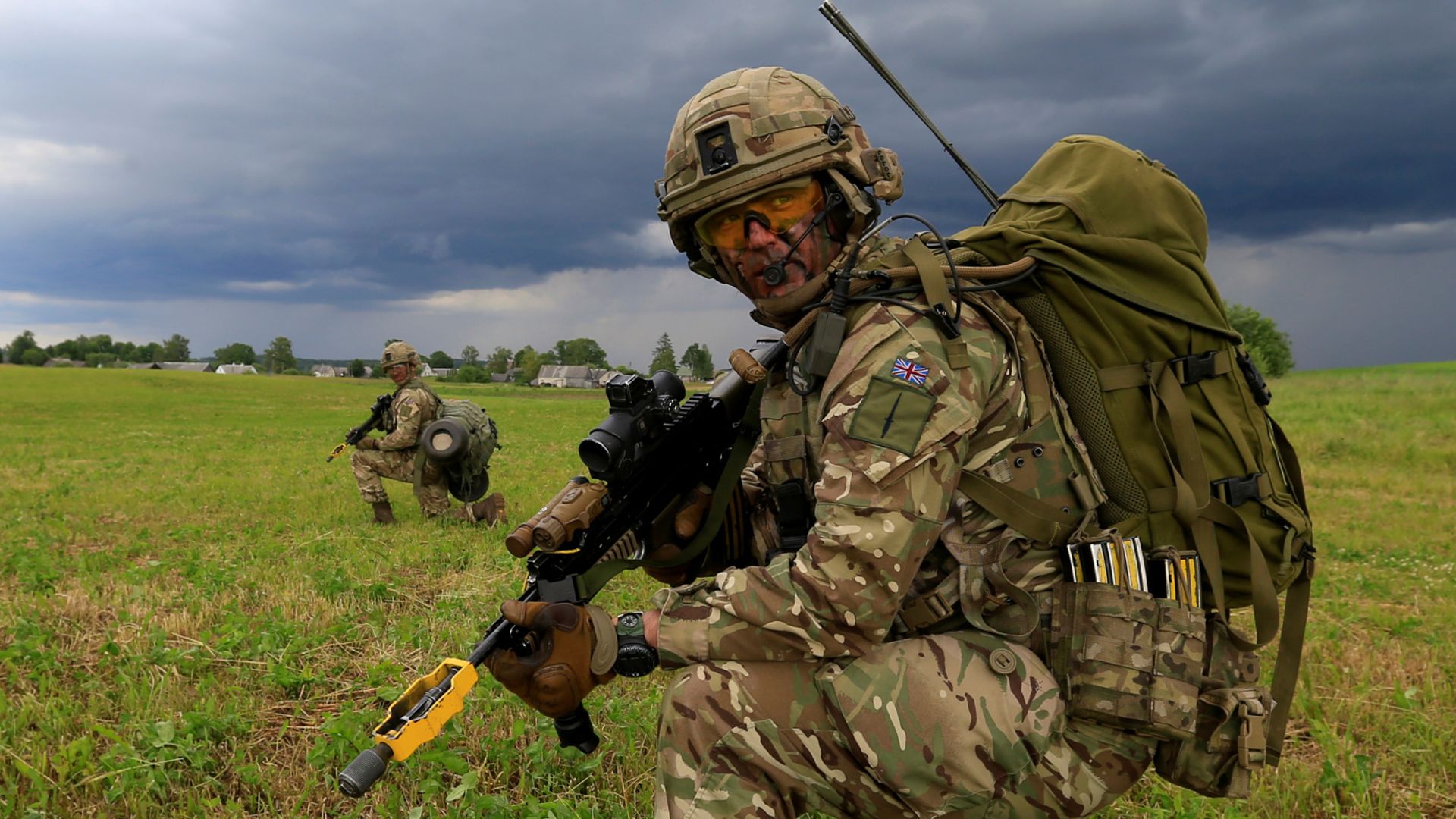
Cold. That is the first thing you notice when you stand near a heavy artillery battery before dawn in northern Europe, where frost clings to camouflage netting and every breath turns into a pale ghost in the headlights.
I have spent years standing beside people whose job is to keep terrible things from happening. Not to fight wars for glory, not to give speeches on a podium, but to sit in windowless rooms or muddy fields and make sure the other side never tests where the line actually sits. When you hear phrases like "synchronizing firepower" or "deterrence," it is easy to let your eyes glaze over. Those words sound like press releases written by people who never had to worry about a single miscalculation turning a quiet Tuesday into a catastrophe.
Yet behind those dry bureaucratic terms sits a very real human weight. A captain staring at a glowing screen at three in the morning knows that a poorly timed decision can rattle entire capitals. A logistics planner checking fuel routes across Poland or the Baltic states understands that a bridge bottleneck is not just a line on a map—it is time, and in modern warfare, time is everything.
To make sense of how a dedicated U.S. Army command coordinates long-range fires and allied forces to deter Russia without firing a shot in anger, it helps to step back from the acronyms and look at the people and pressures inside the machine.
Why Deterrence Is a Feeling Before It Is a Weapon
Ask ten people what deterrence means, and nine of them will picture missiles, tanks, or jets.
Wrong.
Deterrence is a calculation happening inside someone else’s head. If an adversary believes they can grab territory quickly, present the world with a fait accompli, and dare allies to fight a costly war to win it back, deterrence has failed before a single round leaves a barrel. If, instead, the math looks grim—if every radar ping, every rocket battery, every allied brigade feels connected and ready—the temptation shrinks.
History backs that up in uncomfortable ways. Throughout the Cold War, stability along the Fulda Gap and across Western Europe depended on more than raw numbers; it depended on credibility. Leaders on both sides had to believe that escalation was real, organized, and not easily brushed aside. When deterrence gets fuzzy, trouble follows. When Russia launched its full-scale invasion of Ukraine in 2022, it exposed how fragile assumptions about European security had become and forced NATO and the U.S. Army to rethink how forces are commanded, supplied, and linked together on the eastern flank.
That is where specialized command structures come in. Instead of treating long-range rockets, air defense, intelligence sensors, and multinational partner units like separate instruments playing out of tune, a dedicated fires and effects command tries to make them play the same score.
Consider what happens next: coordination sounds simple on paper until you add geography, weather, language differences, and electronic jamming.
Inside the Room Where Timing Is Everything
(Note: The following officer and scene are a hypothetical scenario created to illustrate how command-and-control and fires coordination work in practice, grounded in real military roles and operational realities.)
Call him Major Elena Novak, a hypothetical fires planner working a night shift inside a secure tactical operations center. Outside, rain taps against reinforced concrete. Inside, the air smells faintly of burnt coffee, dry recycled air, and warm circuit boards.
Elena does not pull a trigger. Her job is far quieter and, in its own way, heavier: making sure that if a crisis erupts, the right sensor sees the right target, passes clean data across networks without getting blinded by electronic warfare, and pairs that target with the right long-range strike or air-defense asset—all while staying strictly inside rules of engagement and allied coordination.
Think of it like conducting a symphony orchestra where the violinists are in one country, the percussion is fifty miles away, the sheet music is being updated live, and someone in the balcony is trying to cut the lights. If the brass comes in three seconds early or a communication link drops, the music falls apart. In military terms, friction is constant.
Elena checks two things constantly: latency and ambiguity.
Latency is the gap between spotting a threat and having a credible response ready. In modern conflict, drones, loitering munitions, and long-range rocket systems compress timelines from hours to minutes. If command decisions move too slowly, or if units cannot talk smoothly across national boundaries, speed favors the aggressor.
Ambiguity is the fog that invites mistakes. A radar track might be a civilian aircraft, a weather anomaly, a decoy, or something far more dangerous. Good command synchronization reduces guesswork so leaders have clearer pictures and steadier options—whether that option is a calibrated response, a defensive intercept, or a visible show of readiness meant to signal resolve without crossing into reckless escalation.
It is exhausting work. You cannot put "nothing happened tonight" on a trophy, yet for the people doing deterrence right, a quiet night is the highest compliment their craft receives.
What People Usually Get Wrong About Firepower and Deterrence
Whenever news breaks about long-range artillery, rocket systems, or new Army commands in Europe, two myths show up almost immediately. Both miss the point.
The first myth is that more firepower automatically equals more safety. Raw destructive power without command discipline, reliable logistics, and clear political control is just noise—or worse, a hair trigger. Deterrence relies on precision, readiness, and predictability. An adversary needs to know not only that you can reach deep targets, but that your forces are disciplined, integrated with allies, and sustained by real supply chains rather than hollow promises.
The second myth is that deterrence is purely an American show. Geography alone makes that impossible. Eastern Europe is a patchwork of sovereign nations with their own memories, terrain, and forces. When U.S. Army commands train and integrate with Polish, Baltic, Romanian, German, and other allied units, they are building shared habits and shared trust. In a crisis, trust built over years of joint drills matters just as much as hardware.
Let me admit something honest here: watching modern military tensions unfold can feel unsettling, even frightening. News clips swing wildly between triumphalism and doom, and technical terms like "multi-domain" or "fires synchronization" can make ordinary citizens feel shut out of conversations that shape their economic stability and global security.
You do not need a defense degree to grasp the core stakes. Look at the pattern through a simple lens:
| Element of Deterrence | Everyday Analogy | Why It Matters in Real Life |
|---|---|---|
| Command & Control | A dispatch center linking ambulances, traffic lights, and hospitals | Prevents confusion and wasted seconds when every minute counts |
| Long-Range Fires & Sensors | Smoke detectors paired with a fire station across town | Connects early warning to credible reach so threats cannot operate unchallenged |
| Allied Integration | Neighbors sharing spare tools and clear emergency plans | Turns separate strengths into a harder problem for any would-be aggressor |
| Sustainment & Logistics | Keeping a car fueled and serviced before a winter drive | Ensures readiness is real over weeks and months, not just a single day |
The Invisible Cost of Staying Ready
Readiness is never free. Every exercise burns fuel, wears down tires and barrels, pulls soldiers away from their families, and forces governments to weigh defense spending against schools, healthcare, and housing.
That tension is real, and pretending it does not exist insults people paying the bill. A democracy has to ask hard questions: Where does prudent defense end and wasteful bloat begin? How do you maintain strong deterrence against Russia without losing sight of other global pressures or drifting into permanent crisis thinking?
Those are fair arguments, and serious people disagree on budgets and force posture every single day. What is harder to argue away is the cost of being caught flat-footed. History rarely rewards nations that wait until smoke is rising to figure out how their radios talk to one another or how their commanders share intelligence.
By contrast, when a command structure works smoothly—when planners have rehearsed the hard scenarios, tested the communications links, and aligned with partners—it lowers the odds that a crisis spirals out of control through sheer confusion. Deterrence is loudest when it stays in the background, quietly altering the risk calculus of anyone thinking about testing the boundary.
Back in that damp pre-dawn field, the frost begins to melt as grey light creeps over the horizon. No shots are fired. Engines idle, radios hum with routine checks, and the day starts like any other.
Peace rarely announces itself with fireworks; more often, it sounds like a steady heartbeat in the dark, holding its rhythm so nobody dares test what happens if it stops.