Cold tea tastes like copper when you have been staring at a map for fourteen hours.
Consider a hypothetical scene playing out tonight in a wood-paneled office three miles from the Kremlin walls. Let us call him Alexei. He is a mid-level foreign policy analyst, thirty-eight years old, with dark circles under his eyes that no amount of espresso can erase. Spread across his mahogany desk are printouts of American district maps, polling averages from swing states, and translated transcripts of speeches given in Pennsylvania and Michigan. Outside his window, the Moscow sky is the color of a bruised plum. Inside, the radiator hisses like a trapped animal. You might also find this similar story interesting: Systemic Failure on the Nile Corridor Why Egyptian Rail Collisions Persist.
Alexei is not looking at troop movements in the Donbas. He is not counting artillery shells or tracking drone shipments across the Polish border. He is counting votes in suburban Philadelphia.
This is the strange, breathless reality of modern geopolitics. When the political ground shifts in Washington, the tremors do not stop at the water’s edge. They rattle the teacups in Moscow, shake the foundations of trenches in eastern Ukraine, and dictate whether a grandmother in Kharkiv sleeps in her own bed or on a concrete floor in a subway station. Right now, the Kremlin is watching a massive American electoral shake-up with a mixture of calculated patience and quiet anxiety. Their greatest hope is simple, stark, and entirely focused on one man. They are betting that whatever chaos engulfs the United States political system, it will not alter Donald Trump’s approach to negotiating an end to the war in Ukraine. As highlighted in recent coverage by NBC News, the implications are significant.
The Architecture of a Waiting Game
To understand why Moscow is holding its breath, you have to strip away the loud, bombastic rhetoric of television pundits and look at how power actually moves.
War is exhausting. Not just for the soldiers bleeding in the mud, though they pay the ultimate price, but for the economies and bureaucracies that feed the machine. By late 2026, Russia’s economy has been twisted into a pretzel to sustain its military campaign. Interest rates have soared into the double digits. Inflation eats away at the savings of ordinary citizens in Samara and Novosibirsk. Factories that once built tractors now weld armor plating, creating a sugar high of wartime spending that every economist in Moscow knows will eventually end in a brutal crash.
Vladimir Putin knows he cannot fight forever at this intensity. Yet he cannot afford to lose.
Enter the American political earthquake. Whenever Washington undergoes a major electoral realignment—whether through midterms that flip the balance of power in Congress, sudden shifts in party leadership, or the turbulent aftermath of a high-stakes campaign—foreign capitals panic. A new Congress means new committee chairs. New committee chairs mean new investigations, different budget priorities, and shifting alliances.
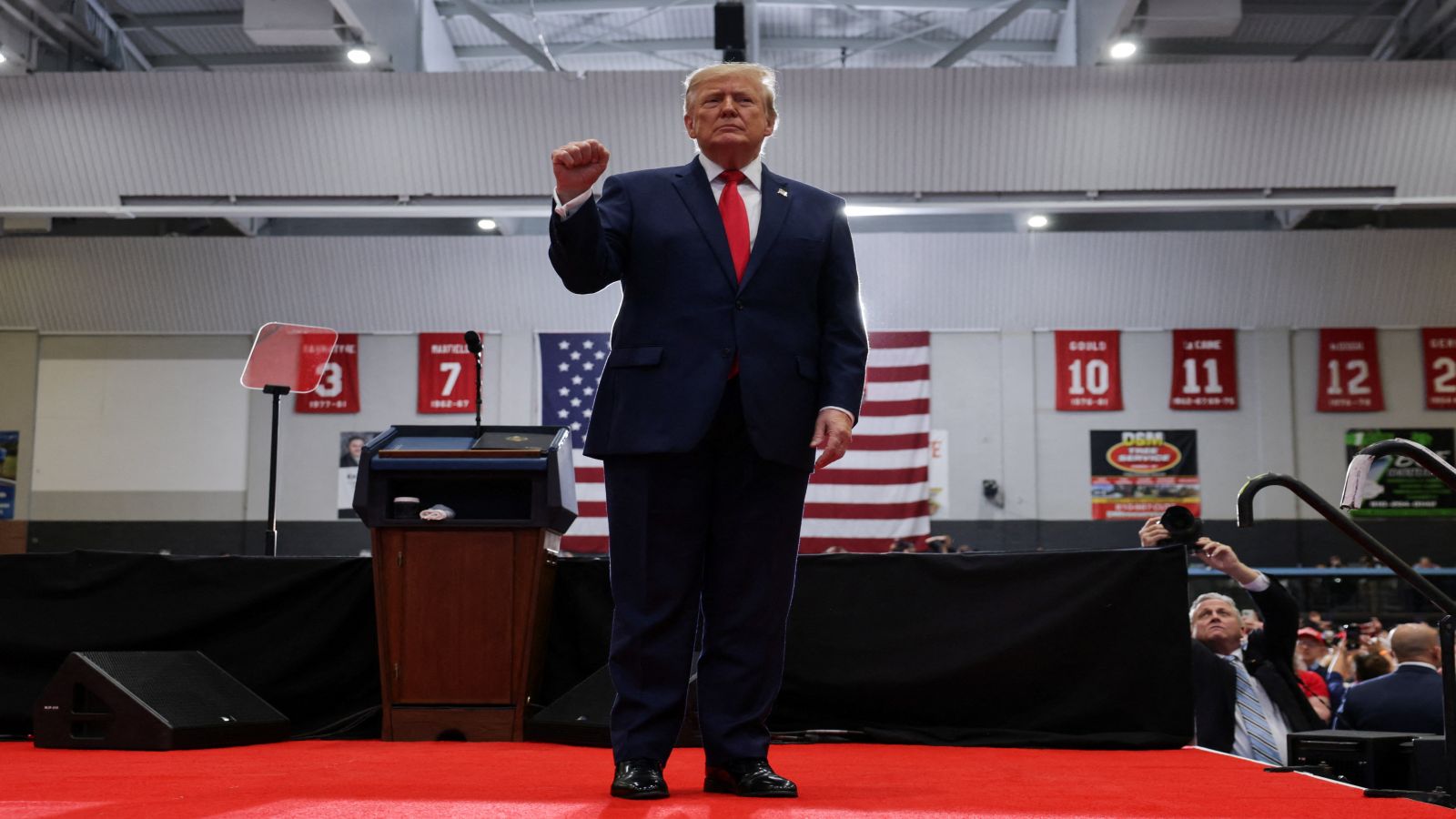
In the halls of the Russian Foreign Ministry, the primary fear is unpredictability. For months, Moscow’s strategic planning has operated on a clear assumption regarding Donald Trump. Trump has repeatedly, loudly, and unapologetically stated that he wants the war in Ukraine stopped immediately. He has expressed deep skepticism about open-ended American financial aid to Kyiv, framed the conflict as a drain on American resources, and suggested that a negotiated settlement—likely involving territorial compromises that Kyiv has long rejected—is the only realistic path forward.
To the Kremlin, that predictability is gold.
Imagine you are playing a high-stakes game of poker, and you finally think you have figured out the tells of the player sitting across from you. You know what he values. You know where he is willing to fold. Then, suddenly, the casino management walks over, changes the dealer, swaps out the deck, and half the spectators start screaming about the rules. You do not want a new game. You want the player across from you to stick to his original bet.
What Moscow Actually Wants from a Deal
When Kremlin officials talk about negotiations, they are not talking about peace in the way a poet or a priest defines it. They are talking about cementing reality on the ground.
Let us be painfully honest about what a Trump-brokered negotiation looks like from Moscow’s perspective, because pretending otherwise insults the intelligence of everyone watching this tragedy unfold.
- Territorial Recognition: Russia currently occupies roughly a fifth of Ukraine’s sovereign territory, including Crimea and large swaths of the Donetsk, Luhansk, Zaporizhzhia, and Kherson regions. Moscow’s baseline demand is keeping what it has taken.
- Neutrality Guarantees: The Kremlin wants an ironclad promise that Ukraine will never join NATO, effectively leaving the country in a gray zone without Western security umbrellas.
- Sanctions Relief: Beneath the bravado about economic resilience, Russian oligarchs and state banks are desperate to reconnect to global financial arteries and unfreeze billions in sovereign assets.
Trump’s transactional approach to foreign policy appeals directly to this mindset. Unlike traditional Washington diplomats who view the conflict through the lens of international law, democratic values, and post-World War II borders, Trump looks at balance sheets. He sees billions of taxpayer dollars flowing out of the United States with no clear return on investment. He sees the risk of escalation toward a nuclear confrontation that nobody wins.
For Putin, dealing with a pragmatist who views alliances as business contracts is infinitely preferable to dealing with idealists who view the war as an existential struggle between democracy and autocracy. You can haggle with a businessman. You cannot haggle with a crusade.
The Domestic Storm Threatening the Table
So why is Moscow nervous? Because American politics rarely stays neatly in its box.
An election shake-up in the United States does not happen in a vacuum. When voters shift the political furniture in Washington, they alter the pressure cooker inside which a president must operate. Even a leader as famously independent and resistant to institutional pressure as Trump has to navigate the realities of Capitol Hill.
Think about what happens when the political winds shift. If a newly energized opposition gains leverage in the House or Senate, or if traditional defense hawks within the Republican Party find their voices strengthened by voter mandates, the political cost of forcing Ukraine into a lopsided peace deal skyrockets.
Suddenly, every concession offered to Moscow becomes ammunition for domestic rivals. Every handshake or phone call with Putin gets dissected on cable news as a sign of weakness. Congress holds the power of the purse, and while a president commands the military and leads diplomatic talks, lawmakers can pass binding sanctions, mandate minimum aid packages, and tie the executive branch’s hands in knots through oversight hearings.
I remember sitting in a cramped press room in Brussels a few years ago, watching European diplomats try to decode a single tweet from Washington. Grown men and women, fluent in four languages and armed with doctorates in international relations, were staring at their phones like medieval peasants trying to read the entrails of a bird. The sheer volatility of American domestic politics had turned global statecraft into a guessing game.
That exact same paralysis is happening in Moscow today.
Russian state television broadcasts a veneer of supreme confidence. Anchors in sharp suits mock American polarization, portraying the United States as a declining empire tearing itself apart at the seams. Yet behind closed doors, Russian diplomats understand a terrifying paradox: a chaotic, politically divided Washington might actually be harder to negotiate with than a unified one. If Trump is forced to fight a two-front political war at home just to maintain control of his legislative agenda, he may have far less political capital to spend on a controversial, messy peace deal in Eastern Europe.
The View from the Other Trench
It is dangerously easy to talk about negotiations, leverage, and electoral maps as if we are moving plastic pieces across a board. We must not forget the flesh and blood paying for every day of delay.
While analysts in Moscow study swing-state demographics and politicians in Washington trade barbs over microphones, let us look at another hypothetical figure—grounded entirely in the daily reality of millions of Ukrainians. Meet Olena, a thirty-two-year-old structural engineer living in Kyiv.
Olena does not care about the nuances of American committee assignments. She cares about the hum of the diesel generator outside her apartment building when the power grid fails after a missile strike. She cares about whether her younger brother, stationed near Pokrovsk, has enough mortar rounds to hold his position through the night.
To Olena, the phrase "negotiated settlement" does not sound like peace. It sounds like a pause button.
Historical patterns in the region justify her terror. In 2014, after Russia seized Crimea and fueled a separatist war in the Donbas, European leaders brokered the Minsk agreements. Those deals froze the conflict on paper while leaving Russian forces entrenched on Ukrainian soil. Eight years later, Moscow used those exact staging grounds to launch a full-scale invasion.
When Ukrainians hear that Moscow hopes Trump will push for a quick deal regardless of American political shifts, they hear a death sentence for their sovereignty. They know that if the fighting stops today along the current front lines without ironclad, enforceable security guarantees, Russia will simply spend the next four years rebuilding its tank factories, replenishing its missile stockpiles, and training a fresh generation of conscripts.
Peace without justice is merely an intermission.
The Illusion of Control
Here is the truth that keeps diplomats awake at three in the morning: nobody is truly in the driver’s seat.
We like to believe that powerful leaders—whether in the Oval Office or the Kremlin—sit in dark rooms orchestrating grand strategies with surgical precision. We imagine them pulling levers and watching the world bend to their will. In reality, high-stakes diplomacy is usually a frantic scramble to manage unintended consequences.
Consider the sheer number of variables currently colliding:
- Battlefield Momentum: If Russian forces make sudden territorial breakthroughs before talks begin in earnest, Putin’s appetite will grow, making him reject terms he might have accepted six months earlier. Conversely, if Ukrainian forces hold the line or strike deep inside Russian territory, Moscow’s leverage evaporates.
- European Resolve: Leaders in Warsaw, Berlin, and London are acutely aware that a bad deal in Ukraine puts their own borders in the crosshairs next. Even if Washington steps back, European nations have ramped up their own defense manufacturing and may refuse to lift sanctions or recognize Russian territorial gains, leaving any US-Russia bilateral deal half-baked.
- Economic Breaking Points: Neither side has infinite money. A sudden drop in global oil prices could gut Moscow’s war chest overnight, forcing Putin to the table on far weaker terms than he anticipates.
Trump himself thrives on unpredictability. He views ambiguity as a weapon, keeping both allies and adversaries off balance so they cannot plan around him. While the Kremlin hopes his core instinct—to end the war quickly and cut American commitments—remains untouched by the domestic electoral shake-up, banking on a leader whose primary strategy is surprise is a desperate gamble.
What happens if Putin overplays his hand? What happens if Moscow assumes Trump is locked into a corner by domestic politics and demands humiliating concessions from Washington, triggering Trump’s famously fierce pride and causing him to flood Ukraine with advanced weaponry instead?
That is the nightmare scenario whispered in the corridors of the Russian Ministry of Defense. It has happened before in history. Leaders misread the domestic constraints of their rivals, push one inch too far, and accidentally ignite the exact escalation they were trying to avoid.
The Heavy Cost of Waiting
I have spent years watching how conflicts end, and if there is one lesson written in permanent ink across the twentieth and twenty-first centuries, it is that wars rarely end when the politicians are ready. They end when the exhaustion becomes absolute.
Right now, the world is caught in a cruel waiting period. Every week that passes while Washington absorbs the aftershocks of its political realignment is another week of artillery barrages, another week of shattered families, and another week where the fate of a European nation hangs on the shifting moods of an electorate five thousand miles away.
It is deeply unsettling to admit how fragile the global order has become. We want neat answers. We want to believe that wise men and women are steering the ship away from the rocks. Instead, we are watching a high-wire act in a hurricane, where a gust of wind in a suburban American precinct can send shockwaves straight into the bunker of a Russian autocrat.
Back in that wood-paneled office in Moscow, the radiator finally clanks into silence. Dawn begins to bleed gray light through the frost on the windowpane. Alexei gathers the polling printouts, taps them into a neat stack, and locks them inside a steel safe. He rubs his eyes, puts on his heavy wool coat, and steps out into the freezing air.
Thousands of miles away, in a darkened apartment in Kyiv, Olena hears the piercing wail of an air raid siren cut through the morning quiet, grabs her coat, and walks down the concrete stairs into the dark.