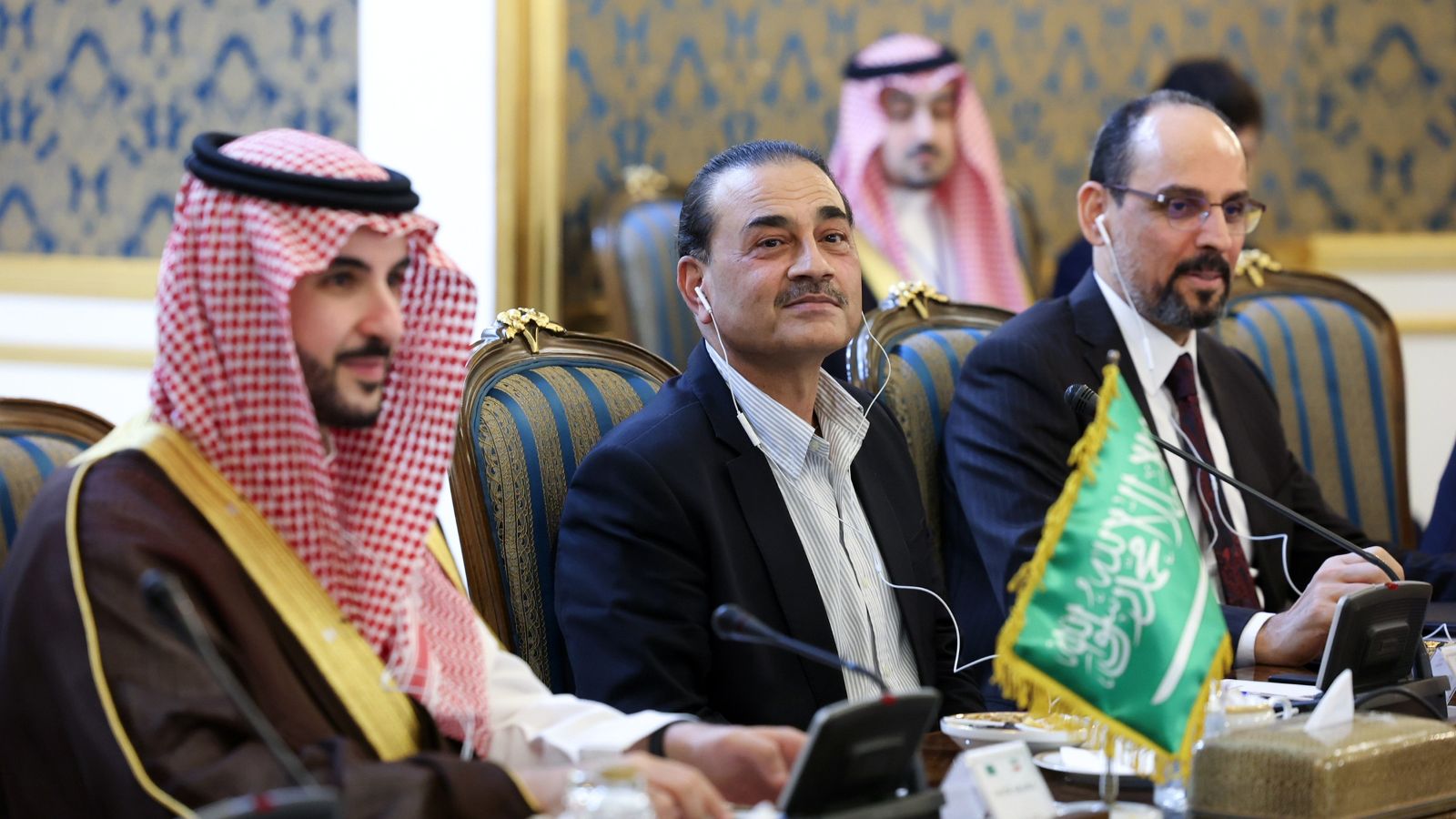
The air inside a high-level diplomatic summit smells like cold coffee, floor wax, and suppressed anxiety.
If you have ever sat in the back row of a committee room while politicians haggle over the placement of a single comma, you know the peculiar ache that settles behind your eyes around hour four. Outside, the city hums with normal life—traffic moving, vendors shouting, people worrying about the price of cooking oil or the reliability of the local power grid. Inside, under fluorescent lights that flatten every face into exhaustion, delegates argue over verbs. Should the text say "condemn" or "express deep concern"? Should it say "reaffirm" or "note"?
To an outsider, it looks like theater for people who enjoy the sound of their own voices. Yet when Indian Member of Parliament Shashi Tharoor stepped before the cameras during the BRICS Parliamentary Forum and offered a measured, almost wistful remark—hoping there would be a joint declaration the following day—he was pointing directly at a fault line running beneath the modern global order.
Hope.
Diplomats rarely use that word unless certainty has already packed its bags and left the building.
The Weight of an Unwritten Sentence
Consider what happens when a room full of lawmakers cannot agree on a piece of paper.
On the surface, the BRICS Parliamentary Forum is a gathering of legislators from an expanding coalition of emerging economies—originally Brazil, Russia, India, China, and South Africa, now widened to include nations like Egypt, Ethiopia, Iran, and the United Arab Emirates. Unlike prime ministers and presidents, who sign binding executive treaties and command armies, parliamentarians represent the noisy, argumentative heartbeat of their home countries. They are supposed to bring the voices of ordinary citizens into the architecture of international cooperation.
When those lawmakers meet, a joint declaration is the bare minimum proof of life. It is the receipt showing that nations with radically different political systems, histories, and economic anxieties managed to sit at the same table and find common ground without flipping it over.
When someone as seasoned as Shashi Tharoor—a man who spent decades inside the United Nations mastering the art of diplomatic ambiguity before entering Indian politics—says he is hoping for a declaration tomorrow, listen closely. That is not casual optimism. That is an experienced navigator reading the barometer and noticing the needle dropping fast.
Why was agreement proving so elusive? Because BRICS is no longer a cozy five-member club sharing a neat acronym invented by a Goldman Sachs economist in 2001. It has become a sprawling, crowded house where the neighbors do not always share the same rules, the same enemies, or the same vision of the street outside.
A Tale of Two Tables
To understand why a single document in a parliamentary forum carries so much invisible weight, step away from the podiums for a moment and picture two people living thousands of miles apart—a hypothetical scenario designed to make the abstract mechanics of trade and geopolitics tangible.
First, meet Elena, who runs a mid-sized textile export workshop on the outskirts of São Paulo. Her margins are razor-thin. Every time the US dollar surges against the Brazilian real, the imported machinery parts she needs to keep her looms running grow more expensive overnight. When she hears politicians talk about BRICS exploring alternative payment systems or local currency trade, she does not hear ideological grandstanding. She hears the possibility of surviving next quarter without laying off six workers.
Now meet Aarav, a software engineer in Bengaluru watching global supply chains shift like tectonic plates. His company builds logistics tools for European and North American clients, even as his government buys discounted energy from Russia and navigates tense, heavily militarized borders with China. For Aarav, stability is oxygen. If the coalition India belongs to veers too sharply into an overtly anti-Western posture, his clients get nervous. If India pulls back entirely, it loses leverage in shaping the rules of the Global South.
Elena and Aarav will never read the final communiqué of a BRICS Parliamentary Forum. They will not parse the footnotes on multilateral reform or counter-terrorism cooperation.
Yet the friction between what Elena needs and what Aarav risks is the exact tension paralyzing the drafting committee in that cold, fluorescent-lit room.
Why Parliaments Matter More Than You Think
People often dismiss parliamentary forums as decorative sidebars to the main event—the leaders' summits where handshakes make front-page news. That is a mistake.
Executive leaders can strike deals behind closed doors, driven by immediate strategic necessity. Parliaments, however, are where those deals collide with domestic reality. A prime minister can promise closer economic integration; a parliamentarian has to go back to a constituency of farmers, factory workers, or small business owners and explain why cheap imports are flooding the local market or why foreign policy alignments are complicating trade visas.
In democracies like India, Brazil, and South Africa, lawmakers operate under the relentless glare of opposition parties, free presses, and voters who punish leaders at the ballot box. In other member states of the expanded BRICS bloc, legislatures function under entirely different constitutional realities, tightly aligned with state executive power.
Putting these two worlds into a single drafting room is like trying to synchronize an analog wristwatch with a digital atomic clock. Both measure time, yet their internal mechanisms operate on completely different principles.
When Tharoor, serving as chair of India’s Parliamentary Standing Committee on External Affairs, spoke of hoping for a consensus document, he was standing right at that mechanical grinding point. India’s foreign policy has long walked a high wire—often described by analysts as multi-alignment. New Delhi refuses to be a junior partner to Washington, yet it has zero interest in turning BRICS into an anti-American bloc dominated by Beijing and Moscow.
Every word in a joint declaration becomes a tug-of-war over that exact boundary.
The Anatomy of a Diplomatic Stalemate
I remember watching a regional trade negotiation unravel several years ago over three words: rules-based order.
To one delegation, the phrase was an uncontroversial nod to international law and predictable commerce. To another, it was coded language for Western dominance—a set of rules written in 1945 by powers that no longer reflected the demographic or economic reality of the twenty-first century. Neither side was lying. Both were speaking from deep historical memory. The meeting ran past midnight, room service trays piled up in the hallway like discarded armor, and by dawn, the final statement had been watered down so thoroughly it read like an apology for holding the meeting at all.
That is the hidden drama behind every delayed declaration.
At the BRICS Parliamentary Forum, the sticking points are rarely mysterious to anyone paying attention to global headlines, even when diplomats politely avoid naming them on camera:
- Geopolitical conflicts and security language: How do you write a consensus statement on global peace when member states hold starkly different positions on the war in Ukraine, the crisis in the Middle East, or maritime disputes in the Indo-Pacific? One sharp adjective can trigger a veto.
- The identity of the bloc itself: Is BRICS a non-Western counterweight designed to challenge the G7, or is it a non-aligned forum championing reforms inside existing institutions like the United Nations Security Council and the World Bank? India, Brazil, and South Africa have long pushed for Security Council reform—a goal that sits awkwardly alongside the entrenched veto privileges of existing permanent members.
- Economic mechanisms: Everyone agrees that over-reliance on a single global reserve currency creates vulnerability. Nobody agrees on what replaces it, how fast it should happen, or who controls the clearinghouses.
When a drafting session stretches late into the night without a breakthrough, it is rarely because the delegates are lazy. It is because compromise requires giving up something your domestic audience expects you to defend.
The Cost of Silence
What happens if tomorrow arrives and there is no declaration?
In diplomacy, silence is never neutral. If a summit ends with a "Chair’s Summary" instead of a unanimous joint declaration, every foreign ministry from Washington to Brussels to Tokyo immediately reads the omission as proof of internal fracture. Critics of BRICS—those who argue the grouping is too incoherent, too divided by bilateral rivalries like the India-China border dispute to ever function as a unified force—get all the ammunition they need.
Conversely, a forced, hollow declaration carries its own quiet poison. If lawmakers sign off on vague platitudes just to avoid embarrassment at the closing press conference, the public grows even more cynical about multilateral institutions. People start viewing global forums as expensive junkets where elites trade complimentary pens while real crises—climate disruption, sovereign debt traps, supply chain shocks—go unanswered.
This is why Tharoor’s candid phrasing resonated far beyond the press briefing room. By refusing to pretend that consensus was guaranteed, he acknowledged the genuine difficulty of the task. There is a strange honesty in admitting that diplomacy is hard work rather than a choreographed victory lap.
Reading Between the Lines of "Tomorrow"
Look closely at the timeline of any international gathering. The first day is for ceremonial speeches—grand visions of South-South solidarity, historical brotherhood, and shared prosperity. The cameras flash, the cultural performances dazzle, and the official photographs look harmonious.
The real summit happens between midnight and seven in the morning on the final day.
That is when junior diplomats and senior parliamentarians sit hunched over laptops in windowless breakout rooms, trading bracketed text back and forth. Brackets in a diplomatic draft are like bandages over open wounds—every phrase enclosed in [square brackets] marks a disagreement that has not yet stopped bleeding.
One by one, the brackets have to be removed. Sometimes a delegation trades a concession on climate finance language for softer wording on regional security. Sometimes a senior figure like Tharoor steps in, drawing on decades of linguistic precision to invent a phrase so elegantly ambiguous that both sides can go home and claim they won.
That is not cynicism; it is the craft of keeping dialogue alive when the alternative is estrangement.
If you have ever tried to keep an extended family together at a holiday dinner where half the table refuses to speak to the other half over an old inheritance dispute, you already understand multipolar diplomacy. You do not solve thirty years of grievance between the soup and the dessert. Your victory lies in making sure nobody throws a plate, everybody stays seated until coffee, and someone agrees to host again next year.
Beyond the Headline
The world watching the BRICS Parliamentary Forum often falls into the trap of binary thinking. Either the bloc is an unstoppable juggernaut about to topple the Western-led financial order overnight, or it is a disorganized talking shop doomed to collapse under its own contradictions.
Both stories are comforting because they are simple. Neither is true.
The reality unfolding in those committee rooms is messier, slower, and infinitely more consequential. The Global South is no longer willing to be a passive audience while a handful of wealthy nations decide interest rates, trade tariffs, and security architectures. At the same time, the nations claiming to speak for that emerging majority do not share a single brain or a single agenda.
India wants strategic autonomy and a seat at the high table of global governance. Brazil wants environmental leverage and fair agricultural trade. South Africa wants development finance and regional stability. China wants institutional influence and alternative economic corridors. Russia wants diplomatic legitimacy and sanctions relief.
Trying to braid those competing ambitions into one coherent parliamentary voice is like trying to weave steel wire, silk thread, and hemp rope into a single cable. Under tension, each material stretches differently.
And yet, they keep showing up to the room.
They keep showing up because walking away means surrendering the drafting pen entirely to someone else. In international politics, if you are not at the table, you are on the menu. Even a flawed, hesitant, hard-won declaration signals that emerging powers intend to write their own chapters rather than merely annotating someone else’s textbook.
Late in the evening, after the press briefings wrap up and the television crews pack their tripods into aluminum cases, the lights in the drafting room stay on. Somewhere down a carpeted corridor, a tired parliamentarian rubs the bridge of his nose, stares at a contested paragraph glowing on a laptop screen, and reaches for a pen to cross out a single word in the hope that the person across the table will finally nod.