Silence.
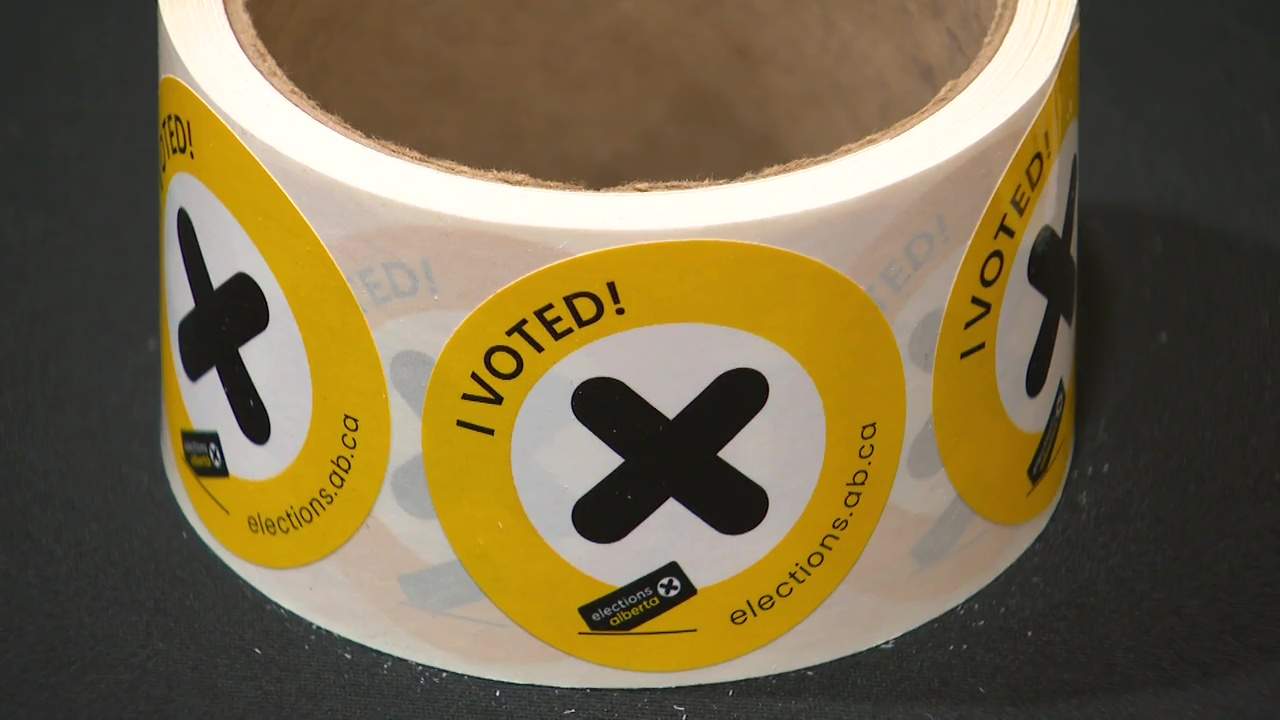
That is the sound of a ballot never cast—not the dramatic slam of a prison door or the loud, televised protest outside a legislature, but the soft, fluorescent hum of a community center gymnasium at seven in the evening while an election worker shakes their head and points to a clipboard. Recently making news lately: The Ghost in the Tank And Other Political Calculations.
For months, the legal battle over Alberta’s municipal election rules played out in the dry, bloodless vocabulary of administrative law. Headlines summarized the conflict in single, easily digestible sentences: an Alberta judge rejected an application by the provincial New Democratic Party to halt changes to how municipalities compile their voter lists. To the casual observer scrolling past the news between coffee and a morning commute, it looked like standard partisan friction. One political party passed a law; the opposition sued; a judge dismissed the challenge.
Move along. Nothing to see here. Further information on this are covered by Reuters.
Except everything is at stake here. Behind the procedural jargon of Bill 20—the Municipal Affairs Statutes Amendment Act—and the judicial reasoning of Justice Colin Feasby lies a fundamental question about who gets to belong in a modern democracy, and how easily administrative efficiency can become a quiet barrier to entry.
The Anatomy of a Tuesday Evening
To understand why a ruling in Calgary’s Court of King’s Bench matters far beyond legal circles, step away from the statutes for a moment. Consider a hypothetical scenario, grounded entirely in the mechanics of Alberta’s revised electoral rules.
Meet Maya. She is twenty-four years old, works two part-time shifts at a clinic in Edmonton, and moved into a basement suite in a new neighborhood four months ago. She pays her rent via e-transfer. Her utility bills are included in that rent. Because she takes the bus, she hasn't updated the address on her driver’s license yet—a minor bureaucratic errand that keeps slipping to the bottom of a list crowded with groceries, shift schedules, and student loan payments.
Under the old system, Maya’s path to the ballot box was straightforward. Municipalities in Alberta were permitted to use a permanent register of electors—a living database maintained in partnership with Elections Alberta, cross-referenced with tax rolls, vital statistics, and driver records. When election day arrived, Maya’s name was already on the list. Even if her address had changed recently, the system was built on the assumption that an eligible citizen should be brought into the fold with as little friction as possible.
Now, trace Maya’s steps under the rules upheld by the court.
Under the amendments introduced by Danielle Smith’s United Conservative government, municipalities were barred from using that permanent provincial register for the upcoming civic elections. Instead, cities and towns were directed to rely on a "temporary" voter list—a roll compiled from scratch, or heavily restricted to specific municipal data sources, effectively forcing millions of Albertans to re-register or prove their eligibility under tighter documentation rules at the polling station.
Maya walks into the school gymnasium after her evening shift. Her feet ache. She has twenty minutes before the polls close. She pulls out her driver’s license, which still lists her old apartment across town. She pulls up her digital bank statement on her phone, only to learn that the specific combination of identification and proof of current residency required when a name is missing from the permanent roll doesn't match what she has in her pocket.
Nobody yells at her. Nobody tells her she isn't a citizen. The poll worker is polite, apologetic, and entirely bound by the rules. Maya walks back out into the crisp October air, her ballot uncast.
Multiply Maya by ten thousand. Multiply her by fifty thousand renters, students, seniors in assisted living, Indigenous residents moving between communities, and low-income workers whose lives do not leave neat, stationary paper trails. Suddenly, a technical adjustment to a database is no longer technical at all. It is a filter.
Inside the Courtroom Where Precision Met Politics
When the Alberta NDP, led by Naheed Nenshi, challenged the legislation in court, they weren't merely arguing about software or data-sharing agreements. Their legal team contended that abolishing the use of the permanent electors register—and doing so on a timeline they argued was chaotic and punitive—infringed upon the democratic rights guaranteed under Section 3 of the Canadian Charter of Rights and Freedoms.
Wait.
Stop and look closely at Section 3 of the Charter, because this is where the legal drama turns razor-sharp. Section 3 states, with deceptive simplicity, that every citizen of Canada has the right to vote in an election of members of the House of Commons or of a legislative assembly. Notice what is missing from that sentence. It does not explicitly mention city councils, mayors, or school board trustees. For decades, Canadian courts have wrestled with whether municipalities—creatures of provincial statute—carry the same constitutional shield as provincial and federal legislatures.
In the courtroom, two competing narratives collided.
On one side stood the NDP and critics of the provincial government, who argued that the removal of the permanent voter list was a solution in search of a problem. Alberta’s municipal elections had not suffered from widespread voter fraud. Elections Alberta’s permanent register was widely regarded by municipal administrators—including officials in Calgary and Edmonton—as accurate, cost-effective, and essential for smooth administration. Scrapping it, the challengers argued, would create massive bottlenecks at polling stations, drive up administrative costs for cities by millions of dollars, and disproportionately disenfranchise younger, poorer, and more mobile citizens.
On the other side stood the Government of Alberta, represented by Municipal Affairs Minister Ric McIver and provincial lawyers. Their argument rested on the bedrock principle of parliamentary supremacy and electoral integrity. According to the province, municipalities exist under provincial jurisdiction; the legislature has the constitutional authority to set the rules for local elections, standardize procedures across the province, and require voters to actively confirm their eligibility rather than relying on an automated provincial database. In the government’s framing, requiring a fresh list and stricter verification wasn't about suppressing votes—it was about bolstering public confidence in local results and ensuring that municipal rolls weren't bloated with outdated entries.
Justice Colin Feasby listened to both sides, sifted through the affidavits, and delivered a ruling that disappointed the opposition while illuminating the stark boundaries of judicial power.
Why the Judge Said No
It is tempting, when a court rejects a challenge like this, to assume the judge endorsed the wisdom of the policy. That is one of the oldest misunderstandings in public life. Courts do not sit as super-legislatures to grade whether a law is smart, efficient, or compassionate. They sit to determine whether a law is constitutional and legally valid.
Justice Feasby’s decision hinged on a crucial legal distinction. The NDP had sought an injunction or declaration invalidating the specific provisions eliminating the permanent register ahead of the municipal election cycle. The court found that the challengers had not met the high legal threshold required to strike down the legislation on the grounds presented.
Specifically, the ruling underscored two sobering realities of Canadian constitutional law:
- The Constitutional Gap for Cities: Because Section 3 of the Charter explicitly names federal and provincial legislatures, extending its full weight to municipal elections remains an uphill legal climb. While democratic values underpin all levels of government, provincial legislatures retain sweeping authority over how local governments are structured and elected.
- The Burden of Proof on Disenfranchisement: To prove that an administrative change violates fundamental rights, challengers must demonstrate more than inconvenience, administrative cost, or political disagreement. They must show a clear, direct deprivation of the right to vote—something difficult to prove prospectively before an election has even taken place and before the actual impact on turnout can be measured.
I remember the first time I stood in a municipal returning office during an administrative rule change, watching clerks scramble to reconcile paper lists with updated residency rules. The air smelled of toner and stale coffee. What struck me wasn't malice on the part of the officials; it was the sheer weight of friction. Every extra form, every unlinked database, every requirement to verify an address twice acted like sand poured into a gearbox. The machine didn't explode. It just ground slower, and fewer people made it through the door before the clock struck eight.
That is the distinction Justice Feasby’s ruling forces us to confront. A law can be cumbersome, expensive for taxpayers, and deeply unpopular with municipal leaders—and still be entirely legal.
The Invisible Cost of "Temporary"
Look at that word in the headlines: temporary.
In politics, nothing is quite as permanent as a temporary measure, and nothing is quite as revealing as the stories we tell ourselves about why we need them. When the Alberta government introduced Bill 20, it didn't just touch voter lists. The broader legislation also allowed municipal political parties in Calgary and Edmonton, banned electronic vote tabulators in favor of hand-counting ballots, and expanded the cabinet’s power to remove elected councillors or repeal local bylaws.
Placed side by side, those changes tell a coherent story about political philosophy. They reflect a worldview deeply skeptical of automated systems, institutional intermediaries, and municipal autonomy—a worldview aligned with a broader North American trend toward tightening voting procedures in the name of "election integrity," even in jurisdictions where systemic fraud is virtually nonexistent.
Consider the practical mechanics of what happens when you dismantle a permanent electors register:
- The Financial Burden Shifts Downward: Compiling a voter list from scratch—or manually verifying thousands of unregistered voters at the polls—doesn't save money. Cities like Edmonton and Calgary warned that moving away from the shared provincial register and banning tabulators would cost millions of additional taxpayer dollars, money that comes directly out of property taxes or local services.
- The Lineups Grow Longer: When a voter’s name is already on a permanent roll, check-in takes thirty seconds. When a voter has to be added on-site, fill out a declaration, and have multiple pieces of identification scrutinized under revised rules, check-in stretches to three or four minutes. Across hundreds of polling stations, those minutes compound into thirty-minute or hour-long queues.
- The Drop-Off Is Quiet: Busy parents picking up kids from daycare, shift workers clocking in at hospitals, and elderly residents who cannot stand in line for forty-five minutes do not file constitutional challenges when they see a line wrapping around a school gymnasium. They simply get back into their cars and drive home.
Let’s be honest about the uncertainty here. We do not yet have the final turnout numbers from the election cycle governed by these rules. Critics warn of a sharp decline in civic participation, particularly in urban centers where renter populations are highest. Supporters of the provincial government argue the opposite—that cleaner lists and clearer rules will reassure skeptical voters and encourage participation from people who previously doubted the system. Both predictions remain hypotheses until the ballots are counted.
What we do know, right now, is that the burden of proof has shifted onto the individual citizen.
An Analogy for a Crowded Room
Think of a public library.
For years, the library operates on an automatic renewal system. Once you prove you live in the city and get your card, the system quietly updates your status each year using municipal records. You walk in, pick up a book, scan your card, and leave. Almost everyone in the neighborhood uses it.
One day, the board of directors announces that the database is messy. Some people on the list have moved away; a few records are outdated. To protect the integrity of the collection, the board deletes the automatic system. From now on, every resident must re-apply in person using a specific combination of utility bills and government IDs, and librarians must log every checkout by hand.
Nobody is banned from the library. The doors are still unlocked. Yet six months later, the people who still have library cards are disproportionately homeowners who have lived on the same street for twenty years, retirees with ample free time, and people with filing cabinets full of paper bills. The single parent working two jobs, the college student in a shared house, the newcomer still waiting on paperwork—they quietly drift away. Not because they don't care about reading, but because the system was redesigned around the lives of people who never move.
Democracy works on the exact same architecture. Access is rarely lost in a single dramatic stroke; it erodes through friction.
What Happens When the Courts Step Back
The dismissal of the NDP’s challenge marks a turning point, though not the end of the story. By declining to strike down the temporary voter list rules, the court handed the issue back to the arena where democratic disputes ultimately belong: the public square.
Municipalities across Alberta are now left to navigate the logistical reality of the ruling. Clerks in Calgary, Edmonton, Red Deer, and Lethbridge must train thousands of temporary election workers on new verification protocols, budget for expanded staffing to prevent polling-station bottlenecks, and launch public awareness campaigns to warn residents that they can no longer assume they are on the voters' list just because they voted in the last provincial or federal election.
For the provincial government, the ruling is a clear legal validation of its authority over municipal affairs. It reinforces the principle that elected governments have broad latitude to reshape local governance, even over the objections of big-city mayors and opposition parties.
For the NDP and voting-rights advocates, the courtroom defeat strips away the hope of a judicial rescue. If the rules around voter lists, municipal parties, and hand-counted ballots are to be reversed, they will not be undone by a judge’s pen. They will only change if voters show up in numbers large enough to overcome the very friction those rules create.
And that brings us back to Maya, standing outside that community center gymnasium in the cooling autumn dusk, holding a driver’s license with an old address and a phone full of digital statements that don't quite satisfy the checklist on the table inside.
The law says she has every right to vote. The judge confirmed the rules are valid. The poll worker smiled and wished her a good evening.
Yet as the gymnasium doors swing shut behind her, locking with a soft, metallic click, the only question that truly matters in a democracy hangs unanswered in the cold night air: Did she come back, or did she just walk home?