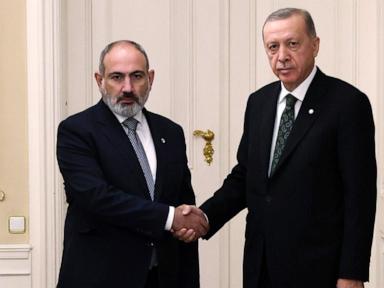
Turkey has finally blinked in its decades-long economic standoff with Armenia, lifting a ban on direct air cargo trade that has throttled regional logistics since the early nineties. While officials frame this as a humanitarian olive branch, the move is a cold, calculated bet on shifting transit routes and energy security. The air trade restriction is gone. This is not a gesture of friendship, but a realization that the status quo is costing Ankara more than it costs Yerevan.
For thirty years, the border between these two neighbors remained one of the most fortified and stagnant in the world. Closed in 1993 during the first Nagorno-Karabakh war, the seal was near-total. Now, under intense pressure from the European Union and the changing reality of the South Caucasus, the Turkish Ministry of Trade has cleared the way for goods to move directly by air. This ends the absurd practice of shipping products through third countries like Georgia, a detour that added 40% to transit costs and days to delivery timelines.
The Geography of Necessity
The decision to permit direct air cargo is the first crack in a very thick wall. It follows a series of discrete meetings between special envoys Ruben Rubinyan and Serdar Kilic, who have been tasked with normalizing relations without touching the third-rail issues of historical recognition. To understand why this is happening now, look at a map of the "Middle Corridor."
With Russia’s traditional northern trade routes under heavy international sanctions, the world is desperate for an East-West bypass. Turkey wants to be the gatekeeper of that bypass. Armenia, situated directly between Turkey and the markets of Central Asia, is no longer a neighbor to be ignored, but a potential shortcut.
Ankara’s primary goal is the opening of the "Zangezur Corridor," a proposed transport link that would connect Turkey directly to its ally Azerbaijan through Armenian territory. By lifting the air cargo ban, Turkey is signaling to Yerevan that economic rewards are on the table, provided Armenia cooperates with the broader regional connectivity plan. It is a carrot used to mask the stick of geopolitical isolation.
Breaking the Georgian Monopoly
For three decades, Georgia has been the sole beneficiary of the closed Turkey-Armenia border. Almost every truck, every crate of textiles, and every kilo of agricultural produce moving between the two nations had to transit through the Upper Lars or Sarpi crossings.
This created a logistical bottleneck that Georgia exploited through transit fees and service industries. By allowing direct air trade, Turkey is effectively diversifying its portfolio. Air freight is the high-value test case. It allows for the movement of electronics, pharmaceuticals, and high-end textiles without the need for massive infrastructure investment on the ground.
If the air routes prove successful and politically manageable, the pressure to open the land borders—specifically the Alican bridge—will become overwhelming. Business interests in eastern Turkish cities like Kars and Erzurum are already lobbying for this. These provinces have stagnated for thirty years while the rest of Turkey modernized; they see the Armenian market not as a threat, but as a lifeline for their struggling local economies.
The Problem of Trust
Normalization is a dirty word in many corners of Yerevan and Ankara. In Armenia, there is a profound fear that economic integration is a Trojan horse for Turkish hegemony. Many remember the "Zurich Protocols" of 2009, a previous attempt at peace that collapsed under the weight of nationalist rhetoric and Azerbaijani interference.
The current approach is different because it is incremental. By focusing on cargo rather than people, and air rather than land, both governments can test the waters without triggering a domestic backlash. However, the lack of formal diplomatic ties remains a massive hurdle. You can fly a plane of cargo from Istanbul to Yerevan, but you still cannot send a letter through the regular mail or get a visa at a consulate. This is trade in a vacuum.
The Azerbaijani Factor
No decision regarding Armenia is made in Ankara without a phone call to Baku. Azerbaijan’s victory in the 2020 Karabakh war fundamentally changed the leverage in the region. Previously, Turkey kept the border closed as a favor to Azerbaijan to pressure Armenia over occupied territories. Now that those territories have been reclaimed, the original justification for the blockade has evaporated.
Baku has given its "silent consent" to these small steps, but that consent is conditional. If Armenia slows down the process of border demarcation or pushes back against the Zangezur Corridor, Azerbaijan can—and likely will—demand that Turkey re-impose the restrictions. The air cargo route is a hostage to the wider peace treaty negotiations currently happening in Brussels and Washington.
Technical Hurdles and Market Realities
Opening the skies is one thing; making it profitable is another. Armenian markets are small, with a population of less than three million. The real value for Turkish exporters isn't the Armenian consumer, but the Armenian diaspora and the potential for Armenia to act as a re-export hub for the Eurasian Economic Union (EAEU).
Because Armenia is a member of the EAEU, goods that are processed or "transformed" in Armenia can theoretically enter the Russian market with lower tariffs. This creates a fascinating, if morally complex, opportunity for Turkish firms to bypass some of the logistical headaches of the current global trade environment.
- Logistics: Current airport infrastructure in Yerevan (Zvartnots) is modern but geared toward passengers. Dedicated cargo facilities will need expansion.
- Regulations: Harmonizing customs codes between a NATO member and an EAEU member is a bureaucratic nightmare that has not yet been fully addressed.
- Insurance: Many international underwriters still view direct trade in this region as high-risk, which keeps premiums high and discourages smaller players.
Beyond the Runway
This isn't about moving boxes of apricots or Turkish leather jackets. It is about the fundamental realignment of the South Caucasus. For the first time since the fall of the Soviet Union, there is a path where Armenia is not an isolated Russian outpost, but a bridge.
Russia’s influence in the region is at its lowest point in a century, distracted by the war in Ukraine and weakened by sanctions. This vacuum is being filled by a Turkish-Azerbaijani duopoly on one side and a desperate Armenian search for Western security guarantees on the other. Trade is the only language all these parties speak fluently.
The lifting of the air cargo ban is the most significant move in years because it proves that the border is not an immovable object. It is a policy choice. If the cargo planes continue to land without incident, the logic for keeping the land gates locked begins to crumble under its own weight. The economic gravity of the Middle Corridor is pulling these two historical rivals together, whether their populations are ready for it or not.
The next six months will determine if this is a permanent shift or a temporary thaw. If the land border opens to third-country nationals, as has been discussed in recent rounds of talks, the thirty-year blockade is effectively over. The planes are already in the air. The trucks are waiting at the gate.