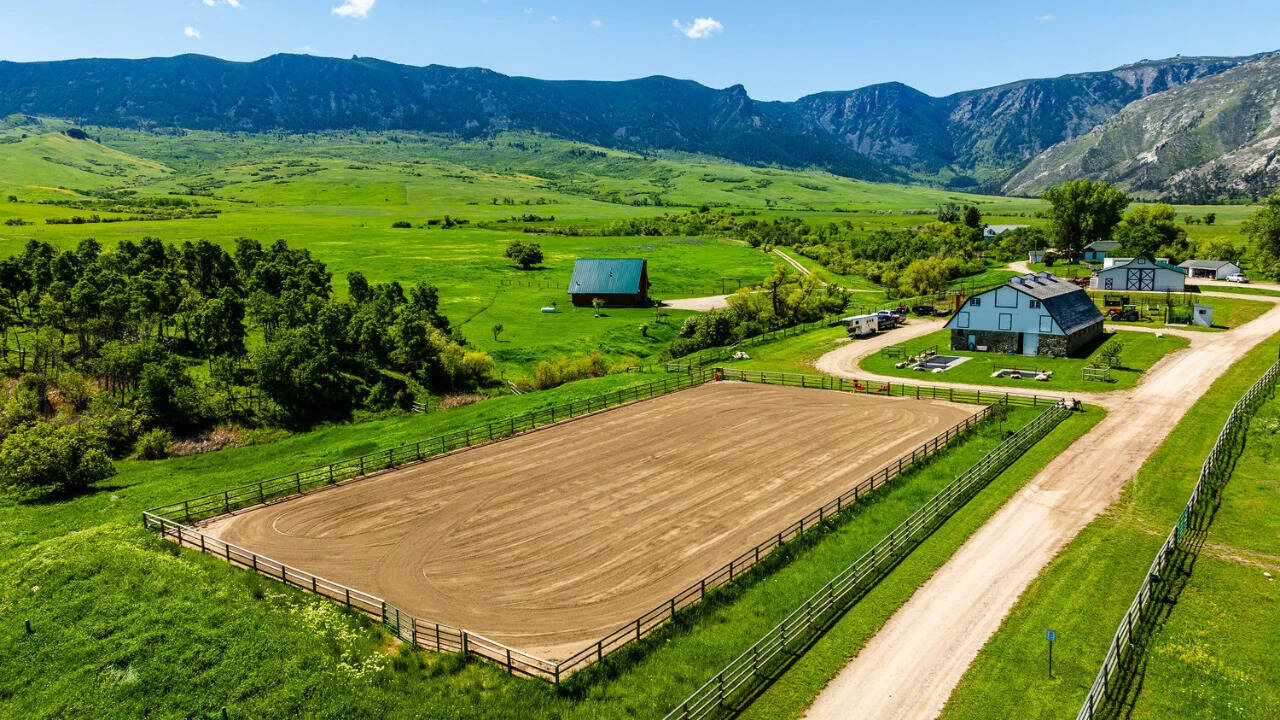
The 1,542-acre Quarter Circle Lazy B Ranch in north-central Wyoming is on the market for $24.5 million, ending 135 years of continuous Wallop family stewardship. That works out to roughly $15,888 per acre for a property made famous by a four-day October 1984 visit from Queen Elizabeth II and Prince Philip, alongside earlier trips by Philip and Princess Anne. Yet buyers chasing a royal fairy tale are ignoring the hard economic and legal realities baked into the deed.
Royal provenance makes a great headline. It does not generate agricultural cash flow.
How British Nobility Built a Sheridan County Foothold
Oliver H. Wallop did not arrive in the American West as a pauper chasing a frontier myth. Born the youngest son of a Victorian earl, he settled in the region in the early 1880s and founded the ranch in 1889, bringing thoroughbred horse breeding, polo culture, and transatlantic connections to Sheridan County. In 1925, he unexpectedly inherited the title of 8th Earl of Portsmouth, yet he kept his roots tied to his Wyoming holdings until his death in 1942.
Four generations followed him across the same foothills beneath the Bighorn Mountains. The family name became woven into state politics and British aristocracy alike: Oliver's grandson, Malcolm Wallop, served 18 years in the U.S. Senate, while Malcolm's sister, Jean, married Henry Herbert, the 7th Earl of Carnarvon (often known as Lord Porchester), who managed Queen Elizabeth II's horse-racing operations from 1969 onward.
A royal guest list gives a listing instant global visibility, turning a regional land sale into international news from London to Cheyenne.
When Queen Elizabeth II arrived in October 1984 after looking at horses in Kentucky, the trip functioned as a private family retreat rather than a state summit. Locals still recall the quieter details from those days—from security officials worrying about rifles in pickups at the edge of hunting season to the monarch walking downtown Sheridan and dining out at a local spot.
Inside the $24.5 Million Valuation Math
At $24.5 million, the asking price reflects trophy real estate pricing rather than traditional ranching multiples. Anyone evaluating the listing as a working cattle operation will run into a brick wall on yield. Even with strong Western cattle markets, 1,542 acres of mountain-front pasture and timber will not pay down jumbo debt service on a twenty-four-million-dollar principal balance.
Instead, the property's appeal rests on a hybrid lifestyle and hospitality model:
- Residential and lodge footprint: A main lodge built in 1993 spanning 3,006 square feet with two bedrooms, a loft, and four bathrooms, paired with an early-1900s Foreman's House updated in 2011 and an additional 1,377-square-foot cabin.
- Equestrian and outbuildings: A 100-by-200-foot riding arena, two barns including a 1930s stone barn, and older utility structures.
- Water and recreational licensing: Four mountain ponds, 600 feet of trout stream, and one of Wyoming's original private game bird farm licenses.
- Short-stay income streams: Three residences—among them a fly-fishing lodge and a remote cabin—operated as holiday rentals to help offset holding costs.
That rental and recreational mix helps pay taxes, maintenance, and staffing. It still leaves a wide gap between operating receipts and a $24.5 million capital outlay. In high-end Mountain West real estate, wealthy buyers routinely accept negative operating cash flow in exchange for privacy, views, and legacy status, provided they have liquidity outside the ranch.
Conservation Easements Cut Both Ways
The property carries one of Wyoming's earliest conservation easements, placed to protect open space, wildlife habitat, and scenery near Little Goose Canyon and the Bighorn Mountains. Conservation easements are frequently praised as a public good, and they do preserve the exact visual character that makes a buyer want the land in the first place.
They also impose permanent legal limits. Depending on the exact terms recorded on title, an easement can restrict subdivision, cap future residential square footage, limit commercial expansion, or bar certain surface uses forever. For a buyer hoping to carve off parcels, build a sprawling family compound, or aggressively scale commercial operations, an easement is a binding constraint rather than a footnote.
Why Legacy Sales Rarely Move Like Standard Listings
Selling a family ranch after 135 years involves more than setting a price with a brokerage—especially when a family member, Paul Wallop, is both an owner and co-listing agent. Multi-generational family holdings often carry emotional weight, differing timelines among relatives, and decades of informal arrangements that must be untangled before closing.
Buyers at the $24.5 million tier in Wyoming are a narrow pool. Most are cash or high-net-worth buyers weighing competing trophy ranches across Montana, Wyoming, and Colorado against market returns, wildfire exposure, water rights administration, and winter operating demands. A royal connection pulls eyeballs into the room, yet serious buyers price the dirt, water, structures, and legal restrictions first—and treat the 1984 royal visit as seasoning on top.
Before submitting an offer on any legacy ranch carrying a conservation easement, a buyer's attorney should pull the full recorded easement document, verify water right priority dates and diversion infrastructure, audit actual multi-year rental and game-bird operating ledgers, and test local zoning and access rules against intended use.