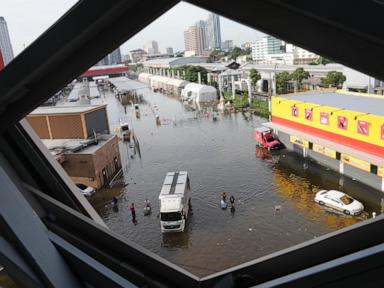
Disaster response in emerging economies operates as a high-stakes stress test of fiscal capacity, bureaucratic velocity, and infrastructure resilience. When nearly 300 millimeters of rainfall accumulated across Bangkok within a compressed three-day window—equaling an entire monthly norm in a single meteorological pulse—the resulting crisis exposed the structural fault lines of urban drainage systems and supply chain vulnerability in Southeast Asia's third-largest economy. The Thai government responded by approving a 10.5 billion baht fiscal relief package, supplemented by targeted debt suspensions, low-interest liquidity injections, and tax exemptions. Standard media coverage frequently reduces such interventions to humanitarian philanthropy. A rigorous economic deconstruction reveals a complex machinery of risk mitigation, liquidity management, and structural triage designed to prevent systemic solvency failures among households and small enterprises.
The Fiscal Architecture of State Disaster Allocation
Public sector capital mobilization during a weather catastrophe requires balancing immediate humanitarian liquidity against medium-term macroeconomic stability. The 10.5 billion baht allocation approved by the Thai cabinet functions through specific administrative conduits, primarily routed via the Ministry of the Interior and municipal authorities to fast-track disbursements.
To evaluate the efficiency of this disbursement architecture, analysts must examine the velocity of capital flow versus administrative friction. Traditional disaster relief funding models suffer from protracted verification cycles, where aid delivery is delayed by bureaucratic documentation requirements. In this instance, the government structured initial direct payouts—ranging from 5,000 to 10,000 baht per eligible household—to bypass stringent bureaucratic hurdles under specific emergency declarations, allowing rapid cash injections into flooded districts.
This funding model operates on a tiered compensation matrix:
- Tier One: Immediate emergency living allowances for households experiencing structural inundation exceeding documented temporal thresholds.
- Tier Two: Commercial and industrial rehabilitation credits administered via state financial institutions to support business continuity.
- Tier Three: Fiscal concessions including custom duty exemptions and corporate tax deferrals for affected business operators.
The fundamental trade-off in this fiscal architecture involves moral hazard versus speed. Bypassing stringent upfront proof requirements accelerates liquidity delivery to distressed citizens, yet it increases the administrative burden of post-audit verification. The treasury absorbs this monitoring cost to prevent localized consumption cliffs that could trigger broader retail contraction across municipal markets.
Household Vulnerability Models and Registration Dynamics
Understanding the human toll of the September deluge requires analyzing the concentration of vulnerability across urban and peri-urban demographics. Within weeks of the emergency declaration, household registrations for state flood aid surged past one million units nationwide. Bangkok and its surrounding industrial ring—including Samut Prakan and Pathum Thani—accounted for an overwhelming majority of these claims, reflecting the high population density and economic concentration in the Chao Phraya river basin.
The spatial distribution of flood damage highlights a persistent structural risk: rapid urbanization outpacing hydrological capacity. When heavy precipitation overwhelms drainage infrastructure, low-lying neighborhoods experience prolonged inundation. The government structured relief payouts to scale with the duration of displacement, offering tiered support based on continuous days spent under water.
This creates a quantitative friction point between claimants and verification agencies. When over 450,000 households register within a single municipal boundary such as Bangkok, administrative bottlenecks threaten to stall the distribution channel. To resolve this, disaster management divisions deployed digital application channels alongside local municipal verification teams. However, discrepancies in geographic data and residency documentation frequently create friction, forcing applicants to navigate complex administrative corridors while managing property damage and income loss.
The economic reality for informal workers and small-scale vendors during these events demonstrates the fragility of daily-wage models. Retail operators in flooded markets frequently report losing substantial daily capital while fixed operating costs remain constant. State cash transfers act as an essential consumption floor, preventing temporary liquidity shocks from cascading into permanent insolvency or localized debt defaults.
Macroeconomic Shock Transmission and Industrial Resilience
While localized property destruction captures public attention, the macro-level transmission mechanism operates primarily through industrial supply chains, logistics networks, and foreign exchange confidence. The Bank of Thailand maintained its baseline full-year economic growth projection at 2.3 percent or higher, asserting that the macroeconomic impact of the September floods would remain contained. This projection relies on the assumption that industrial parks escape catastrophic structural damage, allowing production lines to resume operations quickly after water levels recede.
However, supply chain contagion extends beyond factory floors. During the peak of the crisis, Bangkok's Suvarnabhumi Airport experienced severe operational disruptions when ground-handling personnel were unable to report to work due to surrounding street flooding. This labor deficit generated an acute baggage processing backlog, stranding thousands of international travelers and prompting the mobilization of military personnel to clear the logistics bottleneck. This operational failure illustrates how urban flooding paralyzes tertiary service sectors, temporarily degrading the nation's aviation and tourism logistics.
Automotive manufacturing and electronics assembly—sectors that anchor Thailand's export economy—face distinct risk profiles during extreme weather events. Component suppliers situated in low-lying industrial zones experienced temporary halts in assembly lines. The economic cost function of these disruptions includes not only direct equipment damage but also contractual penalties for delayed shipments and the friction of inventory replenishment.
Secondary Liquidity Instruments and Debt Interventions
Direct cash transfers represent only the visible layer of state intervention. To stabilize the financial sector and prevent systemic default cascades, the government deployed secondary monetary instruments in coordination with commercial banks and state financial institutions.
These interventions target three distinct financial balance sheets:
- Household Mortgages and Personal Debt: Offering debt-payment suspensions, principal moratoriums, and reduced interest rates for borrowers residing in declared disaster zones.
- Agricultural Sector Credit: Providing low-interest and interest-free emergency loans to farmers whose crops and livestock suffered structural destruction, preventing seasonal debt spirals.
- Corporate and SME Working Capital: Facilitating access to soft loans backed by the Thai Credit Guarantee Corporation, which temporarily waived guarantee and management fees to encourage commercial lenders to extend credit lines to distressed enterprises.
These monetary measures function as risk-sharing arrangements between the state, commercial banks, and borrowers. By absorbing a portion of credit default risk through state guarantees, the government incentivizes private financial institutions to maintain liquidity flow rather than executing sudden credit tightening, which would deepen the economic contraction.
Operational Bottlenecks in Infrastructure and Logistics
Beyond fiscal appropriations and monetary policy adjustments, physical disaster response requires evaluating the operational bottlenecks inherent in crisis management. Municipal drainage infrastructure in Bangkok relies heavily on canal pumping stations and gravity drainage systems. When rainfall intensity exceeds the discharge capacity of these mechanical pumps, water accumulation stalls, creating persistent urban lakes.
The logistics of emergency response depend on inter-agency coordination between the Department of Disaster Prevention and Mitigation, military logistics units, and municipal authorities. Deployment delays during the initial 72 hours of an acute flood event typically stem from asset positioning failures rather than funding shortages. Heavy transport vehicles capable of navigating inundated streets are often limited in number, creating priority triage conflicts between hospital supply delivery, evacuation operations, and baggage logistics at international transport hubs.
Furthermore, public communication infrastructure represents a critical variable in disaster management. When authorities issue multi-day flood warnings or emergency preparedness guidelines, the information asymmetry between urban centers and rural provinces generates erratic behavioral responses among citizens. Clear, standardized public advisories are necessary to prevent panic-driven resource hoarding and ensure accurate distribution of emergency gear and financial aid applications.
Strategic Forecast for Climate Adaptation Infrastructure
The recurring cycle of extreme precipitation and urban inundation in Southeast Asia mandates a shift from reactive fiscal compensation to proactive capital expenditure. Emergency funding packages, debt suspensions, and tax reliefs are palliative monetary measures that treat symptoms rather than structural causes. As weather volatility intensifies across the region, the fiscal cost of post-disaster recovery will scale exponentially unless urban planning and drainage engineering match climate realities.
The strategic imperative for the fiscal authority involves reallocating capital budgets toward high-capacity drainage canals, subterranean retention basins, and early-warning telemetry networks. Future economic stability depends on insulating primary metropolitan and industrial zones from hydrological shocks before emergency declarations become necessary. Without structural adaptation, state reserves will increasingly absorb the recurring cost of environmental volatility, compressing fiscal space for long-term national development.


