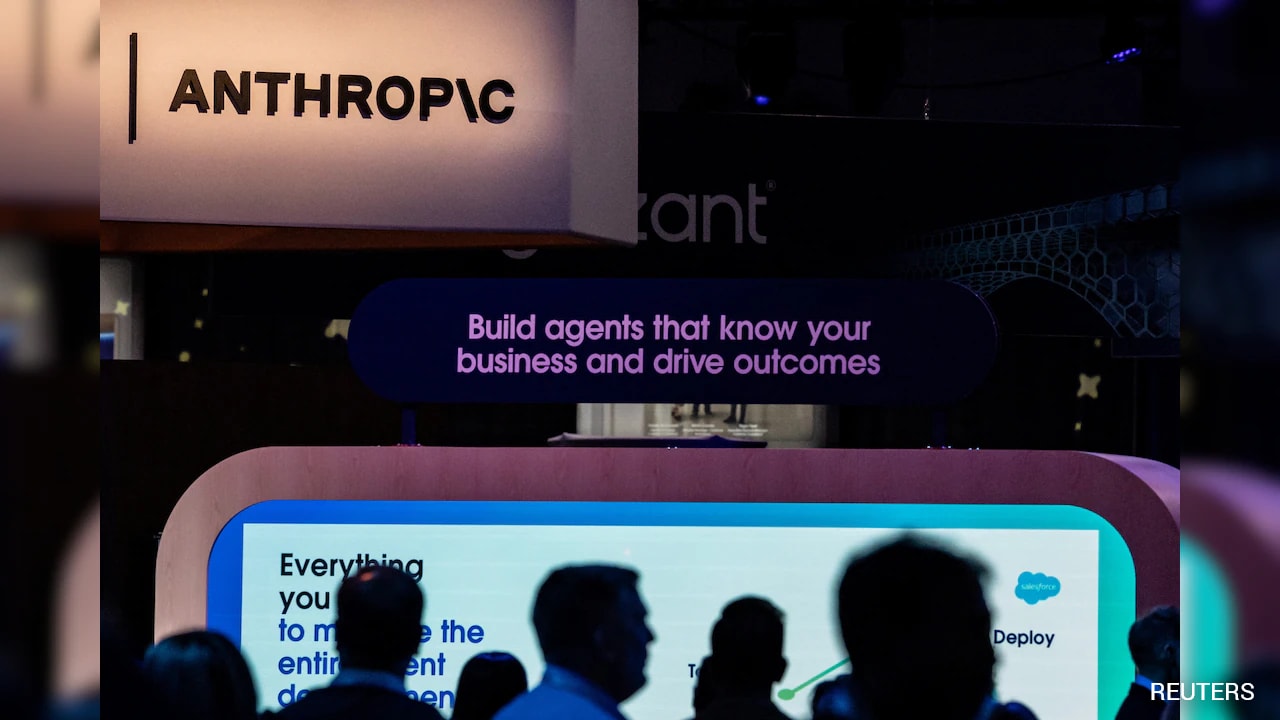
Anthropic published a warning regarding artificial intelligence. The executives running the lab argued that future models might possess dangerous capabilities, from automating cyberattacks to accelerating biological weapons manufacturing. At the exact same moment, the organization secured billions in venture capital and cloud computing credits to train those exact same systems. This contradiction defines the modern commercial landscape of frontier artificial intelligence. Corporate safety rhetoric and aggressive market expansion share a single bank account.
Examining the commercial mechanics of safety branding reveals a calculated strategy. When a laboratory emphasizes extreme existential dangers, several outcomes immediately follow. First, regulators take notice. Second, compliance barriers rise. Third, smaller competitors without compliance legal teams or billions in venture backing find themselves priced out of the market entirely. The warnings serve a dual purpose. They act as a public service announcement and an impenetrable moat. Meanwhile, you can read other developments here: The Bet That Stunned Silicon Valley.
To understand how we arrived here, follow the money. Training a modern foundation model requires clusters containing tens of thousands of specialized accelerators, massive electricity contracts, and hundreds of millions of dollars in compute capital. Only a handful of entities can play this game. Anthropic positions itself as the responsible steward of this power, distinguishing its corporate identity from rivals who move faster and break things with abandon. Yet, commercial survival demands deployment. You cannot return venture capital on moral philosophy alone. You must monetize the API tokens.
The core premise of the competitor coverage focuses on the cognitive dissonance of sounding the alarm while ringing the cash register. That is correct, but it misses the deeper institutional architecture. Safety research within these organizations is not an afterthought or an independent academic wing. It is integrated directly into the product lifecycle. By studying how models fail, how they hallucinate, and how they can be jailbroken, safety teams inadvertently help engineers build more resilient, commercially viable architectures. Every vulnerability discovered and patched makes the enterprise offering more attractive to Fortune 500 chief information officers who fear corporate liability. To explore the complete picture, check out the recent report by Mashable.
Risk mitigation is a product feature. When an insurance firm or a major bank evaluates whether to integrate an artificial intelligence assistant into its workflow, they do not care about science fiction scenarios involving rogue superintelligence. They care about data leakage, regulatory fines, and brand embarrassment. Anthropic addresses these commercial anxieties by wrapping its products in the language of high-stakes ethical vigilance. The existential framing masks a very mundane, highly effective enterprise sales pitch. We are the safe bet because we worry about the worst-case scenarios.
Critics argue that this entire dynamic is nothing more than regulatory capture in a slick hoodie. That assessment carries substantial weight. When major labs lobby governments for strict oversight, they invariably advocate for frameworks that require mandatory reporting thresholds, extensive safety audits, and bureaucratic hurdles that only multi-billion-dollar balance sheets can clear. Open-source developers and academic researchers cannot afford compliance departments. By anchoring the public debate to catastrophic existential risks, enterprise labs successfully shift legislative focus away from immediate, tangible harms—such as copyright infringement, labor displacement, and algorithmic bias—and toward speculative futures that require centralized corporate governance.
Consider the economics of scale in safety implementation. Ensuring alignment, filtering training data, and running red-team evaluations on frontier models cost staggering sums. A bootstrap startup cannot compete with a laboratory backed by cloud giants when the cost of safety compliance matches the cost of training itself. The existential risk narrative establishes a high barrier to entry. It tells the market that building advanced models is too dangerous for amateurs, effectively institutionalizing a corporate oligopoly under the banner of public protection.
The financial incentives pull in opposite directions. On one side, investors demand exponential growth, enterprise adoption metrics, and market share capture. On the other side, safety researchers publish papers detailing the unpredictability of neural networks and the limits of current interpretability methods. This tension creates a strange corporate theater where executives must simultaneously project absolute confidence to their boardrooms and profound anxiety to Capitol Hill.
We must ask whether this duality is sustainable. As models scale, the gap between commercial deployment and safety verification widens. If a system is truly unpredictable at scale, shipping it to millions of enterprise users while promising that alignment holds is a high-stakes gamble. The industry continues to scale compute because stopping means commercial death. The race dynamics dictate that if you pause your training runs, your competitor fills the vacuum, secures the enterprise contracts, and dictates the standards of the next generation.
The public discourse often treats artificial intelligence labs as either benevolent researchers or reckless technocrats. Reality resists such tidy binaries. These entities are complex socio-technical institutions navigating a brutal competitive environment where moral positioning functions as currency. They warn of existential risks because those risks are real, measurable, and fundamentally tied to the unpredictability of scaling laws. They commercialize those same systems because capital accumulation is the only mechanism available to survive the race.
Understanding this dynamic requires looking past the press releases and the congressional testimony. The safety debate is not an interruption of the business model. It is the business model. As long as the market rewards organizations that claim exclusive stewardship over the future of intelligence, the warnings will grow louder, the funding rounds will grow larger, and the fundamental contradiction will remain entirely unresolved.