Walk through the Tower of London on a Tuesday morning and you will see it. It sits behind reinforced glass, bathed in spotlights that cost more than some people's homes. The Koh-i-Noor. To a tourist from Ohio, it is a magnificent rock. To the British Crown, it is a centerpiece of history. But to a billion people across the sea, it is a jagged piece of a broken heart.
History is usually written by the victors, but it is felt by the survivors. Also making waves recently: The Empty Pavements of Red Square.
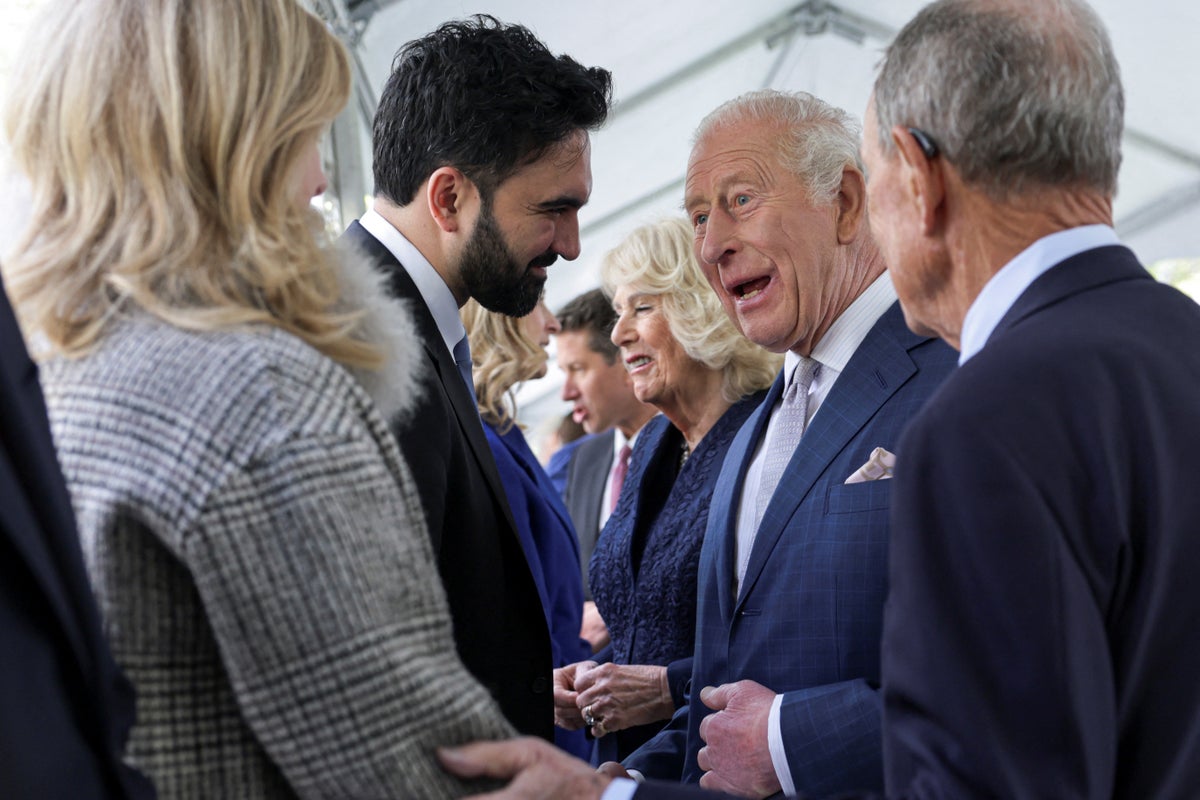
When Zohran Mamdani, a New York State Assemblyman born in Kampala to Indian parents, stood up and suggested that King Charles III should return the diamond, he wasn't just making a political demand. He was poking a bruise that has never quite healed. He was speaking for the grandmother in Delhi who remembers the stories of what was taken. He was speaking for the student in Mumbai who sees the gem in a textbook and feels a strange, cold phantom limb pain.
The Weight of a Stone
The Koh-i-Noor is not just carbon. If it were just a diamond, we could talk about carats and clarity. We could discuss the way light refracts through its facets. But this stone carries the weight of empires. It has passed through the hands of Mughals, Persians, and Sikhs, usually leaving a trail of blood in its wake. More information into this topic are explored by The New York Times.
Imagine a child being told they must give up their family heirloom because a stranger has a bigger sword. That is the simplified version. The reality is more clinical, more bureaucratic, and infinitely more painful. In 1849, the ten-year-old Maharaja Duleep Singh was "persuaded" to sign the Treaty of Lahore. A child. A king without a kingdom. He handed over the diamond to the East India Company.
The British call it a gift. India calls it a heist.
Mamdani’s proposal to the King isn't about jewelry. It is about the dignity of being seen. When he spoke about the diamond, he tapped into a global zeitgeist that is tired of the "finders keepers" school of international diplomacy. He turned a dry diplomatic stalemate into a human conversation about what we owe to the past.
The Ghost in the Room
There is a specific kind of silence that falls in a room when you mention colonial reparations. It is a heavy, awkward silence. It feels like the air before a thunderstorm.
The argument against returning the stone is often built on a foundation of "logistics." Where would it go? Who truly owns it? If we give back the diamond, do we have to give back the Parthenon Marbles? Do the museums of London and Paris become empty shells?
These are the questions of curators. They are not the questions of the people.
For the average person in the Indian subcontinent, the diamond represents a period of history where their ancestors were told they were "less than." It represents the extraction of wealth that turned a global economic powerhouse into a country struggling with poverty. You cannot eat a diamond. It will not build a road or fund a school. But it acts as a symbol of everything else that was moved across the ocean—the gold, the spices, the labor, and the lives.
Mamdani’s voice resonated because it lacked the stiff upper lip of traditional politics. It was raw. It was the voice of the diaspora—people who live in the West but carry the East in their marrow. They are the bridge between two worlds, and they are increasingly unwilling to ignore the cracks in that bridge.
A Crown Without a Shadow
King Charles III inherited a crown, but he also inherited a debt. Not a financial debt, but a moral one. The modern world is shifting. We are no longer in an era where the sun never sets on an empire; we are in an era where the sun is finally shining on the dark corners of that empire's attic.
When Mamdani suggests asking for the diamond back, he is inviting the monarchy to step into the twenty-first century. He is offering a path toward a different kind of greatness—one based on reconciliation rather than possession.
Think about the psychology of a stolen object. If someone steals your watch, and you see them wearing it years later, the passage of time doesn't make it theirs. It just makes the theft a permanent part of your relationship. Every time you see them, you don't see a friend; you see your watch.
The Koh-i-Noor is the watch on the wrist of the British state.
The Power of Saying It Out Loud
There is a peculiar magic in stating the obvious. For decades, the return of the Koh-i-Noor was a fringe topic, something discussed in academic circles or by "radical" activists. By bringing it into the mainstream political conversation, Mamdani has validated a collective feeling.
He didn't use the language of war. He used the language of accountability.
The celebration across India wasn't just because people want a rock. It was because, for a brief moment, someone on a world stage spoke a truth that has been whispered in kitchens from Punjab to Kerala for generations. They celebrated the audacity of the ask.
We live in a world obsessed with "moving on." We are told to look forward, to focus on the future, to forget the "unpleasantness" of the past. But you cannot move on if you are still carrying the weight of the things you took.
The British museum system is often described as a "universal museum," a place where the world's treasures are kept safe for everyone. It sounds noble. It sounds objective. But "safe" is a relative term. Safe from whom? The people who created them?
The Final Facet
The diamond was originally much larger. When it reached England, Prince Albert decided it was too dull. He ordered it to be recut, losing forty percent of its weight in the process. He wanted it to shine brighter under European lights. He wanted to shape it into something that fit a British aesthetic.
That is the ultimate metaphor for colonialism. It takes something ancient, something with its own soul and history, and it trims it down until it fits into a display case. It shears off the "rough" edges of another culture to make it more palatable for the viewer.
Mamdani isn't just asking for the diamond. He is asking for the forty percent that was cut away. He is asking for the recognition of the original shape of a nation before it was recut to fit an imperial vision.
The glass case in the Tower of London is thick. The security is state-of-the-art. The laws are on the side of the keepers. But the glass is not invisible, and the lights are starting to reveal more than just the sparkle of the stone. They are revealing the fingerprints of everyone who ever touched it, and the long, deep shadows cast by a crown that refuses to let go.
One man’s voice in a room thousands of miles away has started a vibration. It is a small hum, a low frequency that rattles the glass. You can ignore a scream, but a steady, persistent hum is harder to silence. It gets under the skin. It stays in the ears. It reminds you that some things are too heavy to keep forever.
The diamond sits in the dark every night, waiting. It has outlasted kings and queens before. It has watched empires rise and crumble into dust. It is patient. It knows that while glass is hard, it is also brittle. And eventually, everything that was taken finds its way home, even if it takes a century to get there.