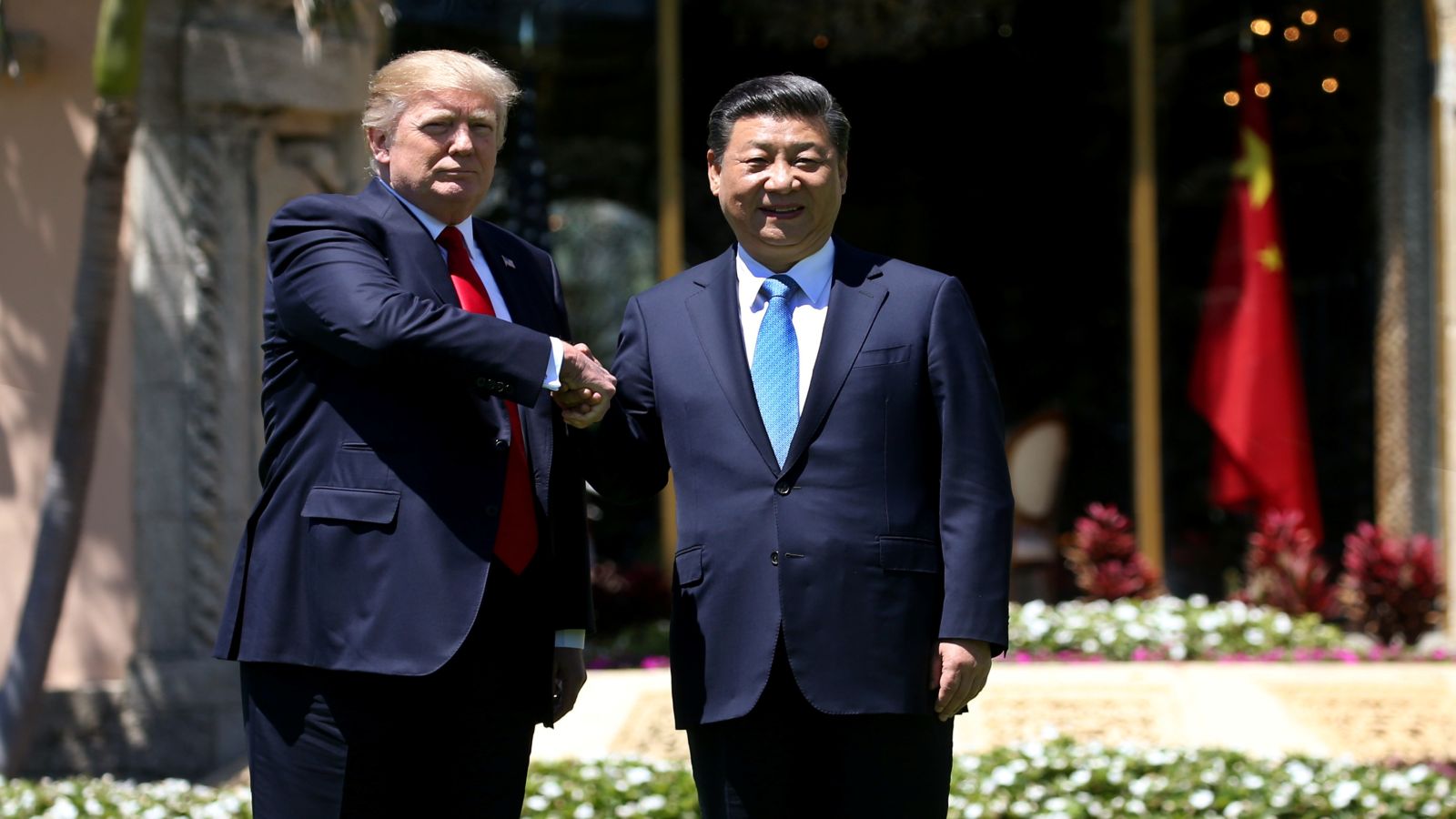
Donald Trump just walked out of the Zhongnanhai Garden compound claiming victory, but the math does not add up for anyone watching the Pacific theater. While the President touts "fantastic trade deals" involving Boeing jets and American soybeans, he has effectively traded long-term strategic leverage for short-term economic optics. By his own admission, the administration did not even bring up the topic of tariffs during the two-day summit. More concerning for the Pentagon is the sudden frost over a $14 billion arms package for Taiwan, a deal that now sits in a state of suspended animation as Trump prioritizes a cooling of tensions over the island's defense.
This was not a negotiation; it was a tactical retreat disguised as a business lunch. For two days, the world watched a choreographed display of pageantry while the real gears of geopolitics ground to a halt. Trump’s strategy appears to be a total pivot toward "affordability politics"—an attempt to suppress inflation and stabilize the economy ahead of the November midterms by making nice with the world's largest manufacturer. But the cost of this stability is a series of concessions that may be impossible to claw back.
The Taiwan Freeze and the 9500 Mile Gap
The most jarring revelation came from Air Force One. Speaking to reporters on the flight home, Trump questioned the necessity of being involved in a "war that’s 9,500 miles away." It is the clearest signal yet that the administration is reconsidering the Taiwan Relations Act's security commitments. Xi Jinping reportedly used the summit to deliver a blunt warning: mishandling Taiwan leads to conflict. Trump’s response was not to double down on the authorized $14 billion weapons sale, which includes Patriot missile interceptors and advanced surface-to-air missiles. Instead, he stalled it.
This hesitation is a massive departure from his December approval of an $11 billion package. By delaying the current shipment, the White House is essentially giving Beijing a veto over American defense exports.
The President's rhetoric that he doesn't "think there's a conflict on Taiwan" ignores the reality on the ground. Beijing has not ruled out the use of force, and Xi sees unification as the crowning achievement of his legacy. By suggesting that arms sales are now a "determination" to be made later, Trump has handed the Chinese Communist Party a psychological win. It suggests that for the right price—or the right purchase order of Boeing 737s—American allies can be moved to the back burner.
The Shell Game of Trade Deals
Trump claims China will buy 200 Boeing aircraft, with a "potential" for up to 750. He mentions billions in soybeans and oil. But veteran trade analysts have seen this movie before. These commitments are often recycled from previous agreements or consist of non-binding "memorandums of understanding" that never materialize into actual deliveries.
The Missing Tariff Discussion
Perhaps the biggest shock of the summit was the silence on the 2025 trade war leftovers.
- Tariffs: Trump confirmed they were "not brought up."
- The Goal: To maintain an uneasy truce that prevents another spike in consumer prices.
- The Reality: China continues to dominate EV and battery supply chains while American manufacturers remain hamstrung by high input costs.
If the U.S. isn't using its tariff power to extract structural changes in China's state-led economy, then what was the 2025 trade war for? The current "equilibrium" described by Chinese officials is actually a stalemate where China maintains its manufacturing dominance while the U.S. buys time to fix its internal inflation woes.
The Iran Gambit
The only area where both leaders seemed to find common ground was the Strait of Hormuz. With 20% of the world’s oil at risk due to the ongoing Iran conflict, both economies are feeling the squeeze. Trump indicated he might lift sanctions on Chinese companies buying Iranian oil if Xi ensures that Tehran doesn't receive military equipment from Beijing.
This is a high-stakes gamble. If Trump lifts those sanctions, he loses his primary tool for squeezing the Iranian regime. In exchange, he gets a verbal assurance from Xi—a leader who has spent the last decade perfecting the art of "economic statecraft" to bypass American pressure.
Why the CEO Delegation Matters
The presence of Elon Musk and Tim Cook in Beijing was not accidental. These are not just business leaders; they are the architects of the integrated supply chains that Trump once claimed he wanted to "decouple." Their seat at the table signals a return to a commercial-first foreign policy.
For Musk, the priority is maintaining Tesla's dominance in the Chinese market. For Cook, it's ensuring that the next generation of hardware isn't caught in a crossfire of export controls. By surrounding himself with these titans, Trump is signaling to his base that he is "bringing back business," even if the strategic cost is the hollowing out of American influence in the South China Sea.
The summit didn't resolve the rivalry; it merely managed the optics of it. Trump is betting that voters care more about the price of goods at home than the sovereignty of an island 9,500 miles away. Xi is betting that if he waits long enough and offers enough "fantastic" deals, the American umbrella over the Pacific will eventually fold.
Beijing didn't give up a single inch on its geopolitical goals. They didn't agree to stop the AI arms race, they didn't commit to ending the militarization of the South China Sea, and they didn't promise to stop subsidizing their domestic industries. They gave Trump a headline about soybeans and Boeing, and in return, they got a President who is now openly questioning the value of defending the world’s most critical semiconductor hub.