The air inside the waiting room always smelled of damp coats, floor wax, and the distinct, metallic panic of people who have left their entire lives in a cardboard box.
I remember sitting in just such a room years ago, clutching a folder thick enough to stop a bullet. Birth certificates translated into three languages. Bank statements showing every modest grocery purchase. Employment letters stamped by managers who smiled too thinly. Inside that folder was my permission to exist elsewhere, if only for a few weeks. You look at the clerk behind the glass, and you realize they hold something terrifying: the power of gravity. They can anchor you to the soil of your birth, or they can let you fly.
Most people think borders are drawn with ink and guarded by men with rifles. They are wrong. Borders are kept alive by ledgers, bureaucracy, and, increasingly, the quiet mathematics of desperation.
Consider what happened recently in the machinery of European travel.
A shadow fell over BLS International, a major visa-processing firm that handles the bureaucratic intake for travelers seeking entry into Spain. The Spanish authorities launched an investigation following a disturbing anomaly: an Algerian migration crisis that did not look like a traditional border crossing at all. Instead of boats on choppy Mediterranean waters or bodies slipping through midnight fences, this crisis moved on paper.
Reports emerged detailing an astonishing price tag. Up to twenty-five thousand euros.
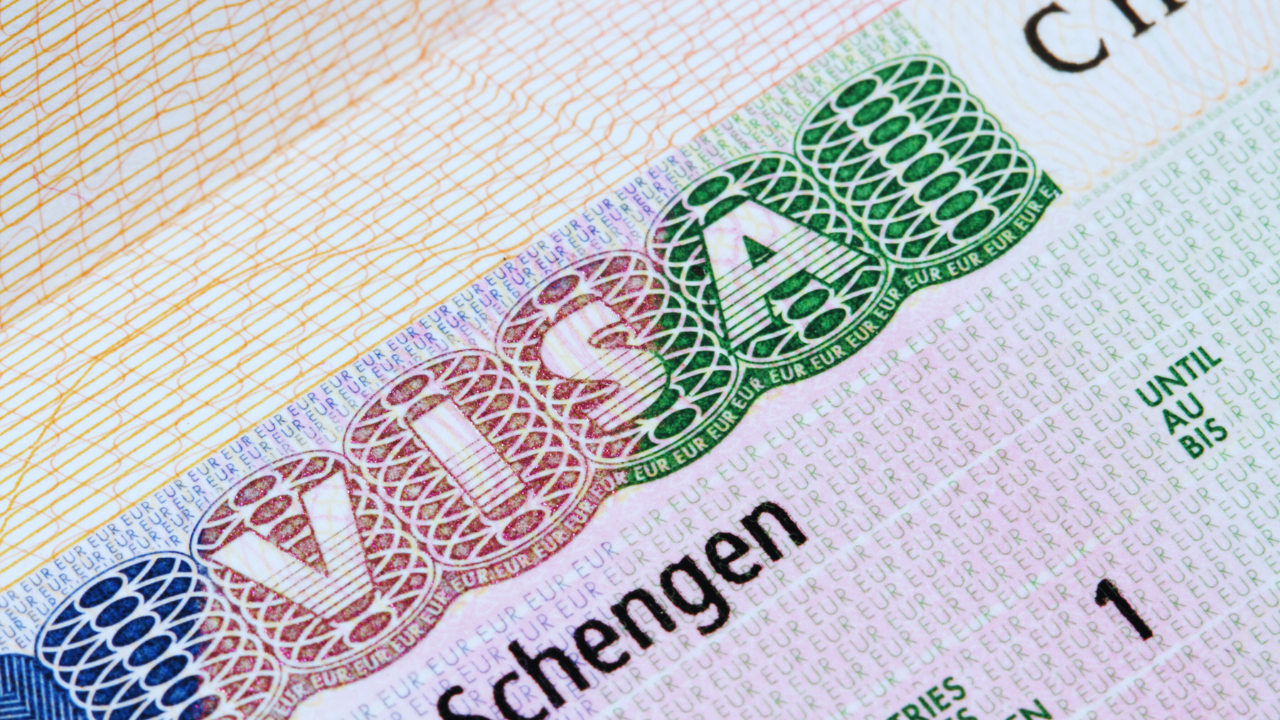
Let that number sink in. Twenty-five thousand euros for a Schengen visa.
To a corporate executive in Madrid or New York, twenty-five thousand euros is a quarterly marketing budget. To an ordinary worker in Algiers, it is a lifetime of labor, a sold ancestral plot, a mountain of debt passed down to children who haven't yet learned how to spell inflation. It is the cost of entry into a lottery where the grand prize is simply the right to stand on a European street corner and look for work that pays in stronger currency.
The Architecture of the Tollbooth
How does a paper stamp acquire the value of a luxury car?
To understand, you have to look past the official press releases and examine how modern migration systems are outsourced. Governments across Europe, straining under the administrative weight of millions of applications, have increasingly handed the keys of the castle to private third-party contractors. Companies like BLS International manage the flow, collect the fees, and act as the initial gatekeepers.
When a system is overwhelmed, scarcity is manufactured. When appointments vanish within seconds on public portals, a black market is born.
Imagine a hypothetical applicant named Tariq. Tariq is thirty-two, lives in a coastal neighborhood north of Algiers, and possesses hands that know how to fix diesel engines. He has a cousin in Alicante who swears there is steady work at an auto body shop. Tariq does not want to break the law. He wants the stamp. He wants to walk through the terminal at the airport with his head held high, his passport smelling of fresh ink and official approval.
He goes online to book an appointment. The calendar is blank. Red text flashes on the screen: No slots available.
He refreshes. Still nothing.
By sunset, Tariq discovers the shadow market. It operates in the encrypted corners of messaging apps and through middlemen who hang around the physical perimeter of consular offices. These are brokers who possess neither uniforms nor badges, but they possess appointments. Dozens of them. Harvested through automated bots or insider channels.
The price starts small. A few hundred euros to skip the virtual queue. But when the stakes involve escaping an economic climate where youth unemployment feels like a permanent ceiling, the price scales grotesquely. Enter the syndicates whispering of guaranteed approvals, forged bank accounts that can fool consular scrutiny, and internal collusion. Twenty-five thousand euros.
The Spanish investigation into BLS International and the associated irregularities did not just uncover administrative laziness. It exposed a fundamental fracture in the architecture of global mobility. When you commercialize the border, you monetize human longing. And human longing has no upper limit on what it is willing to pay to survive.
The Invisible Stakes
We talk about migration statistics as if they were weather patterns. We speak of migrant flows, influxes, quotas, and processing backlogs. We draw bar charts and debate policy points on Sunday morning television.
Strip away the jargon, and you find human beings performing desperate arithmetic.
I have felt that exact brand of helplessness. When you are sitting across from a consular officer who has twenty seconds to judge your entire existence based on three stapled pages, you become hyper-aware of your own invisibility. You realize that to them, you are not a person with a mother, a dog, a favorite cafe, or a broken heart. You are a risk factor. You are a potential overstayer. You are a number on a spreadsheet that threatens to unbalance domestic politics.
When legal avenues are choked by bureaucratic inertia and systemic corruption, desperation does not vanish. It bends.
The Algerian migration crisis tied to these inflated visa prices is a symptom of a world that has built walls while charging admission to the gate. On one side sits an aging Europe facing labor shortages in agriculture, construction, and caregiving, yet terrified of its own demographic shadow. On the other side sits North Africa, pulsing with young, educated, underemployed populations who watch European life beamed into their living rooms every single day through smartphones and satellite dishes.
The demand is infinite. The legal supply is rationed.
Economics teaches us that when demand is high and supply is artificially restricted, corruption fills the vacuum. If you cannot get a legal visa through the front door because the slots are hoarded by brokers, and if your life at home feels like a countdown to nowhere, what choice remains? For those with assets, you pay the twenty-five thousand euros. You mortgage the family home to buy a paper key.
For those without assets, you look toward the sea.
The Human Cost of the Ledger
Investigations like the one facing BLS International usually end in corporate finger-pointing. Contracts will be reviewed. Audits will be ordered. Heads of regional operations might issue polite apologies or step down with golden parachutes, citing a commitment to transparency. New software will be promised—smart portals, facial recognition, CAPTCHAs designed to keep out the bots.
Yet the core machine remains unchanged.
The tragedy is not merely that a private company allowed corruption to seep into its appointment systems. The tragedy is that we have created a world where the accident of where you were born dictates the entirety of your human dignity, and where crossing a geographical line requires proving you can afford to pay a ransom to the state and its intermediaries.
Tariq never made it to Alicante. His family refused to sell the ancestral land, and even if they had, twenty-five thousand euros was a fairy-tale sum built on exploitation. Today, he still works on diesel engines in Algiers, his hands stained with grease, listening to the radio talk about European labor shortages and border security updates.
He does not read the financial reports about corporate probes or regulatory fines. He does not need to. He already knows the price of the paper. It is the cost of a dream, inflated beyond reach, guarded by people who never have to look him in the eye.