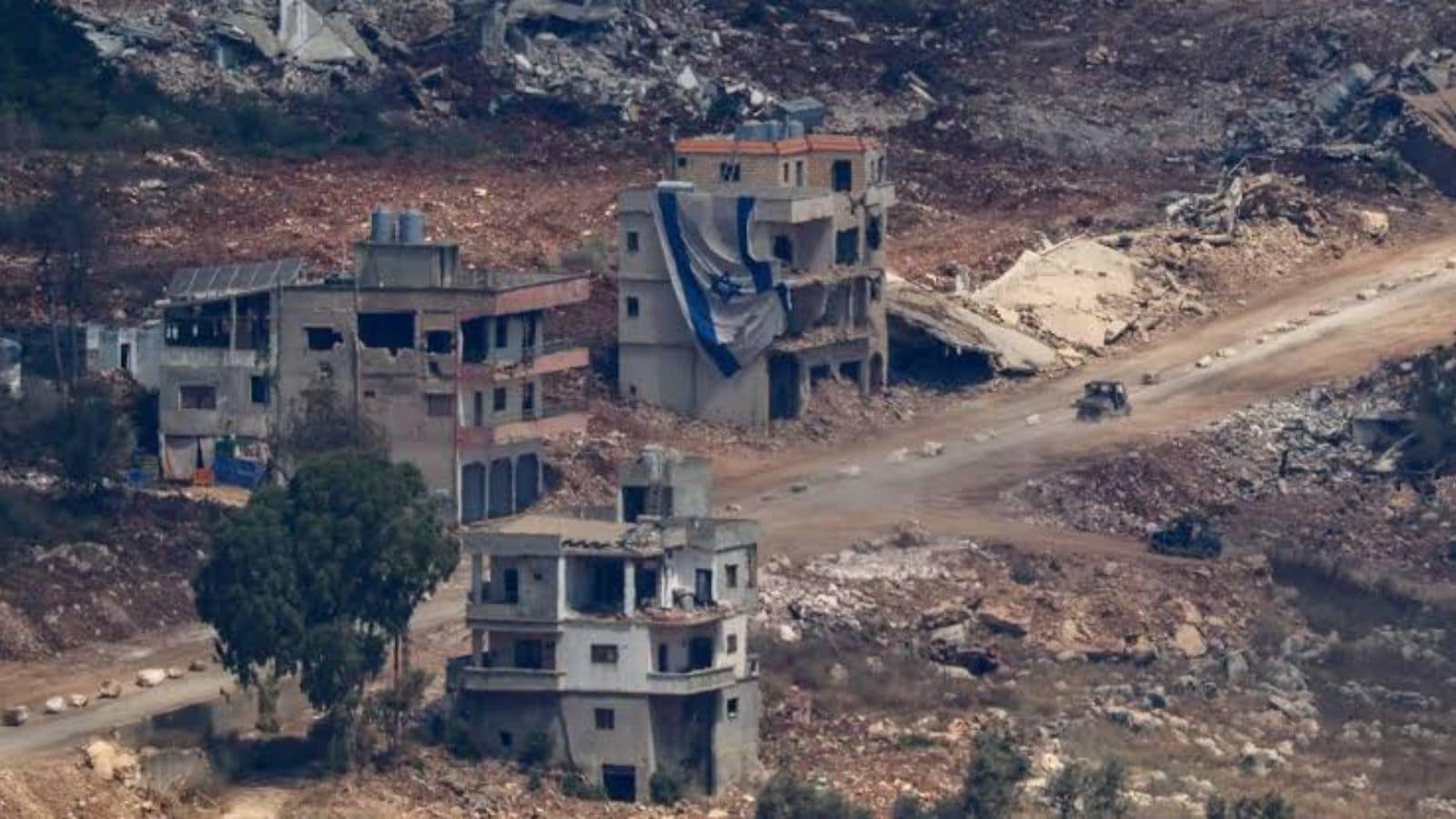
The map on the wall of the dusty provisional office still smelled like fresh toner. Outside, the morning air over the Tigris tasted of sulfur and dry earth, a familiar seasoning for anyone who had spent twenty years watching empires scribble blueprints over ruins.
Consider the arithmetic of rebuilding. It is a peculiar kind of mathematics. You begin with the destruction of a bridge—a span of reinforced concrete that took fifty years to settle into the collective memory of a city—and you replace it with a wire transfer. Five billion dollars. The number is printed on official letterhead in Washington, neat and sanitized, accompanied by the bureaucratic cadence of a reconstruction fund designed for a war that official bulletins insisted was managed, contained, and safely negotiated away.
History does not arrive with a fanfare. It arrives in invoices.
To understand what five billion dollars actually means in the geography of West Asia, you have to leave the committee rooms where diplomats adjust their cuffs. You have to walk down into the neighborhoods where the concrete dust has settled so deeply into the topsoil that nothing green grows without a fight.
Meet Tariq. He is not a general or a minister. He is a fifty-four-year-old mason whose calloused hands know the specific density of limestone from three different quarries. When the shelling started two summers ago, Tariq did not pack a suitcase; he packed a trowel and two spools of heavy twine. He stayed because his grandfather’s orchard was rooted in soil that had been turned over by three separate conflicts within his lifetime.
"They talk about funds," Tariq tells me, wiping mortar from his wrist with a rag that has seen better decades. "They talk about packages and allocations. But a fund doesn't mix mortar. A fund doesn't know how the river rises in April."
He is right, of course. The newly proposed US reconstruction fund for the aftermath of the hostilities with Iran is an exercise in distance. From five thousand miles away, a billion dollars looks like a steering wheel—a mechanism to pull a fractured region back onto the asphalt of stability. From the ground, it is a drop of rain on an iron roof. It makes a sharp sound, and then it is gone.
The political logic behind the initiative is straightforward enough. Wars do not end when the last missile clears the horizon; they mutate into administrative nightmares. When hostilities flare between regional powers and global super-states, the bill arrives later, disguised as humanitarian assistance or stabilization grants. Washington’s calculus is rooted in a hard-learned lesson from previous decades: if you leave a cratered landscape empty of economy, extremism moves into the vacuum with the speed of dry grass catching a spark.
Yet, money of this magnitude rarely flows like water. It flows like electricity, following the path of least resistance through a network of contractors, sub-contractors, feasibility studies, and security consultants who charge three hundred dollars an hour to sleep in armored hotels.
The invisible stakes of this funding are enormous. For the families living beneath flickering fluorescent lights in towns where the power grid is a rumor, every dollar earmarked for reconstruction is a proxy for survival. But it is also a psychological weight. Reconstruction money is never just about bricks and mortar; it is a declaration of who gets to write the next chapter of the city's story. When foreign treasuries open their vaults to repair what their munitions helped break, the ledger is balanced not in cash, but in influence.
Think of it as an architectural mortgage. You borrow the means to fix your roof from the very entity that dropped the ceiling tiles in the first place.
The tension in the air is palpable. In local tea houses, the conversation does not revolve around the geopolitical chess match between capitals. It revolves around the price of a bag of cement. When international aid arrives, local markets stutter. Prices spike. The sudden injection of foreign capital creates an artificial inflation that prices the ordinary laborer out of the very materials needed to patch a kitchen wall.
Tariq points across the alleyway to a half-finished storefront where rusted rebar reaches toward the sky like skeletal fingers.
"Look at that," he says softly. "That was supposed to be a clinic. The money was approved six months ago. The sign is up. The paint on the sign is already peeling from the sun. But inside? Just dust and stray dogs."
This is the gap between the press release and the pavement.
The architects of the five-billion-dollar fund in Washington see a stabilizing ledger. They see a hedge against further conflict, an investment in regional deterrence, a way to stitch shut a wound before it becomes gangrenous. They are not entirely wrong. Without capital, a shattered economy stagnates into permanent misery. Without investment, clean water remains a luxury and schools remain skeletons.
But the human element is stubbornly resistant to spreadsheet logic. A mother whose home was reduced to rubble by a midnight strike does not care about fiscal quarters or multi-year disbursement schedules. She cares that her children are breathing dust and coughing through the winter nights.
We have watched this script before. We watched it after the interventions in the Gulf, after the protracted campaigns in the Levant, after every diplomatic reset that promised a clean slate. The ink dries on the treaty, the cameras flash as dignitaries shake hands over mahogany tables, and then the real work begins—the grinding, unglamorous work of hauling rubble away one wheelbarrow at a time, while accountants thousands of miles away debate whether the receipts were properly filed.
The sun climbs higher over the river, bleaching the minarets and the concrete barriers until the city looks like a sketch drawn on cheap paper. Tariq picks up his trowel. He has a wall to finish before the afternoon heat becomes unbearable. He does not know whether the five billion dollars will ever reach his street, and honestly, he has stopped checking the news to find out.
The foundation is there. The ruins are there. Between them lies the long, quiet distance of human endurance, waiting to see what gets built next out of the ashes.