The sirens in Poltava do not wail anymore; they groan. It is a low, mechanical fatigue that has settled into the brickwork of the city over four brutal years. For those living under the shadow of the ongoing conflict, the sound is no longer an alarm. It is merely the ambient noise of a life lived in fragments.
Deep within a concrete bunker somewhere in eastern Ukraine, a low-ranking logistics officer named Mykola—a hypothetical composite of the thousands of tired souls holding the line—stares at a glowing monitor. His fingers are stained with cheap tobacco and grease. On his screen, a digital map blinks with fresh telemetry. A swarm of Ukrainian long-range strike drones has just crossed the border into Russia, heading toward another oil refinery.
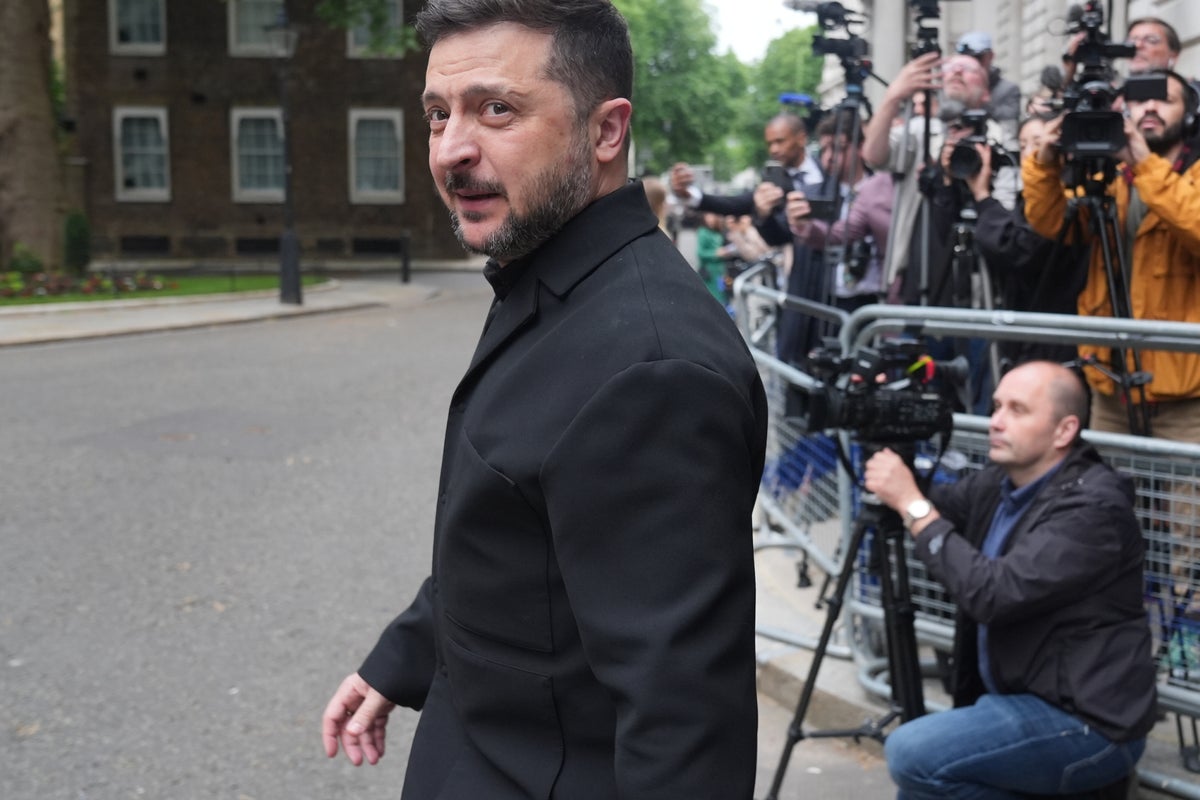
Far away from the damp chill of Mykola’s bunker, Volodymyr Zelensky stood before a microphone and spoke of a freeze.
The announcement sent a shockwave through the international community. For years, the official stance from Kyiv had been unyielding: total liberation of all occupied territories before any formal peace talks could begin. But the reality on the ground has a way of eroding the sharpest political rhetoric. Zelensky’s sudden willingness to pause the active battlefield to initiate dialogue marks a profound, agonizing shift in the anatomy of this war. It is an admission that flesh and blood have limits, even if courage does not.
To understand why a nation would offer to freeze the front lines just as its drones are penetrating deeper into Russian territory than ever before, one must look past the press releases. The true story is written in the smell of burning diesel and the quiet desperation of a freezing winter.
The Iron Calculus of the Grid
War is fought with flags, but it is sustained by BTUs.
For months, the strategic focus of the Ukrainian military has quietly drifted away from the mud-clogged trenches of the Donbas and toward the sleek, silver columns of Russian petrochemical infrastructure. It is a strategy born of pure necessity. If you cannot push the enemy back with armor, you must starve the engine that drives them forward.
Consider the mechanics of a modern oil facility. It is not just a collection of tanks; it is a highly complex, fragile ecosystem of distillation towers, catalytic crackers, and pressurized pipelines. When a Ukrainian drone, packed with high explosives, slams into a fractionation column in Krasnodar or Ryazan, it does not just cause a fire. It tears out the technological heart of the plant. These components cannot be easily replaced, especially under the crushing weight of international sanctions.
The strategy is working. Estimates suggest that Ukrainian strikes have knocked out a significant percentage of Russia’s domestic refining capacity. For a brief moment, the economic calculus swung in Kyiv's favor.
But every action on this chessboard triggers a devastating countermove.
For every Russian oil refinery that goes up in flames, the response against Ukraine’s civilian infrastructure is magnified tenfold. The Kremlin’s missiles have systematically dismantled Ukraine’s thermal power plants and hydro facilities. The energy grid is a patchwork of scars and bypasses. In Kyiv, Kharkiv, and Lviv, daily life is dictated by the rolling blackout schedule.
Imagine a mother in an apartment building in the dead of winter. The power goes out. The radiators turn to ice within hours. She has to decide whether to use her remaining phone battery to check the air raid alerts or to let her child play a game to forget the cold. This is the invisible siege. It is a slow, grinding exhaustion that target coordinates and territorial maps fail to capture.
The Mirage of the Frozen Front
When a politician speaks of freezing a battle, the mind conjures images of peace. We imagine the guns falling silent, the soldiers stepping out of the mud, and the slow return of normalcy.
The reality is far more sinister.
A frozen conflict is not peace. It is a suspended animation of violence. Look at the historical precedents—the Korean Peninsula, Transnistria, Cyprus. These lines on a map do not heal; they scab over, remaining tender and prone to tearing open at the slightest provocation.
For Ukraine, offering a freeze is a high-stakes gamble with the nation’s future. It means accepting, even temporarily, that millions of its citizens will remain under foreign occupation. It means allowing the Russian military to fortify its positions, dig deeper trenches, and lay millions more mines along the current line of control.
Why, then, make the offer now?
The answer lies in the shifting tides of global politics and domestic endurance. The pipeline of Western ammunition and financial aid is no longer a guaranteed torrent; it has become a unpredictable trickle, subject to the whims of foreign elections and domestic budgets. Ukraine is running out of air defense missiles. Its soldiers are exhausted, many having served on the front lines without rotation for years.
Zelensky’s pivot toward peace talks is not a sign of surrender. It is a tactical pivot. By showing a willingness to negotiate, Kyiv repositions itself on the global stage, throwing the ball back into Moscow’s court while buying precious time to rebuild its depleted forces and shore up its crumbling energy infrastructure.
The Ghost in the Machine
Behind the geopolitical maneuvering lies a deeper, darker truth that international observers rarely acknowledge. The war has entered a phase of automated attrition.
On both sides, the human element is increasingly being supplemented—and in some cases, replaced—by autonomous systems. Drones hunt soldiers in the tree lines. Artificial intelligence algorithms scan satellite imagery to select targets for the next missile strike. The battlefield has become a laboratory for the future of human conflict.
But algorithms do not bleed. They do not get tired. They do not have families waiting for them in unheated apartments.
The danger of a frozen front is that it allows this automated warfare to continue in the shadows. Even if the heavy artillery falls silent, the drone strikes will likely persist. The sabotage will continue. The cyber warfare will intensify. The war will not end; it will simply change its frequency, humming at a low, deadly pitch that the rest of the world will eventually learn to ignore.
Mykola, sitting in his bunker, understands this better than any diplomat in Brussels or Washington. He knows that a freeze means his watch does not end. It just means the targets change. He will still stare at the monitor. He will still listen for the groan of the sirens.
The diplomatic maneuvering will dominate the headlines for weeks to come. There will be summits, joint statements, and analytical breakdowns of what a ceasefire might look like. But the true cost of this war will remain buried in the soil of the Donbas and the quiet, darkened homes across Ukraine.
A frozen horizon offers no warmth. It merely guarantees that the winter will last a little longer.