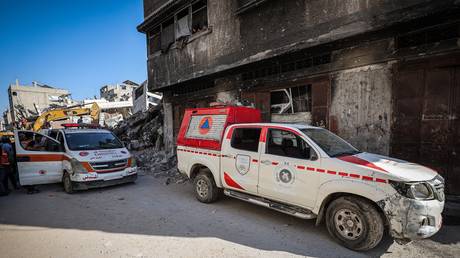
In the crowded, crumbling remnants of Gaza’s shelters, giving birth has shifted from a moment of life to an exercise in survival. It isn't just the bombs falling from the sky that define this conflict. There is a quieter, more devastating crisis happening inside the wombs of thousands of Palestinian women.
The statistics are grim. By early 2026, reports indicated a staggering surge in pregnancy losses. Data from the United Nations, cited by outlets like Haaretz, pointed to nearly 4,000 miscarriages recorded in just the first six months of 2026. That number is more than triple what was seen in the latter half of the previous year. For expectant mothers in the strip, the environment has turned hostile to life itself.
The Physical Toll of Displacement
You can’t talk about maternal health in Gaza without talking about the exhaustion. Constant movement is the new baseline. Many women are forced to walk long distances while carrying heavy supplies, searching for safety that rarely arrives. This physical strain, combined with severe malnutrition and chronic anemia, creates a perfect storm for pregnancy complications.
Obstetricians on the ground, like Dr. Mohammed Al-Bashiti at Nasser Medical Complex, have pointed to this cycle of displacement as a primary driver of the spike in miscarriages. When you’re living on three liters of water a day—most of which isn't even potable—your body doesn't have the resources to sustain a pregnancy. It’s basic biology, yet it’s being ignored in the broader discourse of the war.
When Healthcare Collapses
A hospital should be the safest place for a woman in labor. In Gaza, it’s often a place of desperate improvisation. Most facilities have been damaged or destroyed, and the few still standing are gutted by shortages.
When a woman arrives at a clinic today, she’s often facing:
- A total lack of anesthesia for emergency cesarean sections.
- No blood units for mothers suffering from hemorrhages.
- A terrifying shortage of neonatal incubators for premature infants.
I’ve heard accounts from medical staff who have to watch newborns struggle for breath, knowing they have the knowledge to save them but not the medicine. This is what a systemic collapse looks like. Premature births have skyrocketed by as much as 30% in some areas, driven by the trauma of direct bombings and the constant stress of the siege. When these babies arrive, there’s no clean environment for them, no electricity to run ventilators, and often no formula that isn't mixed with contaminated water.
Toxins and the Invisible Threat
There’s a deeper, more chilling layer to this crisis that experts are only beginning to document: the environmental impact of modern warfare. The sheer volume of explosives used in Gaza releases toxic chemicals into the soil, water, and air. Emerging evidence suggests this exposure is contributing to a rise in birth defects and pregnancy failures.
It’s an unseen injury. A mother might survive the immediate blast of an airstrike, but the toxic dust she breathes, the contaminated water she drinks, and the sheer terror of her surroundings are poisoning her pregnancy from the inside out. When you add this to the destruction of the civilian infrastructure, you aren't just looking at the casualties of war. You’re looking at the potential sterilization of a generation’s future.
Beyond the Official Numbers
Official death tolls in Gaza are notoriously difficult to track, but the reproductive impact is almost certainly higher than the records show. Many miscarriages happen in silence, in the corners of overcrowded tents or on the floors of makeshift shelters. These losses are rarely registered in the formal count of those killed by the conflict.
The restriction of aid is the mechanism that keeps this crisis alive. While global organizations highlight the lack of fuel and medical equipment, the reality on the ground is that international law is failing to keep the supply chains moving. Even when trucks are allowed to cross, the logistical chaos ensures that essential prenatal vitamins, antibiotics, and surgical tools often don’t reach the clinics where they are needed most.
If you want to understand the true cost of this siege, look at the maternity wards. They are empty of life and full of grief. The international community often speaks of "humanitarian pauses," but for a woman carrying a child in a war zone, a few days of quiet isn't enough to repair a healthcare system that has been stripped of its ability to function.
The crisis facing pregnant women in Gaza is a direct consequence of policy, not just nature. Until basic medical supplies, clean water, and safe environments for delivery are treated as non-negotiable rights, the death toll among the unborn will continue to climb. There is no recovery when the next generation is being erased before they ever take their first breath.