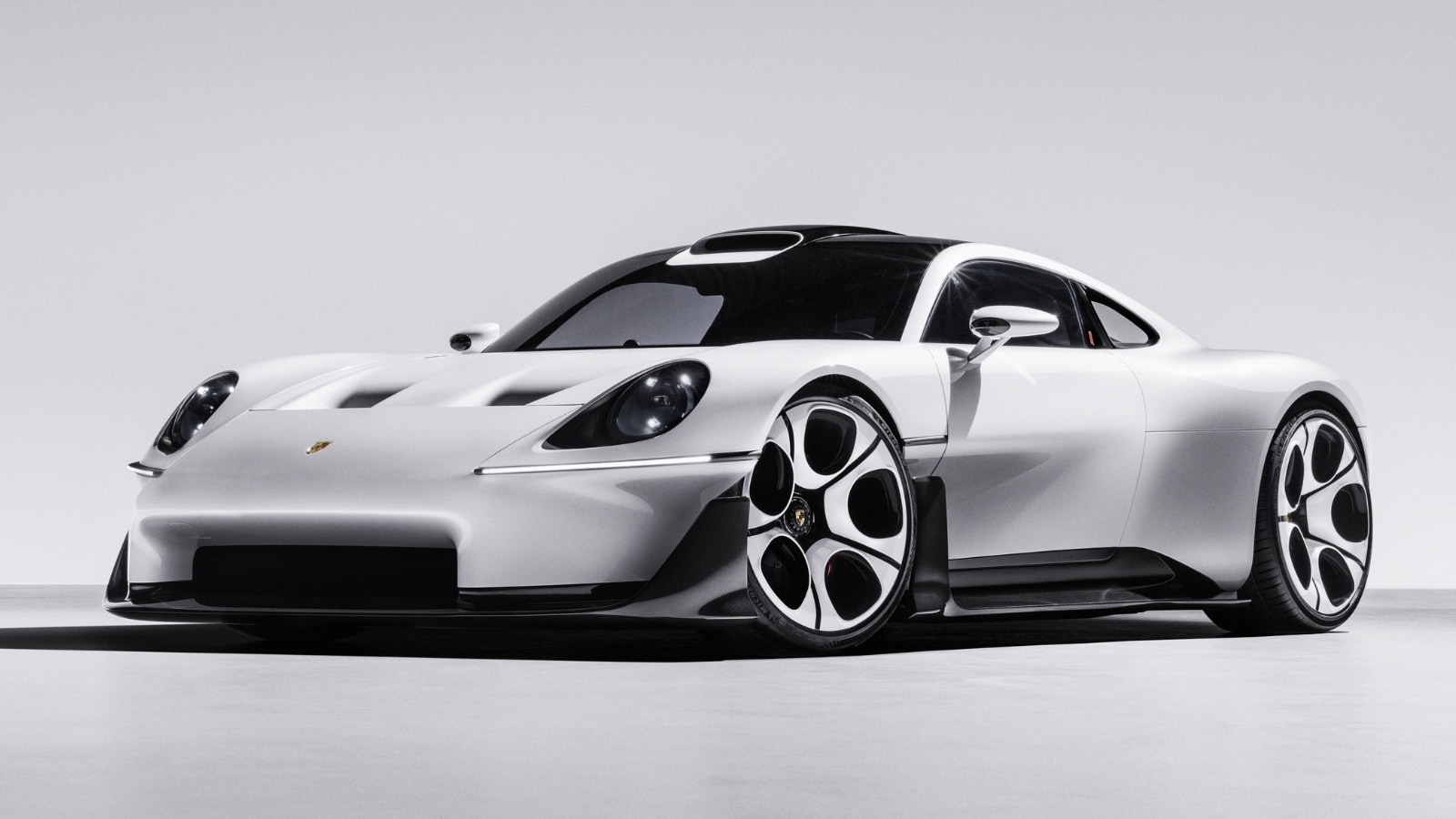
Porsche finally drew a line in the sand when it rolled out the Porsche Mission S in New York on October 15, 2026. For decades, if you wanted a mid-engine halo car from Stuttgart, you had to chase a short-lived unicorn like the Carrera GT or the 918 Spyder, watch the production run end, and pray your timing lined up with the auction market. Not this time. The Porsche Mission S is a vision model previewing a permanent mid-engine supercar tier sitting squarely above the 911. And honestly, the biggest surprise isn't just the price tag talk—it's that Porsche explicitly ruled out a battery-electric version for this platform.
Think about how wild that is for a second. A few years back, every automaker on earth was sprinting toward an all-electric future like there was no tomorrow. Here comes Porsche CEO Dr. Michael Leiters saying a battery-electric supercar on this new mid-engine architecture isn't happening because the demand simply isn't there, leaving pure internal combustion, hybrid, and plug-in hybrid setups on the table. When you've spent years watching glass-cockpit EVs promise silence and instant torque while losing the visceral drama that makes people care about cars in the first place, that pivot feels like a deep breath. Recently making news recently: Why Taylor Swift's 6,000 Books Still Matter to Reading Public Library.
A Permanent Halo Instead of Another One-Off Unicorn
Most car fans still view Porsche's top-tier mid-engine cars through the lens of rarity. The Carrera GT was a limited-run V10 icon, and the 918 Spyder wrapped up its run back in 2015. Both became instant collector trophies, which is great if you buy cars to store in climate-controlled vaults, less great if you want Porsche to maintain an ongoing flagship line that battles Ferrari and McLaren year after year.
Under its broader Sportwagenschmiede '35 strategic realignment, Porsche is shifting toward making money on higher-value, fewer-volume sports cars rather than chasing sheer volume alone. Leiters has former technology leadership experience at Ferrari and previously ran McLaren, and that background shows up right in how this car is positioned. Rather than treating a mid-engine flagship as a brief victory lap, Porsche wants a lasting pillar above the 911. Further details on this are detailed by Apartment Therapy.
Let's be real, though. A permanent car at the top of the lineup doesn't mean a mass-market car. Industry reporting from outlets like Handelsblatt and Motorsport-Total.com has pointed toward figures around 500,000 euros—roughly double what a 911 GT3 RS costs in Germany—while broader estimates in the specialist press float anywhere from above $500,000 up to $1.5 million depending on spec and timing. Porsche hasn't locked in official production pricing or a release date yet, and development is still in early stages with late-decade timing frequently mentioned in reports. If you're shopping at that level, you aren't cross-shopping a base Carrera at around $135,500 or even a Turbo S near $300,000. You're playing in ultra-luxury supercar territory where exclusivity, pedigree, and engineering credibility have to justify every single dollar.
What the Porsche Mission S Gets Right About Power and Design
Nobody loves a spec sheet more than an enthusiast, and the lack of official horsepower numbers on the Porsche Mission S has already sparked plenty of debate. Porsche has confirmed the mid-engine layout and the exclusion of a pure EV variant, while leaving cylinder count and exact output under wraps. Speculation in the automotive press ranges from a flat-eight or V8—including talk of a 5.0-liter flat-eight—to unofficial performance benchmarks around 700 to 750 hp, a 2.8-second zero-to-60 mph sprint, and a top speed north of 200 mph. Treat those numbers as educated guesses until Porsche publishes real factory figures, because concepts and early vision models exist to set direction, not make binding promises.
Where the Porsche Mission S already speaks loud and clear is its visual DNA. Porsche staged the October 15 debut in Queens, New York, at the very spot tied to the 1953 photography of the 550 Spyder. That choice wasn't random nostalgia. Head of Style Tobias Sühlmann and the design team pulled cues from across Porsche history—a flat nose nodding to the GT1, a rear cooling fan echoing the 917, a roofline and hoop wing element recalling the 959, and lightweight wheels reimagining the 928's dial motif—all finished in shades like Firn White Metallic and Light Red Metallic.
- Mid-engine proportions: Moving the engine mid-ship changes the stance and weight balance compared to a rear-engine 911, giving the car a distinct supercar silhouette while preserving recognizable Porsche cues.
- Heritage cues with purpose: Details like the rear cooling fan and dial-inspired wheels tie back to specific past cars rather than looking like generic retro stickers.
- No all-electric trap: Keeping combustion and hybrid options alive on the platform protects the sensory character buyers expect at six- or seven-figure supercar money.
A quick reality check is in order here. Styling studies are notorious for toning down wilder concept touches before a road car hits assembly. Cooling ducts get reshaped for crash and pedestrian rules, aero pieces get tweaked for real-world downforce, and interior materials shift from show-car bespoke to homologated production hardware. Admire the vision for what it signals, just don't treat every crease on a concept car as a guaranteed production part.
Inside the Cabin Fewer Screens and More Focus
Step inside the Mission S concept and you'll notice something refreshingly stubborn. While plenty of modern cabins drown drivers in giant glass slabs and buried touch menus, Porsche pared back digital surfaces in favor of physical buttons, five round instruments, an ignition key to the left of the steering wheel, and an "On Your Own" switch on the wheel to strip back driver aids when you want a purer drive. Even navigation leans on a retractable MagSafe fixture for your own phone rather than forcing a permanent center screen onto the dash.
From hands-on experience driving plenty of performance cars over the years, touchscreens at highway or track speeds are a pain. Looking away from the road to tap through a sub-menu breaks your rhythm immediately. Having real tactile controls and a clear instrument cluster isn't anti-technology; it's pro-driving. At the same time, going minimalist on fixed screens can divide opinion among buyers who still expect rich built-in infotainment and passenger displays in a high-dollar grand tourer or supercar. That tension between purist restraint and modern convenience is one of the most interesting trade-offs Porsche will have to balance as the program matures.
How to Follow This Without Getting Burned by Rumors
Because the Porsche Mission S sits at the intersection of real corporate strategy and early-stage speculation, the smartest move right now is staying grounded. Watch official announcements from Porsche Newsroom rather than treating every leaked render or power rumor as gospel. Pay close attention to what Dr. Leiters and the engineering team actually confirm about powertrain architecture, production timing, and how this new mid-engine platform interacts with the rest of the sports car lineup as Porsche executes its plan toward 2035. If you're thinking about buying at the upper end of the market, compare how a future mid-engine flagship stacks up against current top-tier 911 variants and rival supercars in terms of long-term ownership costs, allocation reality, and what kind of driving you actually do most weekends.