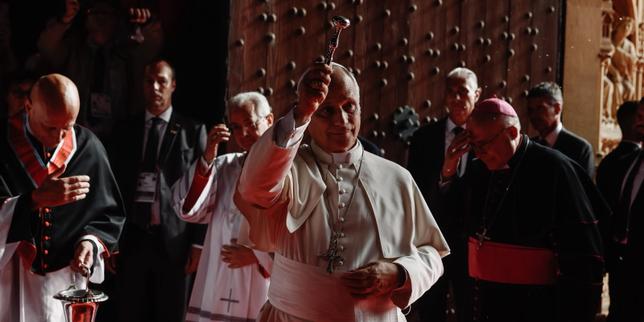
We love grand speeches about peace until someone asks us to give up something to get it. Pope Leo XIV figure-skated right past polite diplomatic fiction during his stop in Metz, landing directly on the uncomfortable truth driving modern European security. Standing on soil historically scarred by centuries of shifting borders, he didn't just offer generic well-wishes. He demanded concessions.
If you tracked his final day in France, you noticed the tone shift immediately. While international summits usually drown in sanitized bureaucratic phrasing, Leo XIV called out the diplomatic lies poisoning state relations. He pointed straight at the reality most politicians avoid: sustainable peace requires sacrificing rigid national postures. You cannot demand total victory and expect a stable continent to emerge from the ashes.
The Symbolic Weight of Metz
Why Metz? Locations matter in geopolitics, and picking this Lorraine city wasn't an accident. This is Robert Schuman territory—the very place where the architecture of post-war European integration first took shape out of the wreckage of Franco-German bloodshed.
When the Pope addressed leaders at the Centre des congrès Robert Schuman, he tied Europe's current fractures directly back to its foundational ideals. He reminded everyone that the European project wasn't built on uncompromising stubbornness. It survived because leaders decades ago chose practical cooperation over tribal vengeance. Walking through a city that changed hands multiple times across modern history gives his message an undeniable teeth. Enemies can reconcile, but only if they stop treating compromise as a dirty word.
What Real Concessions Actually Mean Today
Let's be honest about what the Vatican means when it talks about sacrifice. Modern leaders love talking about resilience while quietly hardening their borders and ramping up rhetoric. Leo XIV cut through that noise.
He argued that true diplomacy demands patience, grueling negotiations, and the willingness to let go of absolute demands for the greater good. That sounds nice on paper, but it terrifies modern politicians. In an era driven by algorithmic outrage and hyper-nationalist posturing, showing flexibility looks like weakness. Yet the alternative is a slow crawl toward permanent continental friction.
- The Danger of Rigid Postures: Refusing to budge an inch locks nations into endless escalation loops.
- The Cost of Dialogue: Real negotiation forces leaders to face domestic backlash for abandoning hardline stances.
- The Historical Precedent: Every lasting European treaty came after exhaustion forced leaders to accept imperfect compromises.
The Interreligious Angle That Got Ignored
While the headlines focused on his political warnings, the morning interreligieuse gathering yielded something interesting. Religious leaders representing diverse faiths signed the local "Appel de Metz", committing to joint frameworks for social cohesion.
Critics often dismiss these declarations as empty paper. But in regions dealing with deep cultural friction, establishing shared ethical baselines matters. Religions occupy a unique space outside immediate electoral cycles. When the Pope calls these institutions to act as active guardians of life rather than tools for political mobilization, he is asking faith communities to step out of their comfort zones, too.
Moving Past Empty Rhetoric
Europe stands at a strange crossroads. Leaders talk constantly about defense readiness, economic autonomy, and geopolitical independence. But they rarely talk about the internal moral discipline required to keep a diverse union from tearing itself apart.
Leo XIV left Metz without offering easy comfort. He didn't tell Europeans that everything will work out fine if we just believe harder. Instead, he handed them a bill: peace costs pride, territorial stubbornness, and political ego. Whether anyone in power has the courage to pay that price remains entirely an open question.