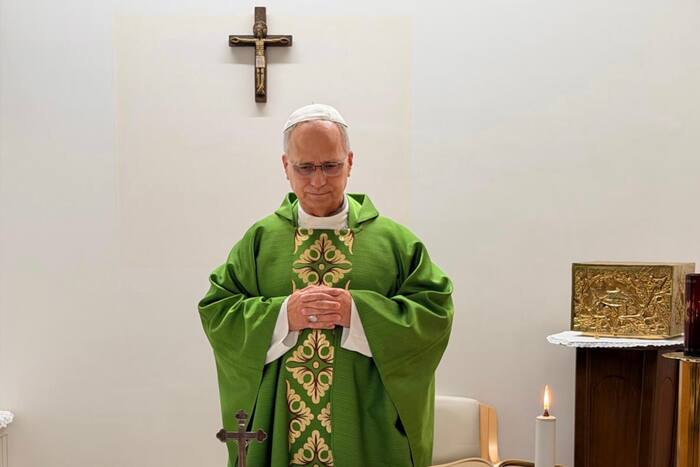
Pope Leo XIV is scheduled to leave Rome's Gemelli Hospital on Saturday, four days after undergoing surgery to remove a cancerous tumor from his right lung. A four-day discharge following thoracic cancer surgery is brisk, even in an era of minimally invasive techniques, and it puts Vatican transparency straight under the microscope.
Standard wire dispatches treat the announcement as routine good news. Doctors cleared the 71-year-old pontiff after checking blood work, a chest X-ray, and his overall clinical picture, allowing him to return to the Vatican ahead of Sunday's noon blessing overlooking St. Peter's Square.
Yet speed in papal health bulletins rarely settles questions. It usually sharpens them.
What a Four-Day Discharge Actually Means
When a patient leaves the hospital four days after lung cancer surgery, the clinical picture usually points to early-stage disease caught before symptoms forced a crisis. Surgeons removed the lower lobe of Leo's right lung and confirmed adenocarcinoma, the most common form of lung cancer. Doctors noted that the nodule turned up during routine medical evaluation rather than a targeted screening program, a pattern familiar to thoracic clinicians worldwide.
Still, a short hospital stay does not mean full recovery. Removing a lobe of the lung is major surgery regardless of how cleanly the incision heals or how early the tumor was spotted. Pain management, respiratory physiotherapy, fatigue, and post-operative staging continue well after a patient walks out the front doors of Gemelli.
A rapid release tells you the immediate post-operative curve looks favorable. It does not tell you the long-term pathology staging or whether follow-up therapy will enter the picture.
For ordinary patients, leaving the hospital four days after a lobectomy feels like a milestone worth celebrating. For the head of a global institution with 1.4 billion Catholics, every medical timeline carries institutional weight. Canceling audiences through October 20 signals restraint, even as the quick exit projects vigor.
Why Vatican Medical Bulletins Stay Guarded
Anyone who has covered the Vatican for decades knows the rhythm of papal health reporting. Information arrives in carefully measured increments, shaped by medical confidentiality, institutional dignity, and the memory of past crises.
Rome's Gemelli University Hospital earned its nickname as the "hospital of the popes" during the pontificate of John Paul II, shifting care away from improvised arrangements inside the Apostolic Palace. Over the years, medical teams there have grown accustomed to intense international scrutiny whenever a pontiff checks into the private wing. Even so, the Vatican rarely shares full oncology details, staging specifics, or long-term prognoses in public communiques.
Consider how recent history colors every headline out of Rome. Pope Francis spent more than five weeks in the hospital battling bronchitis that progressed to bilateral pneumonia before dying at Casa Santa Marta in April 2025, less than a month after discharge. That memory still hangs over St. Peter's Square.
When Leo's diagnosis emerged alongside a rapid discharge plan, officials quickly emphasized his serenity and early detection. Secretary of State Cardinal Pietro Parolin stressed that catching the issue promptly made swift surgery possible, while also fielding questions about contingency measures such as precautionary resignation letters that past popes have considered.
There is a real tension here. Full medical candor builds public trust and dampens rumor. Yet excessive detail can invite armchair speculation about succession, travel schedules, and governance long before doctors have complete data.
The Gap Between Public Optics and Clinical Reality
Short-form reports tend to stop at the front gate of the hospital. A crowd cheers, a smiling pontiff waves, and the motorcade heads back to Vatican City. That visual arc satisfies the daily news cycle.
It leaves out the harder questions that matter to observers watching how a papacy functions under stress:
- Pathology versus procedure: Removing a suspicious nodule and part of a lobe confirms the diagnosis, yet final staging and molecular testing often take days or weeks to synthesize into a complete care plan.
- Pacing versus pressure: Returning home in time for a Sunday blessing looks reassuring on camera, though demanding travel and diplomatic calendars test stamina far more than a quiet room.
- Incidental discovery limits: Finding a lung nodule by chance during routine exams is a reminder that early detection can be fortunate, while also highlighting how often lung cancer slips past notice until imaging happens for another reason.
Suppose a hypothetical 71-year-old executive undergoes a lobectomy for an incidental adenocarcinoma and returns to light work within a week. A clean early X-ray and steady blood counts support going home, yet pulmonologists still watch breathing capacity, infection risk, and follow-up scans closely over the months ahead. The same clinical logic applies in Rome, even when the patient wears white cassock and carries global diplomatic weight.
What to Watch After the Motorcade Returns
Saturday's discharge marks the end of the hospital chapter, not the end of the story. Watch how the Vatican paces Pope Leo's schedule over the coming weeks rather than relying solely on the speed of his exit from Gemelli.
Sustained stamina—how quickly he resumes taxing appearances, handles long meetings, and manages travel—will tell far more than a four-day stay. And watch the tone of future medical notes from doctors Luigi Carbone and Stefano Margaritora. Crisp, matter-of-fact updates usually signal steady footing; sudden silence or vague phrasing usually means something more complicated is being weighed behind closed doors.
Pope Leo Arrives at Rome Hospital for Lung Surgery as Vatican
This clip shows Pope Leo arriving at Rome's Gemelli Hospital ahead of the lung surgery that preceded his four-day discharge announcement.