Standard breaking-news reporting treats the sixth day of violent demonstrations in Tirana as a simple clash between an entrenched prime minister and angry streets. That framing misses the structural mechanics keeping Prime Minister Edi Rama in office while street unrest escalates. A sixth day of street violence does not automatically trigger an executive exit when political survival depends on institutional control, coercive loyalty, and external bargaining power rather than street concession.
To understand why Rama refuses to step down as clashes continue in Albania, the crisis must be analyzed through four structural dimensions: grievance accumulation, coercive loyalty economics, external geopolitical leverage, and institutional endurance. Known facts come from verified reporting on the October 2026 street clashes in Tirana, preceding months of environmental and anti-corruption demonstrations, police deployments and arrests, and public statements by Rama and international actors. Hypotheses in this analysis apply political-economy frameworks to explain incentives where exact internal cabinet deliberations or hidden financial ledgers are not publicly observable. For an alternative look, read: this related article.
How Street Grievances Compounded Into a Multi-Front Crisis
Competitor headlines often compress complex multi-month unrest into a single label—either "corruption protests" or "student anger"—obscuring how separate grievances merged into a single street coalition. In political mobilization theory, grievances act as latent fuel, while visible flashpoints serve as ignition events that lower the perceived cost of collective action.
In Albania, unrest built across distinct tracks rather than appearing overnight on day one of the sixth-day cycle. Earlier in 2026, demonstrations over coastal and environmental land use—such as disputes around protected wetland and tourism developments—established protest networks and symbols like the flamingo. Corruption controversies, including scrutiny of high-profile development deals and high-level security and anti-corruption scandals, eroded institutional trust. By mid-October 2026, student grievances over university conditions, costs, and limited domestic economic prospects fused with broader anti-government demands, turning localized complaints into sustained multi-day confrontations in Tirana and other cities. Further analysis on this trend has been published by TIME.
- Environmental and land-use disputes: Contested coastal and protected-area projects created recurring grievances over public assets and perceived favoritism toward well-connected developers.
- Governance and corruption scandals: High-profile investigations and allegations involving public officials and organized crime links weakened claims of administrative accountability.
- Youth and economic pressures: University conditions, living costs, and limited career opportunities gave student demonstrators immediate material stakes alongside political demands.
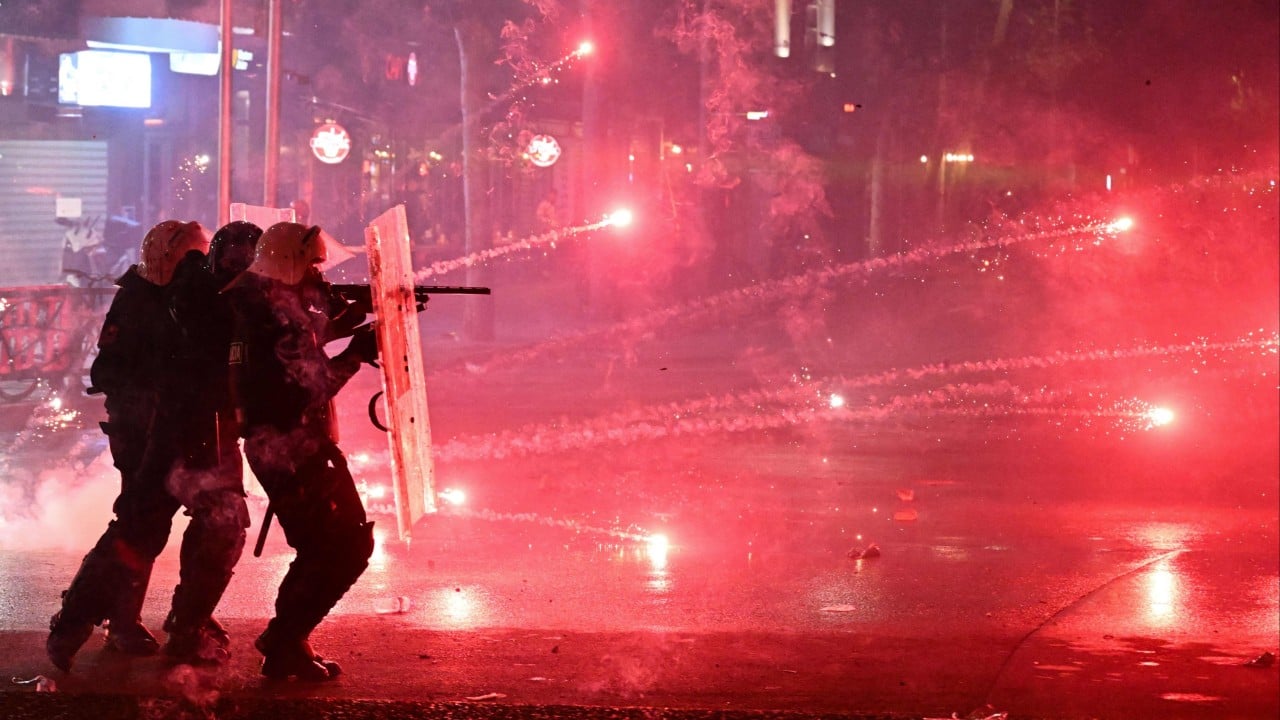
- Escalation dynamics during street clashes: Property damage, roadblocks, tear gas, water cannons, and rubber bullets raised physical risk and polarized public debate between order and dissent.
A key cause-and-effect relationship often missed in surface coverage is how heavy street tactics can harden both sides simultaneously. When demonstrators block roads or damage buildings, authorities gain a public-order rationale for forceful crowd control. Conversely, when police deploy tear gas, water cannons, or rubber bullets—or when arrests draw scrutiny over treatment of young demonstrators—the state's response itself becomes a fresh grievance that recruits new participants.
The Cost Function of Resignation Versus Holding Power
From a strategic standpoint, a leader in power since 2013 faces an asymmetric cost function when weighing resignation against staying put. Resigning under street pressure carries an immediate, certain loss of executive authority and political leverage. Remaining in office carries ongoing reputational, legal, and street-level costs, yet preserves control over state institutions, appointments, and policy execution.
When protesters demand not only a prime minister's exit but also transitional arrangements, constitutional or electoral changes, or accountability probes, the perceived cost of stepping down rises sharply. Hypothesis: in systems where political competition is deeply personalized and partisan trust is low, an incumbent often views resignation not as a neutral reset, but as surrender of protective institutional levers.
Operational endurance during multi-day unrest depends heavily on coercive loyalty—the willingness of security forces and administrative apparatus to enforce government directives under pressure. Public-order policing requires both discipline and morale. When authorities combine riot containment with disciplinary reviews of isolated excesses while offering financial incentives or pay support to frontline personnel, they attempt to prevent fatigue or defection within the ranks.
Consider a stylized operational trade-off a government faces on day six of street clashes:
- Concede immediately and resign: Stops street clashes quickly if resignation is the primary demand, but cedes executive power and risks political unraveling for the ruling party.
- Offer conditional dialogue without stepping down: Signals responsiveness to moderate observers, yet risks rejection if protesters view dialogue without structural concessions as a delay tactic.
- Maintain containment and frame unrest as a threat to stability: Preserves authority in the short term, but risks deepening alienation if force appears disproportionate or prolonged.
In practice, Rama's posture has combined firm refusal to resign with efforts to project stability and appeal to strategic narratives, even as street clashes continued.
European Integration Leverage and External Framing
Unlike isolated domestic disputes, protests in a European Union candidate country operate inside a two-level game where domestic street pressure intersects with external diplomatic expectations. Rama has long tied his political project to advancing Albania's EU accession track. That positioning gives the government a potent counter-narrative: portraying prolonged or violent street disruption as a hazard to international credibility, investment, and European integration.
At the same time, external actors balance competing priorities. Western partners and European institutions generally emphasize democratic norms, proportionality in policing, rule of law, and peaceful resolution of grievances, while also valuing regional stability and institutional continuity. Hypothesis: as long as external capitals prioritize stability and see no clearly institutionalized alternative to prevent disorder, an incumbent gains room to weather multi-day street pressure—provided street violence does not cross a threshold that forces a sharp diplomatic rupture.
Rama's rhetoric pointing to destabilizing external or subversive influences reflects a classic crisis-management move: shifting attention away from domestic grievances toward external threats. Yet that strategy carries a clear limitation. Without concrete, verifiable evidence or broad public belief, blaming outside interference rarely convinces domestic demonstrators facing tangible economic or governance frustrations.
Tactical Execution Checklist for Analysts and Decision-Makers
Tracking a multi-day protest crisis requires moving beyond daily crowd estimates or dramatic clash footage to monitor leading indicators of regime resilience or fracture. Analysts, diplomats, and organizational risk teams evaluating the standoff can apply a structured five-step diagnostic:
- Map coalition cohesion versus fragmentation: Track whether student groups, civic movements, opposition parties, and diaspora voices share a unified minimum demand or diverge over tactics and end-states.
- Audit coercive proportionality and force strain: Watch injury counts, arrest patterns, legal decrees on assemblies, and disciplinary actions to gauge whether policing remains contained or creates escalating backlash.
- Separate symbolic dates from baseline momentum: Distinguish spikes tied to protest cycles or national dates from day-to-day endurance after clashes subside.
- Monitor institutional neutrality: Observe how courts, parliament, media, and local administrations behave under pressure, since institutional alignment often matters more than street volume alone.
- Assess external signaling precision: Read diplomatic statements carefully for shifts from generic calls for calm and restraint toward specific pressure on governance or investigations.
Limitations of Analytical Frameworks and Forecast
No analytical model can predict exact street outcomes on a given day because human collective action involves thresholds, accidents, and rapid shifts in emotion. In particular, this framework has three limits: it cannot observe private deals inside political parties, it weights structural incentives more heavily than charismatic or sudden viral catalysts, and it treats external diplomacy as reactive rather than determinative.
Based on the mechanics operating through the sixth day of unrest, the most probable near-term trajectory is a protracted standoff marked by periodic street flare-ups rather than an immediate forced resignation. Rama holds institutional control and strong incentives to resist stepping down under duress, while protesters have shown persistence across overlapping issues without yet forcing a decisive institutional rupture.
For any actor seeking to de-escalate the crisis without triggering wider instability, the highest-leverage move is coupling credible, independently verifiable accountability on alleged police excesses and governance grievances with a clear, time-bound institutional off-ramp. Pure coercion prolongs friction; unconditional resignation faces maximum resistance; a structured accountability and de-escalation track is the narrowest path that lowers street heat while preserving legal and institutional order.