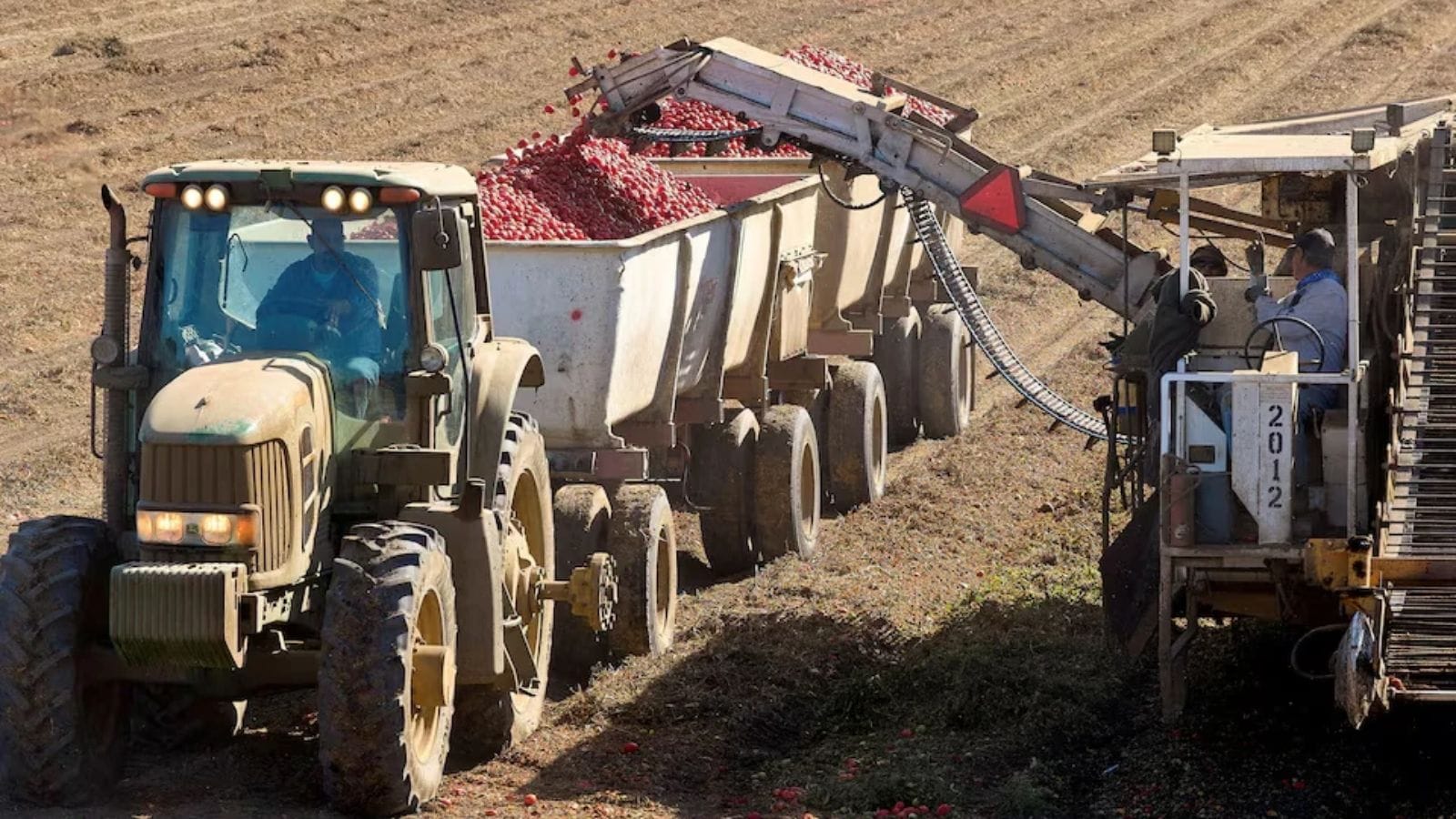
Federal interventions aimed at curbing commodity input costs often founder on the friction between national policy levers and regional market structures. The White House Executive Order waiving federal excise taxes and penalty enforcement on dyed off-road diesel fuel for highway use represents a classic case of policy friction. Designed to deliver immediate liquidity to agricultural and transport sectors during peak harvest cycles, the initiative exposes deep structural asymmetries in global refining bottlenecks, state-level tax compliance, and supply-chain logistics.
Evaluating the economic mechanics of this policy reveals why targeted tax waivers struggle to alter the cost curve for end-users facing systemic supply shocks.
The Three Structural Friction Points of the Dyed Diesel Exemption
Off-road diesel—chemically identical to standard ultra-low sulfur diesel (ULSD) but marked with Solvent Red 164—is historically exempt from federal highway excise taxes because the equipment using it (e.g., tractors, combines, stationary generators) does not operate on public infrastructure. Waiving on-road enforcement to allow dyed fuel in highway transport introduces three operational bottlenecks:
State-Level Fiscal and Enforcement Asymmetry
The federal executive order suspends the federal tax of 24.4 cents per gallon and waives IRS penalty enforcement under 26 U.S.C. 6715. However, federal authority does not automatically extinguish state-level excise tax liabilities or statutory fines. Because state diesel taxes range from less than 20 cents to over 60 cents per gallon, motor carriers operating across state lines risk severe compliance penalties unless individual state revenue departments pass mirroring emergency declarations. For interstate freight operators, the risk of multi-thousand-dollar state audits outweighs the marginal gain of a 24.4-cent federal deferral.Upstream Inventory and Distribution Segregation
Dyed diesel accounts for a smaller volume of total refining output and terminal tankage compared to clear ULSD. Bulk fuel distributors and rack terminals maintain separate storage and metering infrastructure for dyed products. Concentrating on-road demand into the dyed supply chain creates localized rack illiquidity. Rather than lowering baseline pricing, rapid demand shifting toward dyed diesel risks bidding up off-road rack premiums, eroding the very margin relief intended for agricultural producers.Harvest Season Sunk-Cost Timing
The economic value of input tax waivers is highly time-sensitive. For agricultural producers who complete planting and mid-season field operations earlier in the year, harvest fuel consumption represents a fraction of total annual energy expenditures. Furthermore, producers who contracted fuel forward prior to autumn harvesting are locked into contract prices that reflect historical refining spreads, rendering spot tax waivers ineffective for pre-hedged operations.
Cost Function Disparity: Taxes vs. Refining Margins
A quantitative breakdown of the diesel price stack demonstrates the mathematical limits of excise tax relief. Retail diesel pricing is governed by three main components: crude oil acquisition costs, refining crack spreads (the margin between crude oil and refined distillate prices), and distribution/tax overhead.
When global distillate inventories contract—driven by geopolitical supply disruptions, refinery downtime, or trade corridor shifts—the crack spread expands dramatically. Under these conditions, refining margins can widen by over $1.00 to $1.50 per gallon within weeks.
+-----------------------------------------------------------------------+
|                       RETAIL DIESEL PRICE STACK                       |
|                                                                       |
|  [  Crude Oil Base Cost  ]  [   Refining Crack Spread   ]  [ Taxes ]  |
|         (~50-60%)                  (~25-35%)               (~10-15%)  |
+-----------------------------------------------------------------------+
                                                                 ^
                                                       Federal Waiver Scope
                                                        (24.4 cents/gal)
The federal diesel tax of 24.4 cents per gallon represents a fixed nominal delta. When broader market forces drive retail prices up by $1.50 to $2.00 per gallon above baseline historical averages, removing a 24.4-cent component addresses less than 20% of the net price variance. The relief provides marginal cash-flow mitigation for high-mileage haulers, but it fails to alter the underlying price-setting mechanics driven by crude supply constraints and refining capacity shortages.
Regulatory Arbitrage and Risk-Adjusted Decision Making
For independent owner-operators and agricultural logistics managers, the decision to run dyed diesel in road vehicles is governed by a risk-adjusted return model:
$$\text{Expected Net Benefit} = \Delta \text{Tax Savings} - P(\text{Audit}) \times \text{State Penalty}$$
Where:
- $\Delta \text{Tax Savings}$ equals the federal plus applicable state tax differential per gallon multiplied by volume.
- $P(\text{Audit})$ is the estimated probability of a state commercial vehicle enforcement inspection or fuel tank audit.
- $\text{State Penalty}$ represents statutory fines, potential back taxes, and administrative impoundment costs.
Because state enforcement agencies retain full statutory right to sample fuel tanks at weigh stations and port-of-entry checkpoints, $P(\text{Audit})$ remains non-zero. In jurisdictions without explicit state-level tax parity decrees, the expected value of using dyed diesel frequently turns negative. Consequently, corporate fleets with rigid compliance mandates generally prohibit drivers from using dyed diesel under federal-only waivers.
Strategic Directives for Fleet Operators and Agricultural Producers
Rather than relying on short-term tax enforcement waivers to manage fuel volatility, operations managers must implement structural risk mitigation tactics:
Audit State Tax Code Parity Before Fueling
Prior to dispatching highway transport vehicles filled with off-road diesel, legal teams must verify that every state along the transport corridor has issued an explicit administrative emergency order mirroring federal penalty relief.Prioritize Rack Access and Forward Contracting Over Spot Exemptions
Bulk purchasers should negotiate rack contract clauses that permit index-linked adjustments or option-based price caps during harvest months, mitigating crack spread expansion directly at the wholesale level rather than relying on downstream tax adjustments.Separate Fixed Farm Infrastructure Storage from Highway Logistics
Keep off-road dyed fuel dedicated strictly to non-registered farm machinery to preserve clear, audit-proof accounting records, eliminating compliance exposure during state revenue audits.