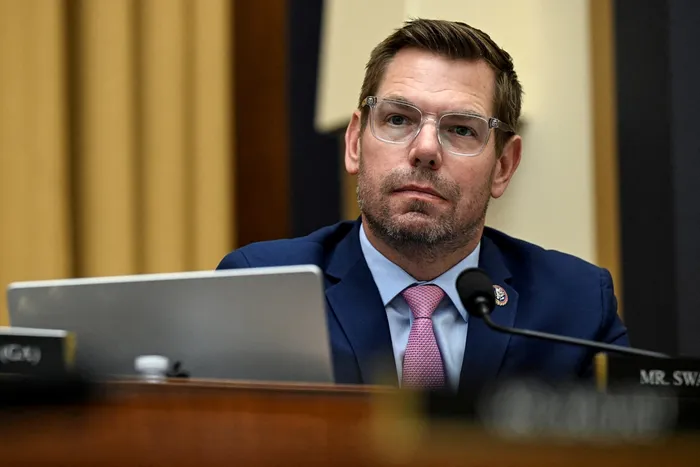
The termination of Eric Swalwell’s 2026 gubernatorial bid is not merely a reaction to a single cycle of allegations; it is the inevitable result of a collapse in Political Capital Reserves. In high-stakes executive races, a candidate’s viability is measured by their ability to absorb reputational shocks without triggering a mass exodus of institutional donors and endorsing bodies. When allegations of sexual misconduct are introduced into this equation, they function as a liquidity crisis. Swalwell’s exit demonstrates a specific failure in Crisis Insulation Theory, where the speed of the narrative’s spread outpaced the campaign’s ability to verify facts or consolidate its base.
The Triad of Campaign Viability
To understand why this specific campaign reached an early terminal velocity, one must analyze the three structural pillars that support any statewide bid in California.
- Financial Elasticity: The capacity to reallocate funds from positive messaging to defensive legal and PR maneuvers.
- Institutional Loyalty: The threshold at which party leadership and labor unions decide the risk of association outweighs the potential for future policy influence.
- Narrative Ownership: The candidate's ability to define the context of their own history before a competitor or the press fills the vacuum.
Swalwell’s campaign suffered a simultaneous rupture in all three. The introduction of sexual misconduct allegations—regardless of their legal merit—immediately converted his donor pool from an "investment" mindset to a "risk mitigation" mindset. In the California political economy, capital is cowardly. Large-scale donors do not wait for the conclusion of an investigation; they pivot to the nearest viable alternative to ensure their access remains secure.
The Mechanism of the Scandal Sinkhole
The "Scandal Sinkhole" is a phenomenon where the internal resources of a campaign are entirely consumed by the gravity of a negative story, leaving zero bandwidth for policy or outreach. This creates a feedback loop.
The first stage is Operational Paralysis. Staff members, typically focused on voter data and mobilization, are redirected to vet internal records and draft statements. This halts the campaign's momentum. The second stage is Endorsement Erosion. In California’s deep-blue landscape, the primary is often more competitive than the general election. This means a candidate’s "friends" are also their rivals. When the allegations surfaced, Swalwell’s competitors did not need to attack him directly; they simply had to remain visible as "stable alternatives," allowing the vacuum of his silence to pull supporters away.
The third stage is the Threshold of Unviability. This is a mathematical reality rather than an emotional one. Once internal polling indicates that the "Strong Dislike" metric among undecided female voters in key suburbs—such as those in Orange County and the Inland Empire—exceeds a specific percentage (usually 15-20%), the path to a plurality disappears. At this point, continuing the campaign is a net loss of personal and professional brand value.
Quantifying the Damage to Political Infrastructure
Swalwell’s exit is a case study in the Burn Rate vs. Impact Ratio. Before the allegations, every dollar spent on television ads in the Los Angeles and Bay Area markets yielded a measurable uptick in name recognition and favorability. Post-allegation, that same dollar is spent merely to achieve a "neutral" state, effectively doubling or tripling the cost of voter acquisition.
The infrastructure of a gubernatorial campaign involves thousands of volunteer hours and hundreds of local endorsements. This infrastructure is held together by a Trust Covenant. When a candidate faces accusations of misconduct, that covenant is breached. Volunteers, fearing "reputational contagion," stop wearing the merchandise and skip the phone banks. This bottom-up decay is often more fatal than the top-down withdrawal of billionaire donors because it cannot be fixed with a fresh infusion of cash.
The Role of the California Jungle Primary
California's "top-two" primary system significantly altered the strategy for this exit. In a traditional closed primary, a candidate might attempt to hunker down and appeal to a hardcore base of loyalists. However, the nonpartisan blanket primary requires a candidate to appeal to a broad, diverse coalition early in the cycle to ensure they land in the top two spots.
By withdrawing early, Swalwell is performing a Strategic Retreat to preserve his remaining influence. If he had stayed in and finished a distant fourth or fifth, his career would be functionally over. By exiting now, he retains the ability to claim his decision was made "for the good of the party" or "to avoid a distraction," allowing for a potential re-emergence in a future cycle once the news cycle has sufficiently decayed. This is a cold calculation: it is better to be a "what if" than a "has-been."
Media Saturation and the Velocity of Allegations
We must examine the Information Velocity Gradient. In previous decades, a candidate might have days to formulate a response to a breaking story. In the current media environment, the lag time is measured in minutes.
Swalwell’s history as a frequent media commentator and a national figure in the Trump-era investigations made him a high-value target for opposition research. This high visibility is a double-edged sword. It provided him with an initial fundraising advantage, but it also ensured that any negative story would receive 10x the coverage of a lower-profile candidate. The nationalization of local races means that a scandal in a California gubernatorial race is no longer a regional story; it is a national data point in the broader cultural war. This creates a "Pressure Cooker Effect" where the demand for a resignation or withdrawal becomes a national trend before local voters have even processed the news.
The Economics of Reputation Recovery
The cost of rehabilitating a political brand after sexual misconduct allegations is astronomical. It requires:
- Third-Party Validation: Independent audits or investigations that "clear" the candidate's name.
- Time-Based Decay: A period of relative obscurity to allow the initial emotional response of the electorate to fade.
- A Shift in Focus: Successfully pivoting to a new, unrelated policy win or public service role.
For Swalwell, the gubernatorial race was the wrong vehicle for this recovery. The timeline was too compressed. A state as large and complex as California requires a candidate to be on the offensive 100% of the time. You cannot manage a drought, a housing crisis, and a personal scandal simultaneously.
Comparative Failure Analysis
Comparing this exit to other recent political collapses reveals a pattern. Candidates who survive such allegations typically have one of two things: a cult-like base of support that ignores mainstream media (populism) or a lack of viable alternatives within their own party (monopoly). Swalwell had neither. He was a mainstream establishment figure in a state with a deep bench of talented, ambitious, and "clean" Democratic alternatives.
This leads to the Law of Replaceability. If the cost of defending a candidate is higher than the cost of switching to a similar candidate, the party will always switch. Leaders like Lieutenant Governor Eleni Kounalakis or Attorney General Rob Bonta represent "safe harbors" for donors and voters fleeing the Swalwell storm.
Strategic Realignment
The immediate consequence of this withdrawal is a massive redistribution of Unclaimed Political Equity.
- Fundraising Reallocation: The millions of dollars previously pledged to Swalwell will not sit idle. They will flow toward candidates who can demonstrate the most stable "Risk Profile" over the next six months.
- Labor Endorsements: Powerful groups like the California Teachers Association (CTA) and SEIU will now accelerate their vetting processes for the remaining field. They cannot afford to be unaligned as the primary approaches.
- Policy Vacuum: Swalwell occupied a specific lane—the "youthful, aggressive prosecutor of the status quo." Other candidates will now attempt to "skin" their campaigns in his image to capture his former supporters, without the baggage of his allegations.
The exit is not a sign of the allegations' truth or falsehood; it is a sign that the Market Value of the Swalwell campaign dropped below its Operating Cost. In the brutal math of California politics, once you are insolvent, the only logical move is to liquidate.
The remaining candidates must now audit their own internal vulnerabilities. If the Swalwell exit proves anything, it is that the "Vetting Barrier" has been raised. In a post-Me-Too political environment, the "Pre-Campaign Audit" must be exhaustive. Any candidate who has not performed a forensic deep-dive into their own personal and professional history is essentially running a campaign on a fault line.
The strategic play for the remaining field is to occupy the "Integrity High Ground" without appearing opportunistic. The winner of the 2026 gubernatorial race will be the individual who can project a sense of Unassailable Stability to an electorate that is increasingly exhausted by the volatility of its representatives. The Swalwell collapse has provided a roadmap of what to avoid: do not allow the national narrative to overshadow local utility, and never let your "Burn Rate" exceed your "Trust Reserves."